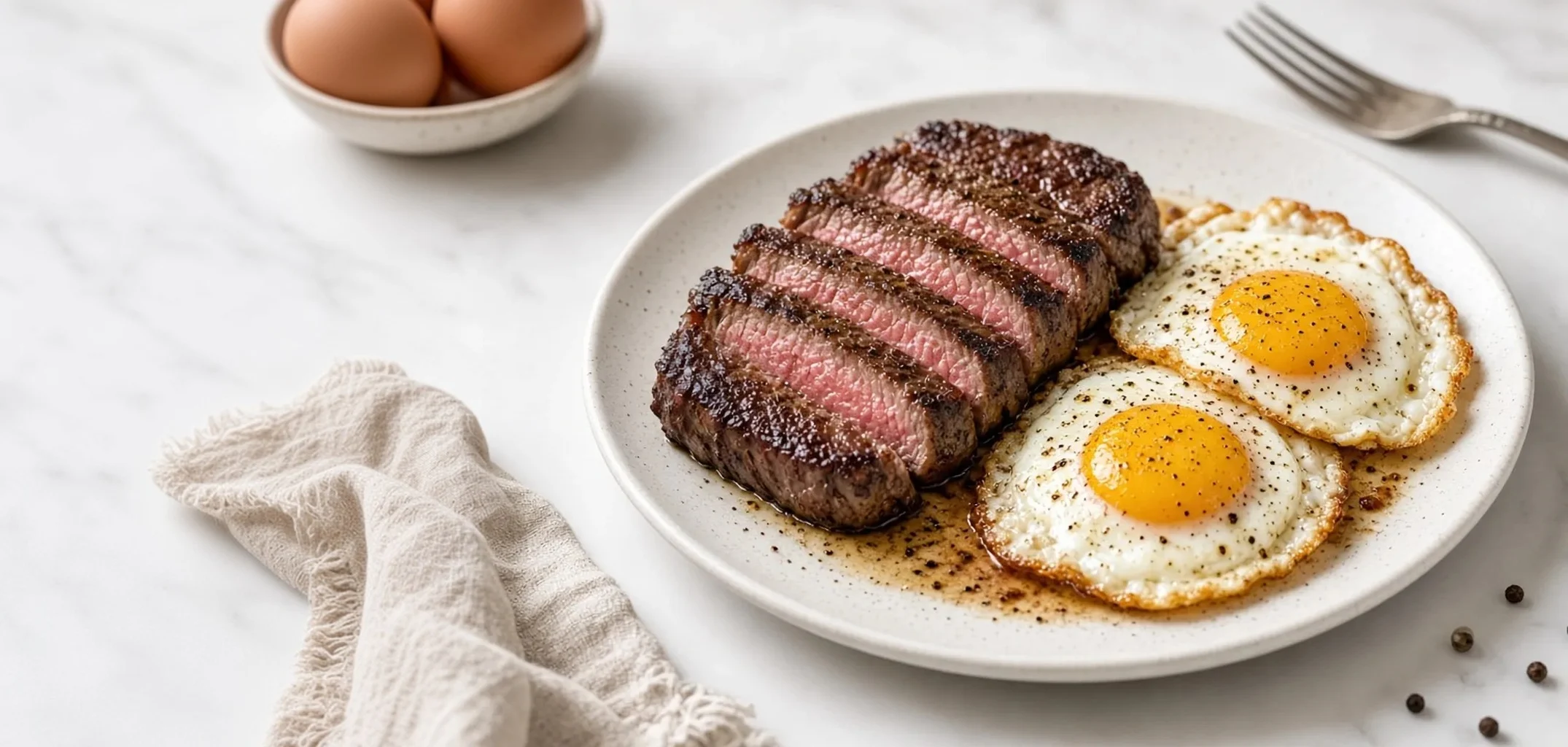
Steak and eggs in brown butter
20 min · 57 g protein · 491 cals / serving
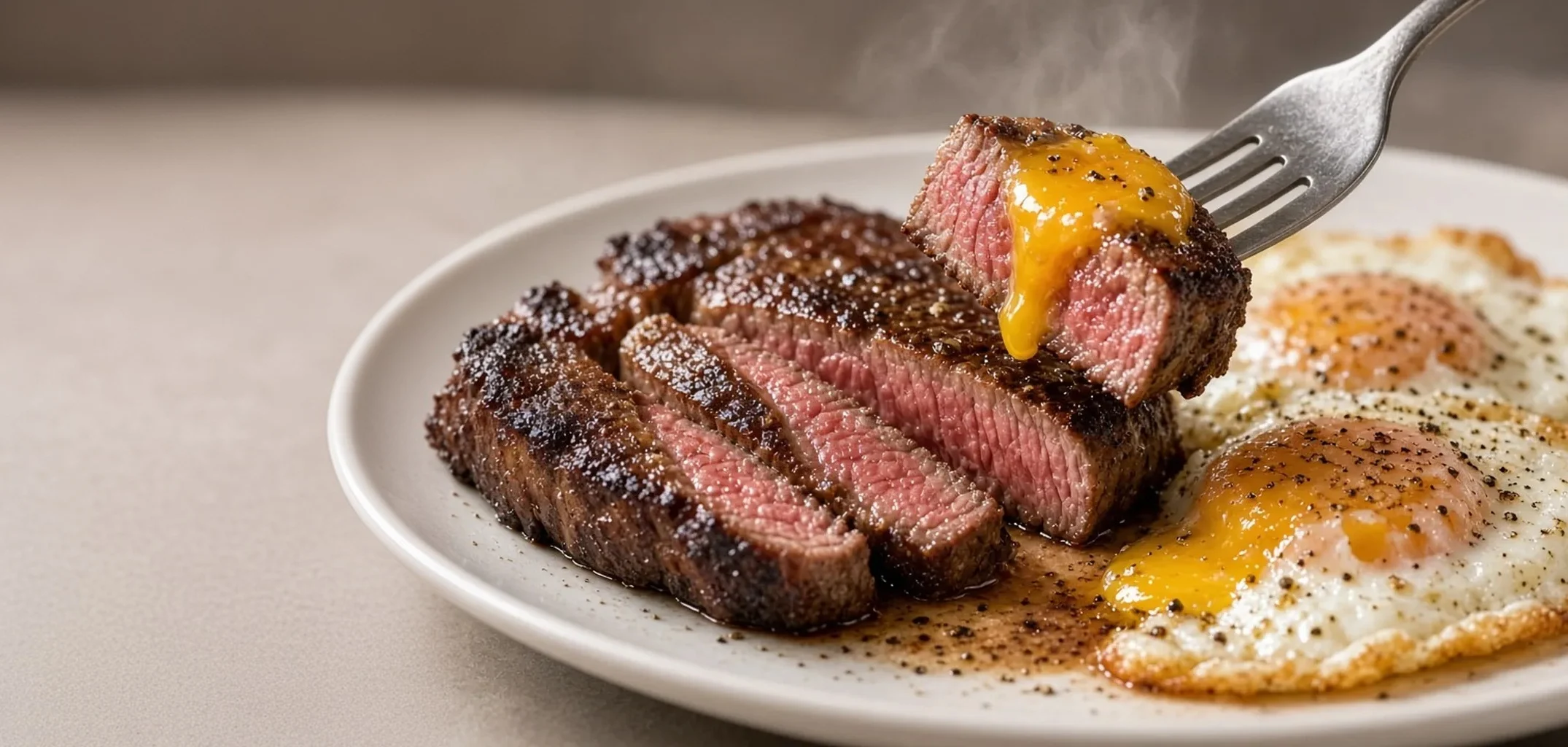
A hard-seared top sirloin, basted with butter until it smells nutty, then sliced beside two eggs fried in the same pan. The yolks run into the steak juices, and the whole breakfast is on the table in twenty minutes.
Ingredients
- 1 top sirloin steak, 2.5 cm (1 inch) thick (about 14 oz) top sirloin steak
- 3/4 tsp salt
- 1 tsp beef tallow, about half stays in the pan
- 1 tbsp butter
- 4 large eggs
- 1/2 tsp black pepper, freshly ground


Steps
- Pat the steak dry and season it on both sides with most of the salt; keep a pinch for the eggs. Leave it on the board while the pan heats.
- Heat a cast-iron skillet over high heat for 4–5 minutes, until it just smokes. Add the tallow, then the steak, and sear 3 minutes without moving it, until a dark crust forms. Turn and sear 2–3 minutes more.
- Lower the heat to medium, add the butter and spoon it over the steak as it foams and turns nutty brown, about 1 minute, until the thickest part reads 125°F for rosy medium-rare or 135°F for medium; the USDA's safe minimum for beef steaks is 145°F after a 3-minute rest. Lift the steak onto a board to rest.
- Crack the eggs into the brown butter left in the pan, sprinkle with the reserved salt and fry 2–3 minutes, basting the whites with the butter, until they are set and the yolks are still soft. For firm yolks, cover the pan for the last minute.
- Slice the steak across the grain, divide it and the eggs between two plates, pour the board juices over and grind on the pepper.
Good to know
Can I use ribeye?
Yes, it is the indulgent version, with more fat through the meat, at about 43 instead of 64.
Can I use leftover steak?
Yes. Slice it cold, warm it for 30 seconds in the brown butter, then fry the eggs around it.
Per
- Calories
- 198
- Protein
- (48%)
- 23 g
- Fat
- (51%)
- 11 g
- Carbohydrates
- (1%)
- 1 g
- of which sugar
- <1 g
- Fiber
- <1 g
- Sodium
- 421 mg
More breakfast


Computed from the ingredients with our published formula, not yet kitchen-tested. How
As written, 982 kcal goes into the pot and 623 g of ingredients comes out as about 497 g of food: 198 kcal per 100 g. Cooking moves water and energy density is the score's biggest lever, so the dish is scored as cooked, not as an average of its parts. Every ingredient links to its food page, with the same data and score. The label's percentages are each macronutrient's share of the calories. The full formula.