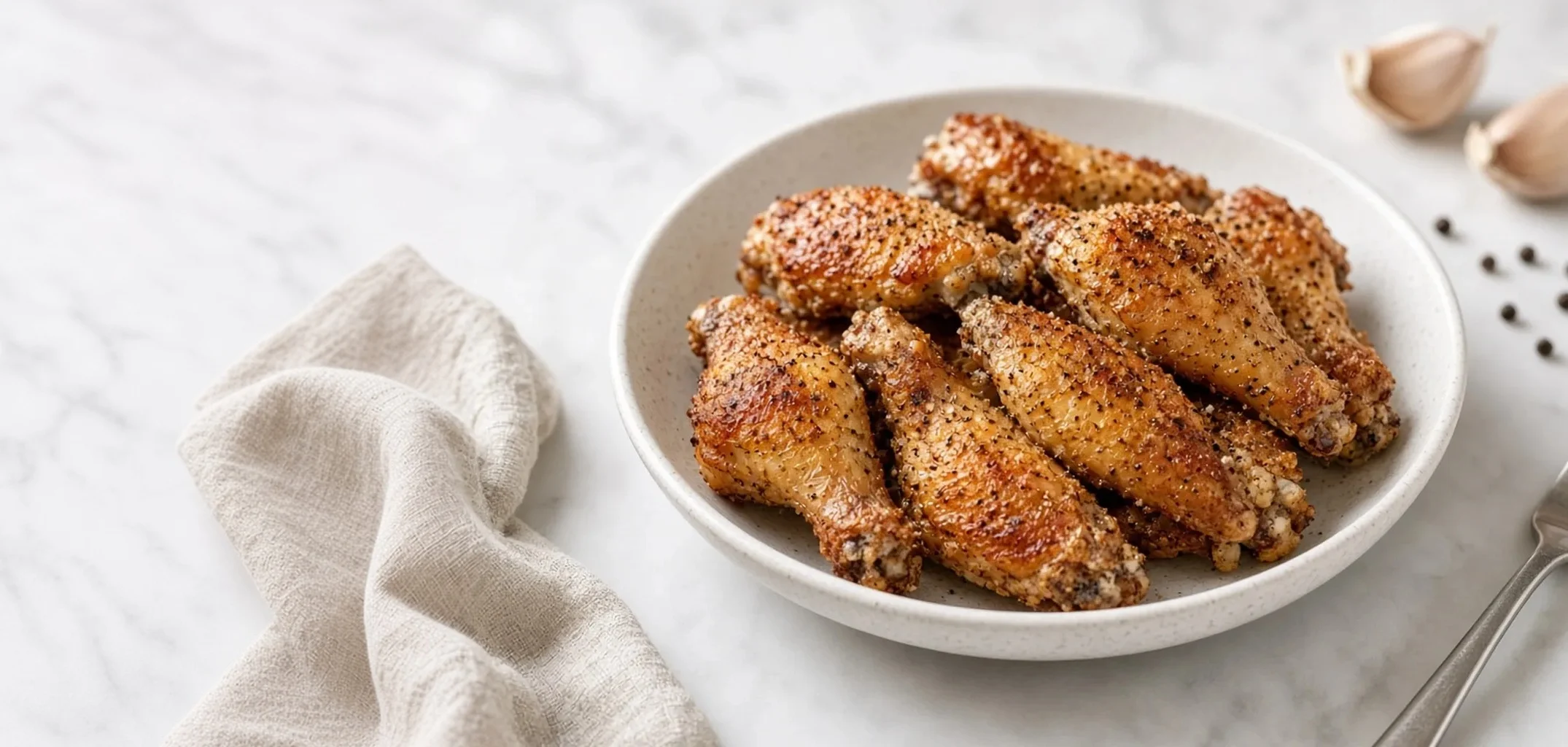
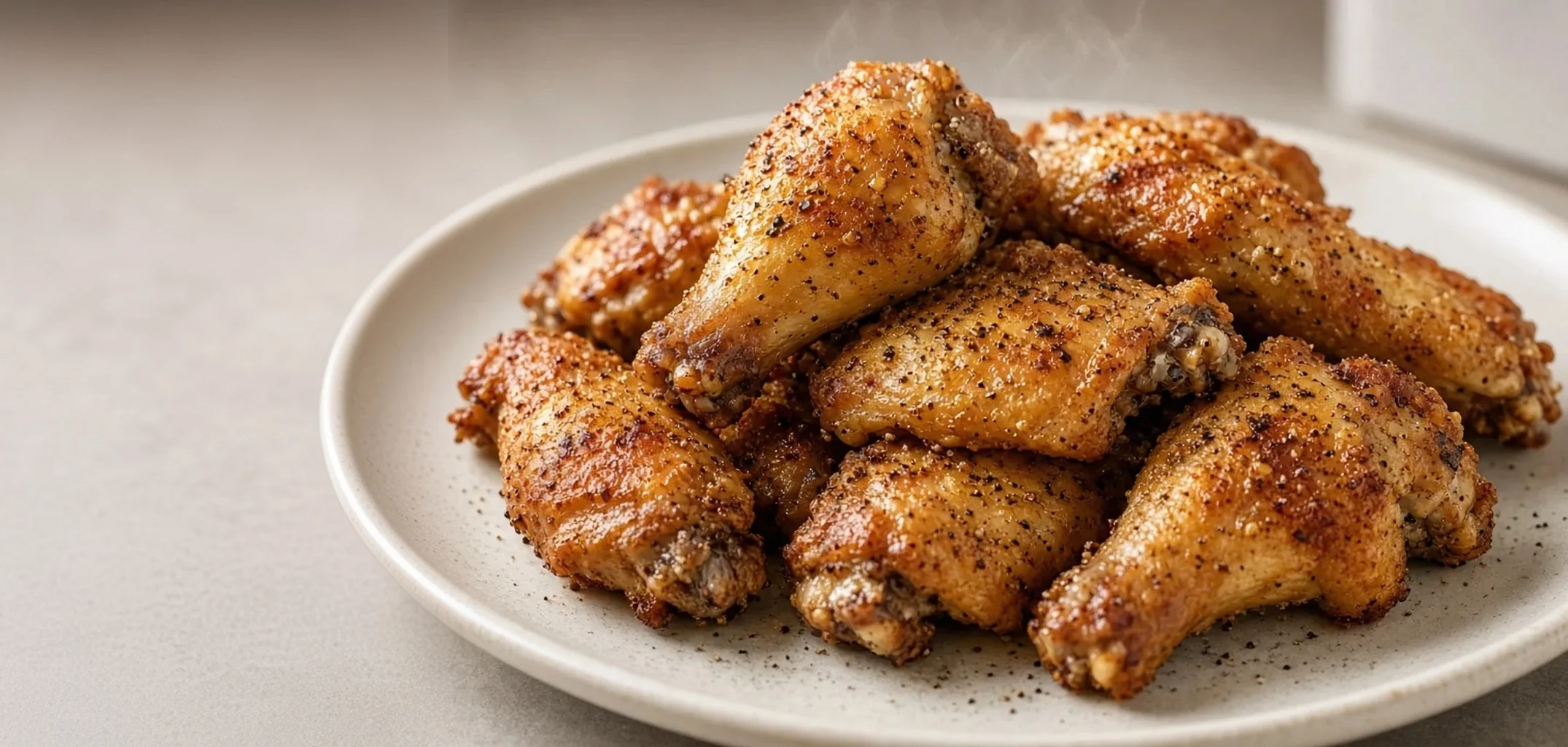
Crispy salt-and-pepper oven wings
155 min · 34 g protein · 363 cals / serving
Chicken wings with thin, crackling skin and nothing on them but salt and pepper. An overnight rest in the fridge dries the skin, a low oven melts the fat out, and a hot oven blisters what is left. No sauce, no flour and no fryer.
Ingredients
- 2 1/4 lb wings, split into flats and drumettes chicken wings
- 1 1/2 tsp salt
- 1 tsp garlic powder (optional)
- 1 tsp black pepper, coarsely ground


Steps
- Pat the wings very dry with paper towel. Toss them with the salt and, if using, the garlic powder, then spread them skin side up on a wire rack set over a foil-lined tray. Refrigerate, uncovered, for at least 1 hour, or overnight for the crispest skin, until the skin looks dry.
- Heat the oven to 250°F. Bake the wings on their rack on a low shelf for 30 minutes, so the fat under the skin starts to melt out.
- Move the tray to the upper-middle shelf and turn the oven up to 425°F. Bake 40–50 minutes more, turning the tray once, until the skin is deep golden, blistered and crisp and the meat by the bone reads at least 165°F.
- Tip the wings into a warm bowl, grind over the pepper and toss. Eat straight away, while the skin still crackles.
Good to know
No time to rest them overnight?
One hour uncovered in the fridge is the minimum. Pat them dry again before baking and add 5–10 minutes to the hot stage if the skin is not yet crisp.
Can I do this in an air fryer?
Yes, after the same dry-brine: 15 minutes at 360°F, then 8–10 minutes at 400°F, shaking the basket halfway.
What if I am not strict carnivore?
A squeeze of lemon and a pinch of chilli flakes at the end, or your favourite hot sauce on the side.
Per
- Calories
- 250
- Protein
- (38%)
- 23 g
- Fat
- (61%)
- 16 g
- Carbohydrates
- (1%)
- 1 g
- of which sugar
- <1 g
- Fiber
- <1 g
- Sodium
- 933 mg
More snacks


Computed from the ingredients with our published formula, not yet kitchen-tested. How
As written, 1451 kcal goes into the pot and 1013 g of ingredients comes out as about 580 g of food: 250 kcal per 100 g. Cooking moves water and energy density is the score's biggest lever, so the dish is scored as cooked, not as an average of its parts. Every ingredient links to its food page, with the same data and score. The label's percentages are each macronutrient's share of the calories. The full formula.