Carnivore meatball soup in bone broth
45 min · 54 g protein · 444 cals / serving
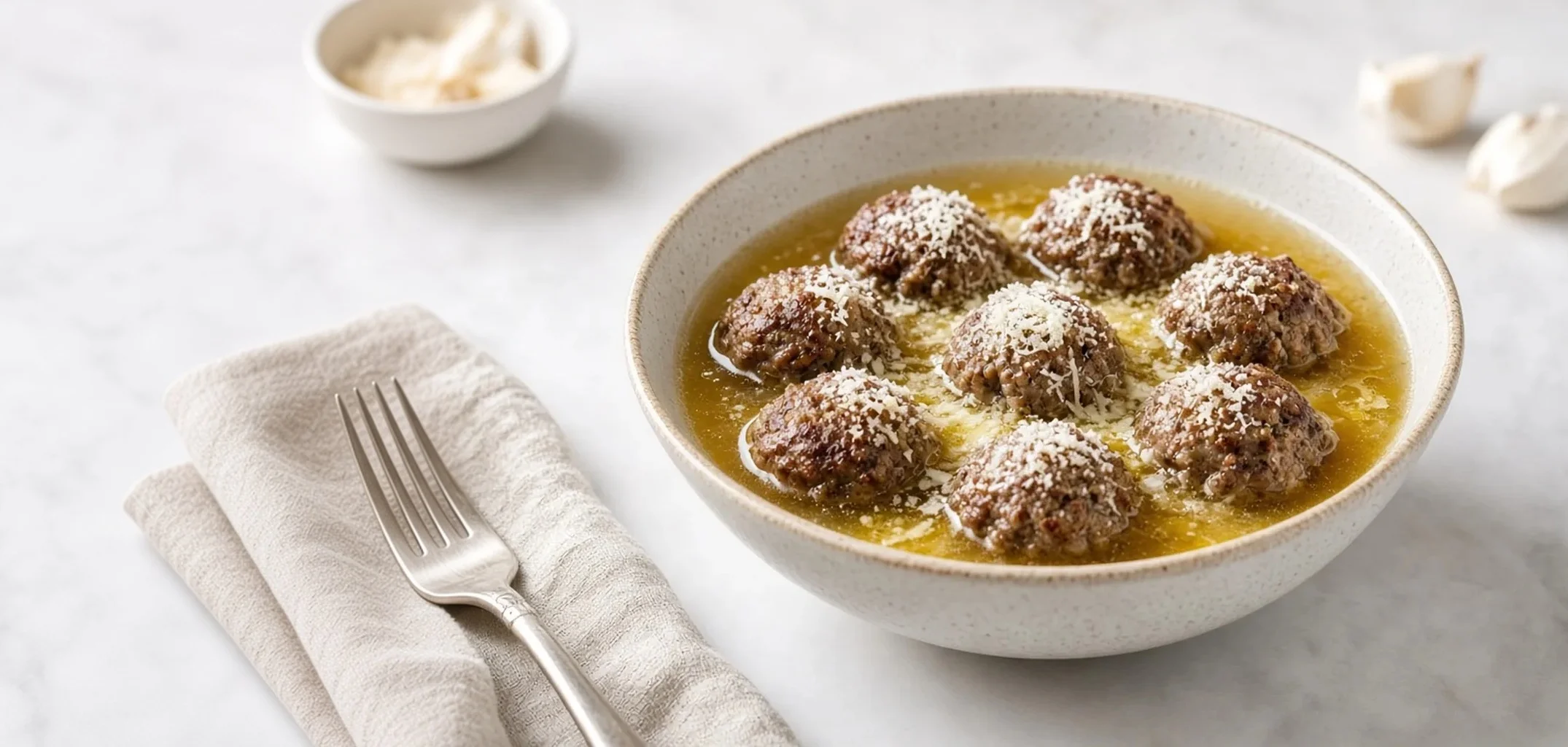
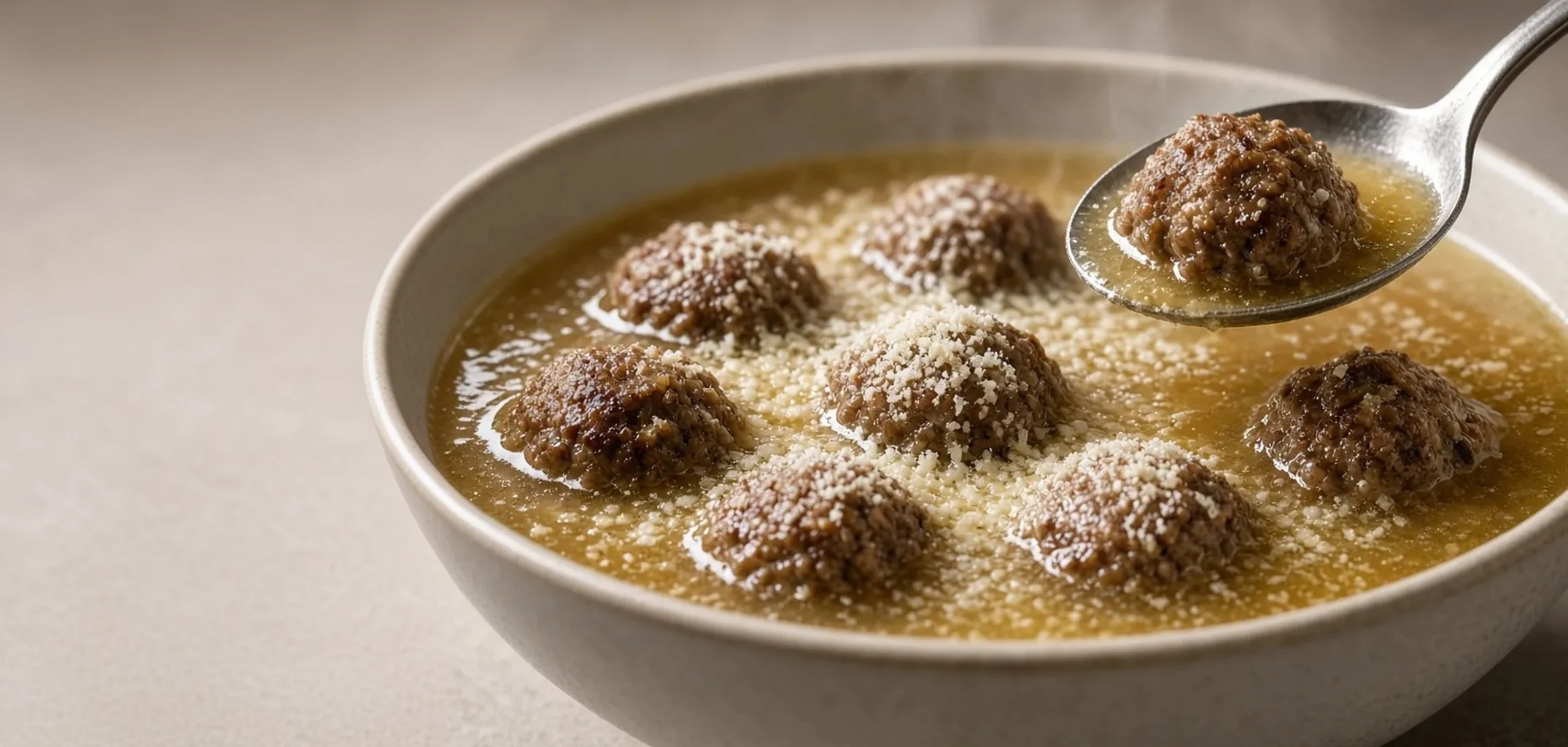
Tender beef and parmesan meatballs, browned in butter and simmered in a deep, savoury bone broth. A bowl of clear golden broth with six or seven meatballs in it, a shower of parmesan on top, and nothing else needed.
Ingredients
Meatballs
- 1 1/2 lb ground beef ground beef (90% lean)
- 1 large egg
- 1/3 cup grated grated parmesan (refrigerated)
- 1 tsp salt
- 1/2 tsp garlic powder (optional)


Soup
- 1 tbsp butter
- 6 cups beef bone broth bone broth
- a pinch, to taste salt


To serve
- 1/4 cup grated grated parmesan (refrigerated)
Steps
- Put the beef, egg, 1/3 cup parmesan, salt and, if using, the garlic powder in a bowl and mix with your hands until just combined. Roll into about 28 walnut-sized balls, 3 cm (1 1/4 inches) across, with wet hands.
- Melt the butter in a large heavy pot over medium-high heat. Brown the meatballs in two batches, turning, about 4 minutes a batch, until browned on several sides. They will finish cooking in the broth.
- Return all the meatballs to the pot, pour in the bone broth and scrape up the browned bits from the bottom. Bring to a boil, then lower to a gentle simmer.
- Simmer uncovered for 15 minutes, until the meatballs are cooked through to 160°F in the center. Taste the broth and add a pinch more salt if it needs it.
- Ladle into bowls and scatter over the remaining parmesan.
Good to know
Can I use any broth?
Bone broth is what makes this a meal: it is richer and sets to a jelly when cold. Ordinary stock works, with a thinner, lighter soup.
Can I freeze it?
Yes, up to 3 months. Thaw overnight and reheat gently until the meatballs are hot through.
Per
- Calories
- 89
- Protein
- (50%)
- 11 g
- Fat
- (48%)
- 5 g
- Carbohydrates
- (3%)
- 1 g
- of which sugar
- <1 g
- Fiber
- <1 g
- Sodium
- 282 mg
More meals


Computed from the ingredients with our published formula, not yet kitchen-tested. How
As written, 1775 kcal goes into the pot and 2323 g of ingredients comes out as about 2000 g of food: 89 kcal per 100 g. Cooking moves water and energy density is the score's biggest lever, so the dish is scored as cooked, not as an average of its parts. Every ingredient links to its food page, with the same data and score. The label's percentages are each macronutrient's share of the calories. The full formula.