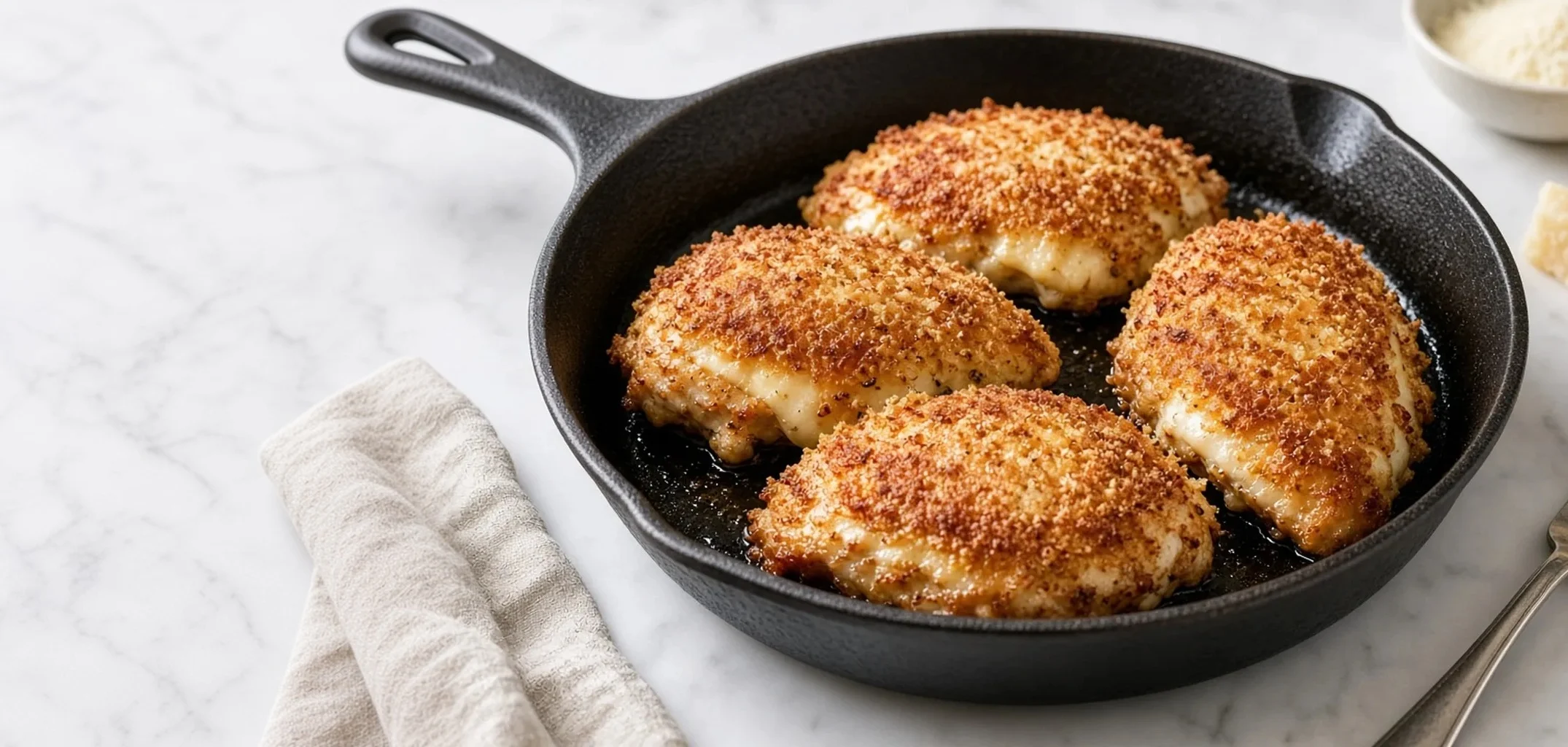
Carnivore parmesan-crusted chicken
32 min · 55 g protein · 454 cals / serving
The steakhouse favourite made with animal foods only: juicy seared chicken breasts under a melted layer of provolone and parmesan, finished with a buttery parmesan crust broiled until crisp and golden. No breadcrumbs, no bottled dressing, and about 30 minutes start to finish.
Ingredients
- 4 small breasts (1 lb 10 oz) chicken breast, roasted, pounded to an even 2 cm (3/4 inch)
- 2/3 tsp salt
- 1/2 tsp black pepper
- 2 tsp butter, for searing


Cheese layer
- 1/4 cup light sour cream
- 1 cup finely grated (3 oz) parmesan, from a block, divided
- 4 slices (3 1/2 oz) provolone
- 1/4 tsp garlic powder (optional)


Crust
- 1 tbsp butter, melted
Steps
- Heat the oven broiler (grill) to high. Pat the chicken dry and season both sides with the salt and pepper.
- Melt the butter in a large ovenproof skillet over medium-high heat. Sear the breasts 5–6 minutes a side, until golden and cooked through to 165°F in the thickest part. Take the pan off the heat.
- Stir the sour cream with half the parmesan (and the garlic powder, if using) and spread it over the tops of the breasts. Lay a slice of provolone on each.
- Toss the rest of the parmesan with the melted butter and press it over the provolone in an even layer.
- Broil 2–4 minutes, about 6 inch from the heat, until the cheese bubbles and the crust is deep golden; watch it, because it browns fast. Rest 3 minutes before serving. Keeps 3 days in the fridge; reheat in a hot oven so the crust crisps again.
Good to know
Can I use chicken thighs?
Yes. Boneless, skinless thighs stay juicier and need about 6–7 minutes a side; the score moves from 66 to 53.
Is it still carnivore with the garlic powder?
The garlic powder is optional so the dish keeps its carnivore label; leave it out and the cheese and butter carry the flavour on their own.
Per
- Calories
- 230
- Protein
- (50%)
- 28 g
- Fat
- (49%)
- 12 g
- Carbohydrates
- (2%)
- 1 g
- of which sugar
- <1 g
- Fiber
- <1 g
- Sodium
- 431 mg
More meals


Computed from the ingredients with our published formula, not yet kitchen-tested. How
As written, 1817 kcal goes into the pot and 991 g of ingredients comes out as about 790 g of food: 230 kcal per 100 g. Cooking moves water and energy density is the score's biggest lever, so the dish is scored as cooked, not as an average of its parts. Every ingredient links to its food page, with the same data and score. The label's percentages are each macronutrient's share of the calories. The full formula.