Meals · Sandwiches, burgers & wraps
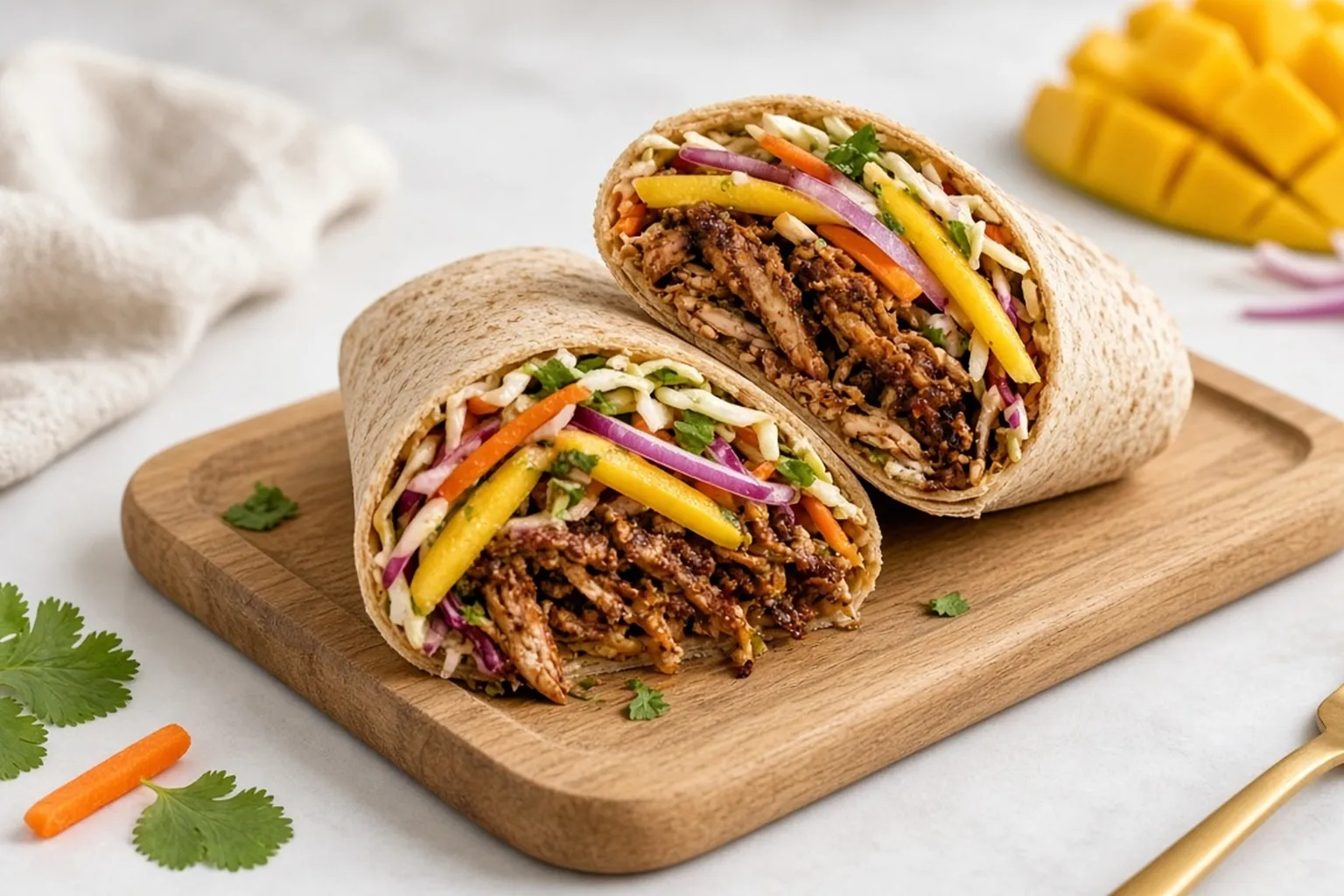
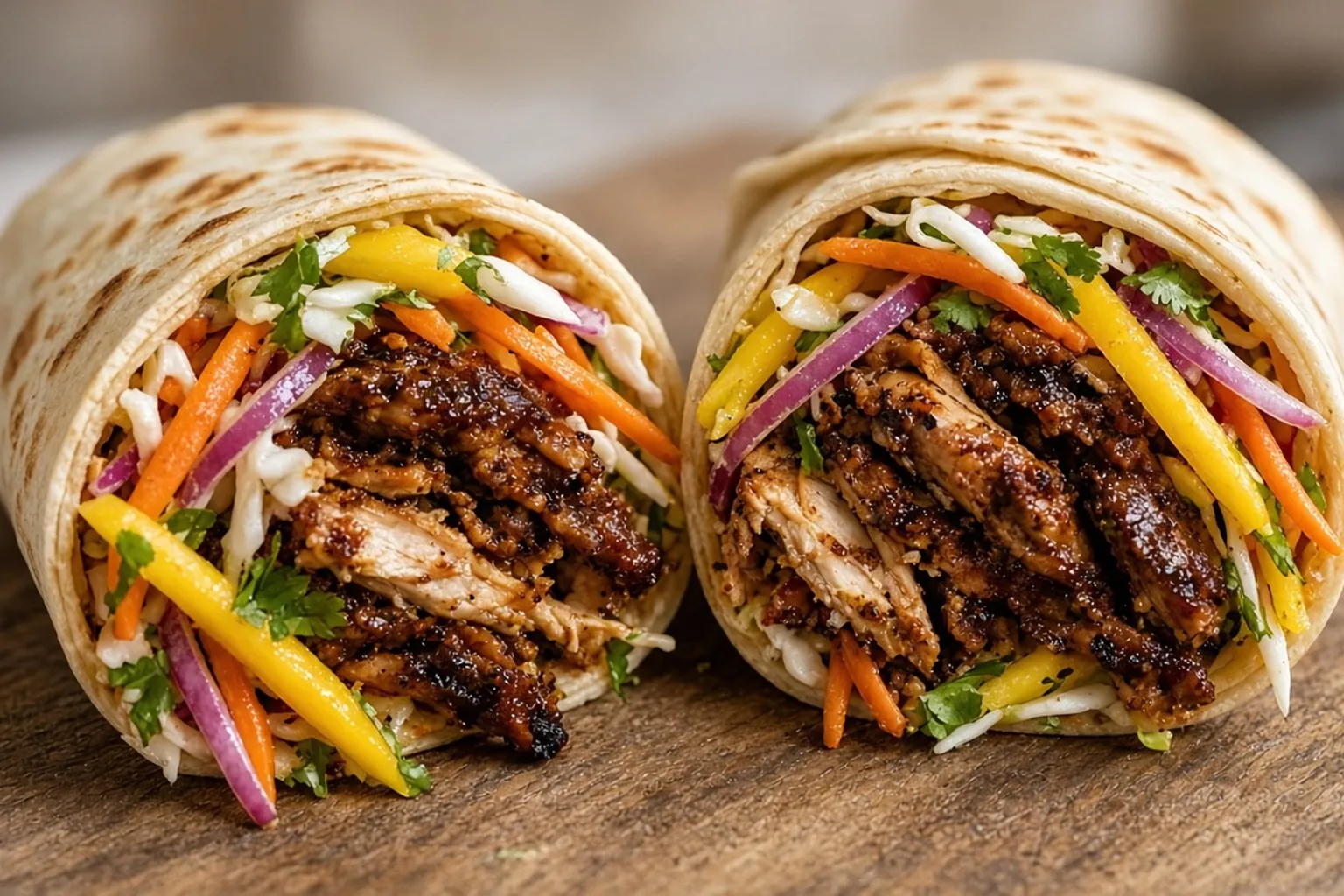
Jerk chicken wraps with mango lime slaw
Shredded chicken tossed hot in a fiery, allspice-scented jerk paste, rolled in warm high-protein wraps with a crunchy, juicy slaw of cabbage, carrot, sweet mango, red onion and coriander in lime. A Jamaican-style wrap from a rotisserie chicken, in ten minutes.
- Time
- 10 min (7 prep + 3 cook)
- Servings
- 2
- Per serving
- 480 kcal
- Protein
- 56 g
Ingredients
Mango slaw
- 2 cups coleslaw mix (undressed), shredded cabbage and carrot, undressed
- 1/2 large mango, cut in thin strips
- a few thin slices red onions
- a small handful fresh cilantro, coriander, chopped


- 1 tbsp + 2 tsp lime juice, from 1 lime; 2 tsp go on the chicken

Mango slaw
- 1 tbsp light mayonnaise
- a pinch salt


- about 2 1/3 cups roasted chicken breast, skin off, shredded: from a rotisserie chicken or leftover roast chicken
- 1 heaped tbsp jerk marinade, jerk paste or wet marinade; check the label for dairy
- 1 tbsp water
- 2 large (10 in) high-protein wraps low-carb protein wrap, or whole-wheat tortillas


Steps
- Toss the slaw mix, mango, red onion and coriander with 1 tablespoon of the lime juice, the mayonnaise and salt in a bowl.
- Put the chicken, jerk paste, water and the rest of the lime juice in a skillet over medium-high heat and stir for 2–3 minutes until the chicken is coated and steaming hot (165°F if it came from the fridge).
- Warm the wraps for a few seconds in the hot pan. Lay the chicken down the middle of each, pile the slaw on top, fold in the sides and roll up tightly. Cut in half on the diagonal.
Good to know
Is jerk paste very hot?
Most are built on Scotch bonnet chillies, so yes. Start with half the paste and taste; the mango and lime cool it down.
Can I use ordinary whole-wheat tortillas?
Yes, two large whole-wheat tortillas roll the same way, at about 58 instead of 69.
Per
- Calories
- 130
- Protein
- (48%)
- 15 g
- Fat
- (27%)
- 4 g
- Carbohydrates
- (25%)
- 10 g
- of which sugar
- 4 g
- Fiber
- 3 g
- Sodium
- 201 mg
More meals


Computed from the ingredients with our published formula, not yet kitchen-tested. General guidance, not medical advice. Talk to your prescriber. How
As written, 960 kcal goes into the pot and 747 g of ingredients comes out as about 737 g of food: 130 kcal per 100 g. Cooking moves water and energy density is the score's biggest lever, so the dish is scored as cooked, not as an average of its parts. Every ingredient links to its food page, with the same data and score. The label's percentages are each macronutrient's share of the calories. The full formula.