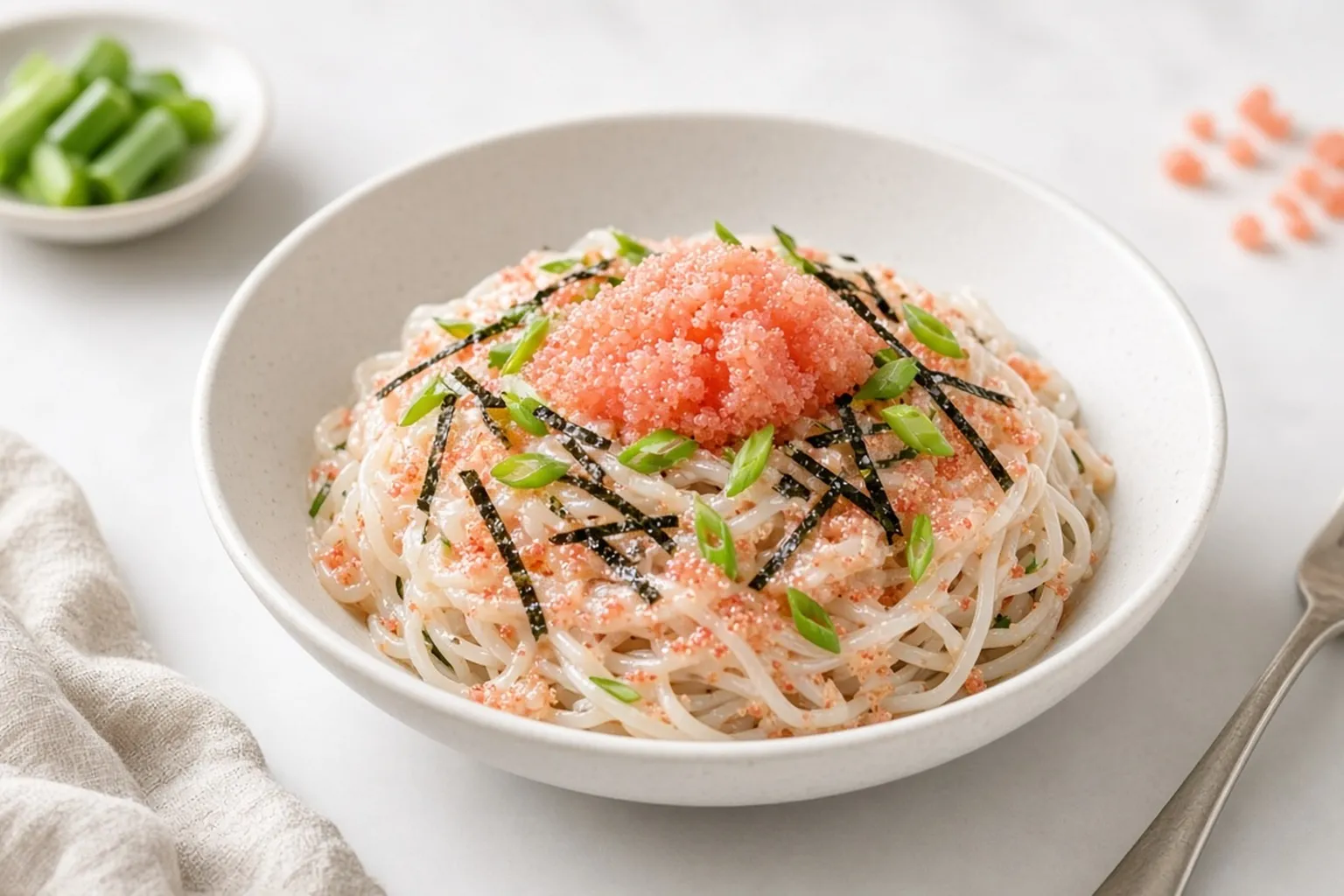
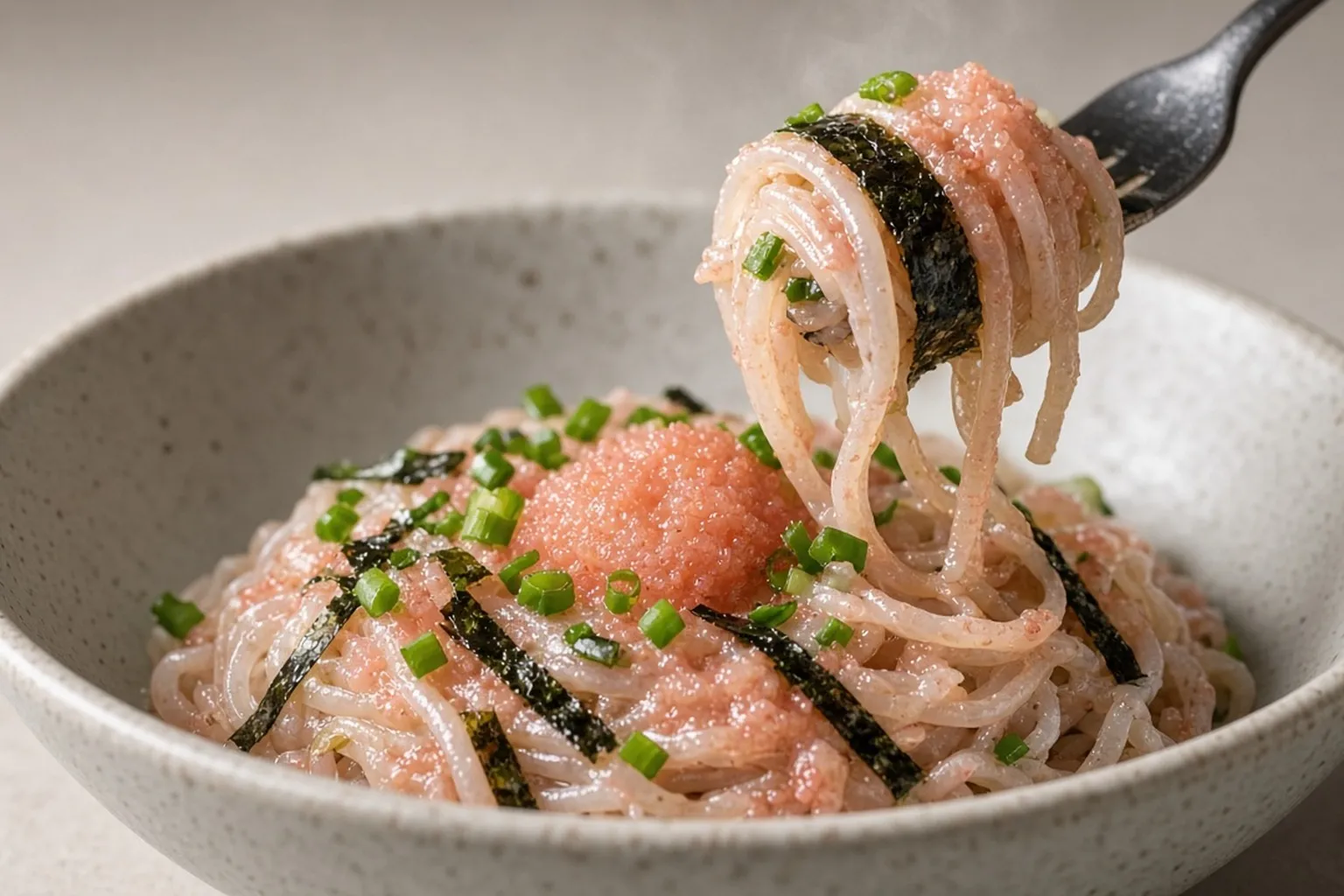
Mentaiko noodles (Japanese cod roe noodles)
Japan's café favourite rebuilt on konjac noodles: slippery noodles dry-fried until they squeak, then tossed off the heat with salty, gently spicy cod roe, butter and a spoon of crème fraîche until every strand turns pale pink. Topped with nori and green onion.
- Time
- 9 min (3 prep + 6 cook)
- Servings
- 2
- Per serving
- 200 kcal
- Protein
- 18 g
Ingredients
- 2 packs (200 g each, drained) konjac noodles, spaghetti- or fettuccine-shaped, drained and rinsed well
- 5 oz cod roe, raw, mentaiko or tarako (cured, salted pollock or cod roe), the skin slit and the roe scraped out
- 1 1/2 tbsp butter, soft
- 2 tbsp half fat creme fraiche
- 1 tsp reduced sodium soy sauce
- 1 tsp lemon juice
- a few grinds black pepper
- 1/2 sheet nori, cut in thin strips with scissors
- 2 green onions, thinly sliced


Steps
- Put the rinsed noodles into a dry non-stick frying pan over medium-high heat and stir them for 4–5 minutes, until the water has steamed off and they squeak against the pan.
- Meanwhile mash the roe, butter, crème fraîche, soy sauce, lemon juice and pepper together in a large bowl, keeping back a spoonful of roe for the top.
- Tip the hot noodles into the bowl and toss for a minute until every strand is coated and the sauce turns creamy and pale pink. The heat of the noodles is all the roe needs.
- Divide between two bowls, top with the reserved roe, the nori and green onion, and eat straight away.
Good to know
Where do I find mentaiko?
In the freezer at Japanese and Korean grocers, sold as whole sacs. Thaw in the fridge. Plain salted cod roe (tarako) works the same way and is milder. Use only cured mentaiko or tarako here; fresh, unsalted cod roe from the fish counter must be cooked and does not work in this dish.
Can I use spaghetti instead?
Yes, it is the classic. Cook 160 g of spaghetti, keep a splash of the water to loosen the sauce, and know it is no longer a keto dish.
Per
- Calories
- 68
- Protein
- (35%)
- 6 g
- Fat
- (53%)
- 4 g
- Carbohydrates
- (12%)
- 3 g
- of which sugar
- <1 g
- Fiber
- 3 g
- Sodium
- 87 mg
More meals


Computed from the ingredients with our published formula, not yet kitchen-tested. How
As written, 401 kcal goes into the pot and 629 g of ingredients comes out as about 589 g of food: 68 kcal per 100 g. Cooking moves water and energy density is the score's biggest lever, so the dish is scored as cooked, not as an average of its parts. Every ingredient links to its food page, with the same data and score. The label's percentages are each macronutrient's share of the calories. The full formula.