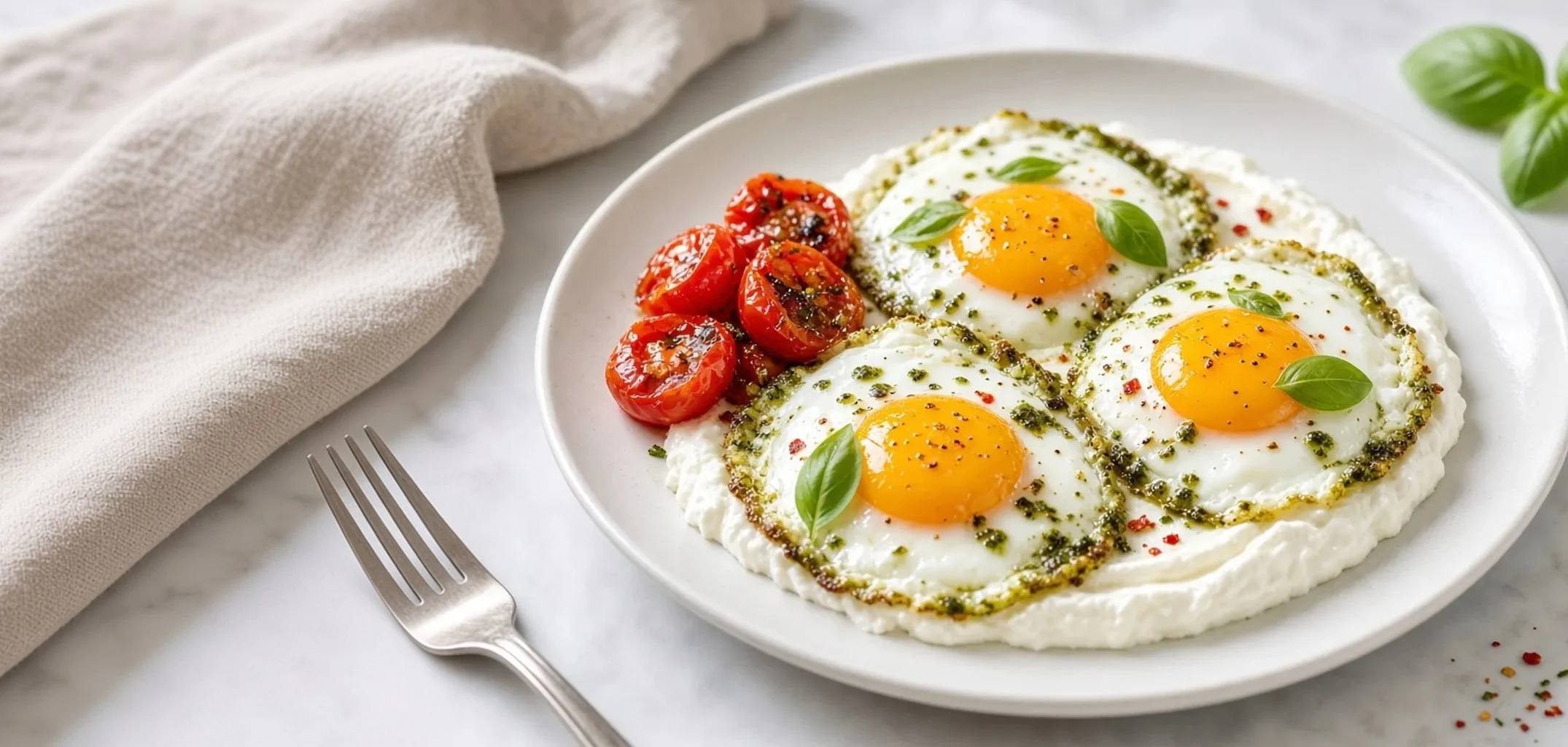
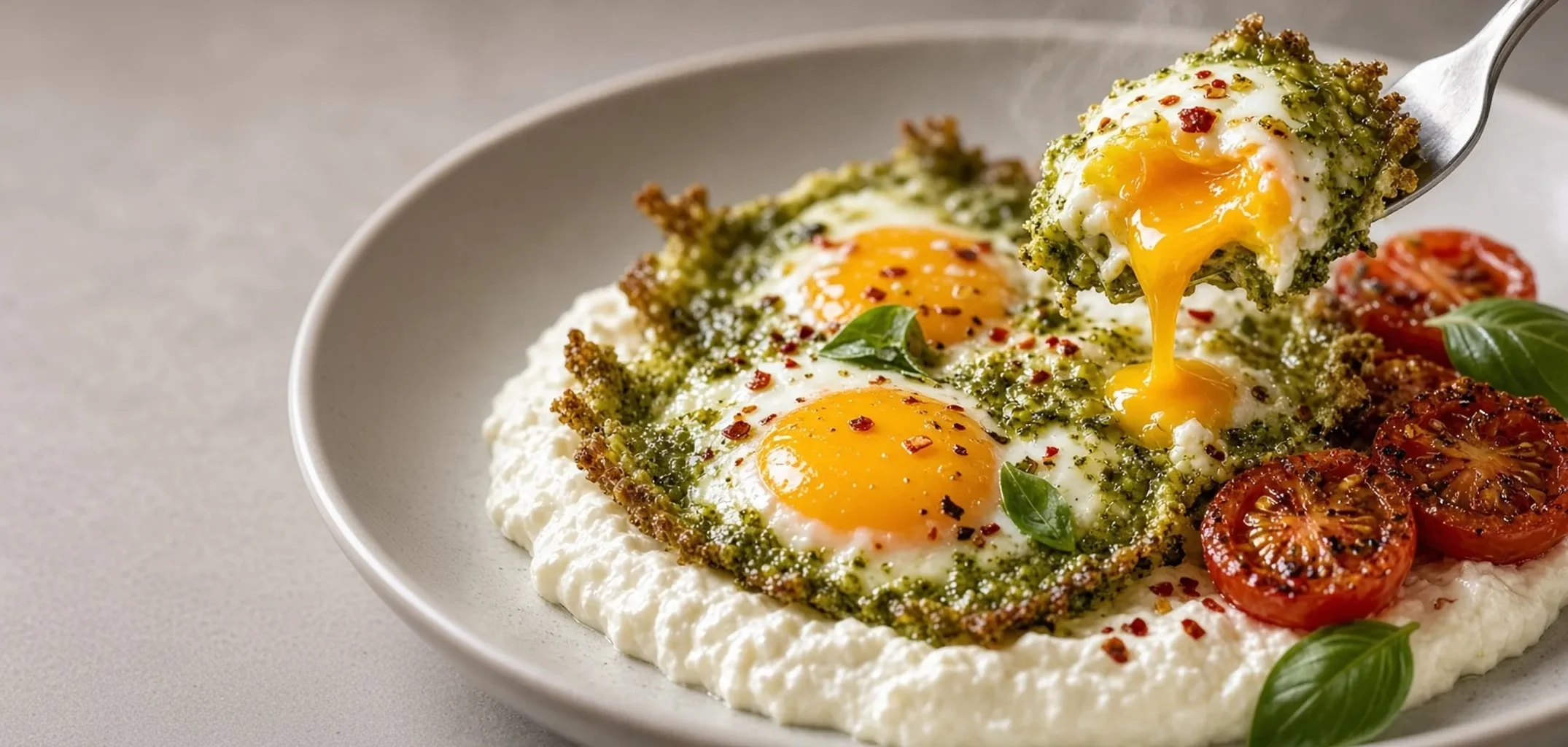
Pesto eggs on whipped cottage cheese with blistered tomatoes
13 min · 31 g protein · 389 cals / serving
The viral pesto eggs: eggs fried in sizzling basil pesto until the edges go lacy and green-gold, slid over a cool bed of whipped cottage cheese with blistered cherry tomatoes and a pinch of chili flakes. All the flavour of the toast version, about fifteen minutes, one pan.
Ingredients
- 3/4 cup + 2 tbsp cottage cheese (2%)
- 1 tsp lemon juice
- 2/3 cup cherry tomatoes
- 1 1/2 tbsp pesto, basil pesto
- 6 large eggs
- a pinch salt
- 1/4 tsp black pepper
- a pinch red pepper flakes (optional)
- a few leaves fresh basil (optional)


Steps
- Blend the cottage cheese with the lemon juice until silky and smooth, about 30 seconds, and spread it over two plates.
- Heat a large 30 cm (12 in) non-stick frying pan over medium-high heat and blister the cherry tomatoes in the dry pan, shaking it now and then, until the skins split and char in spots, 3 to 4 minutes. Tip them over the cottage cheese.
- Lower the heat to medium, spoon the pesto into the pan and spread it out. When it sizzles, crack in the eggs (in two batches if your pan is smaller), season with the salt and pepper, and fry until the whites are set and the pesto edges are crisp and golden, 3 to 4 minutes. Cover the pan for the last minute if you like firmer yolks.
- Slide three eggs onto each plate and finish with chili flakes and basil.
Good to know
Can I scramble them instead?
Yes. Warm the pesto, pour in the beaten eggs and stir gently over low heat until softly set. The pesto turns them pale green and herby.
Can I use ricotta, like the original?
Yes, part-skim ricotta whipped the same way is richer and a little sweeter, at about 43 instead of 52.
Per
- Calories
- 132
- Protein
- (33%)
- 11 g
- Fat
- (58%)
- 8 g
- Carbohydrates
- (9%)
- 3 g
- of which sugar
- 2 g
- Fiber
- <1 g
- Sodium
- 282 mg
More breakfast


Computed from the ingredients with our published formula, not yet kitchen-tested. How
As written, 778 kcal goes into the pot and 633 g of ingredients comes out as about 588 g of food: 132 kcal per 100 g. Cooking moves water and energy density is the score's biggest lever, so the dish is scored as cooked, not as an average of its parts. Every ingredient links to its food page, with the same data and score. The label's percentages are each macronutrient's share of the calories. The full formula.