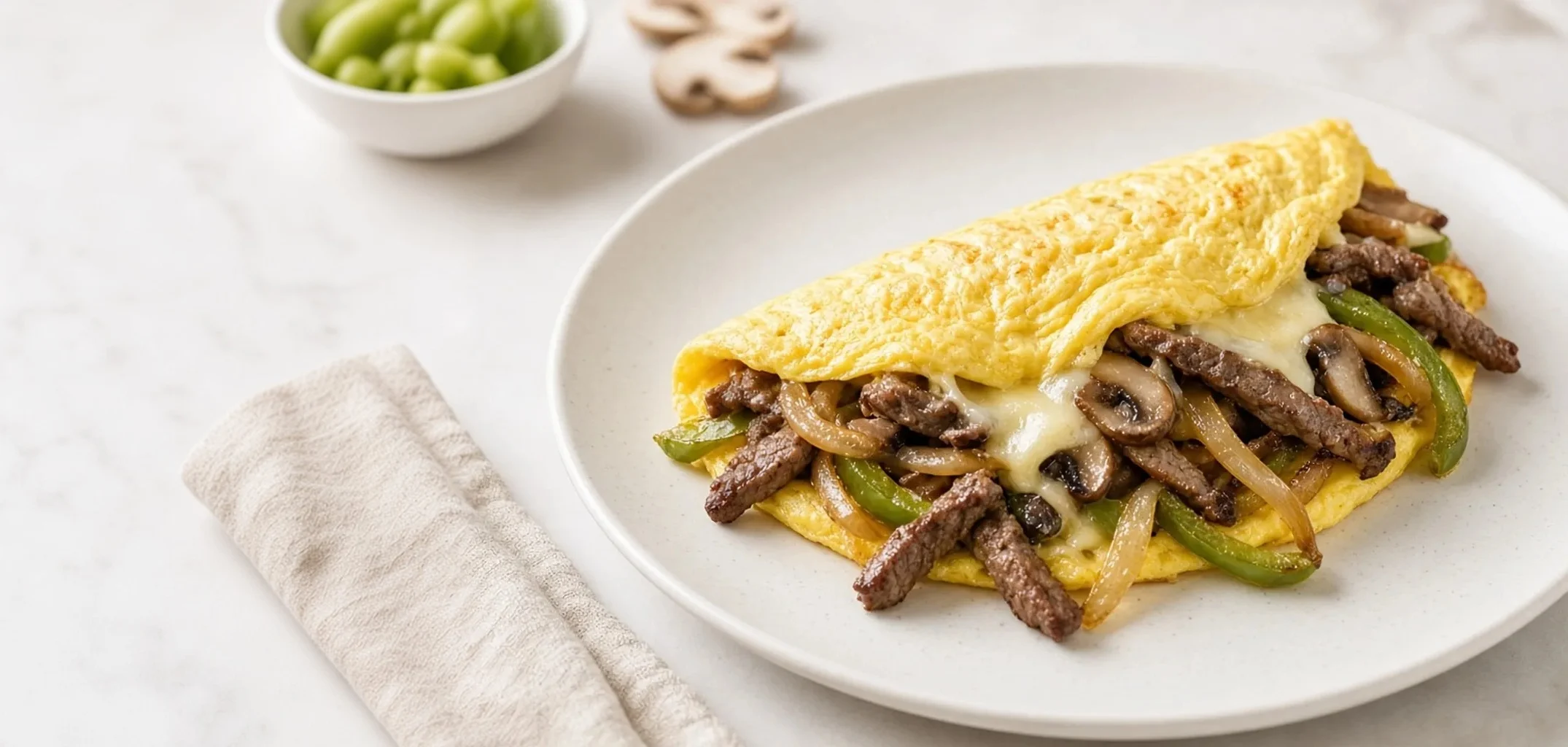
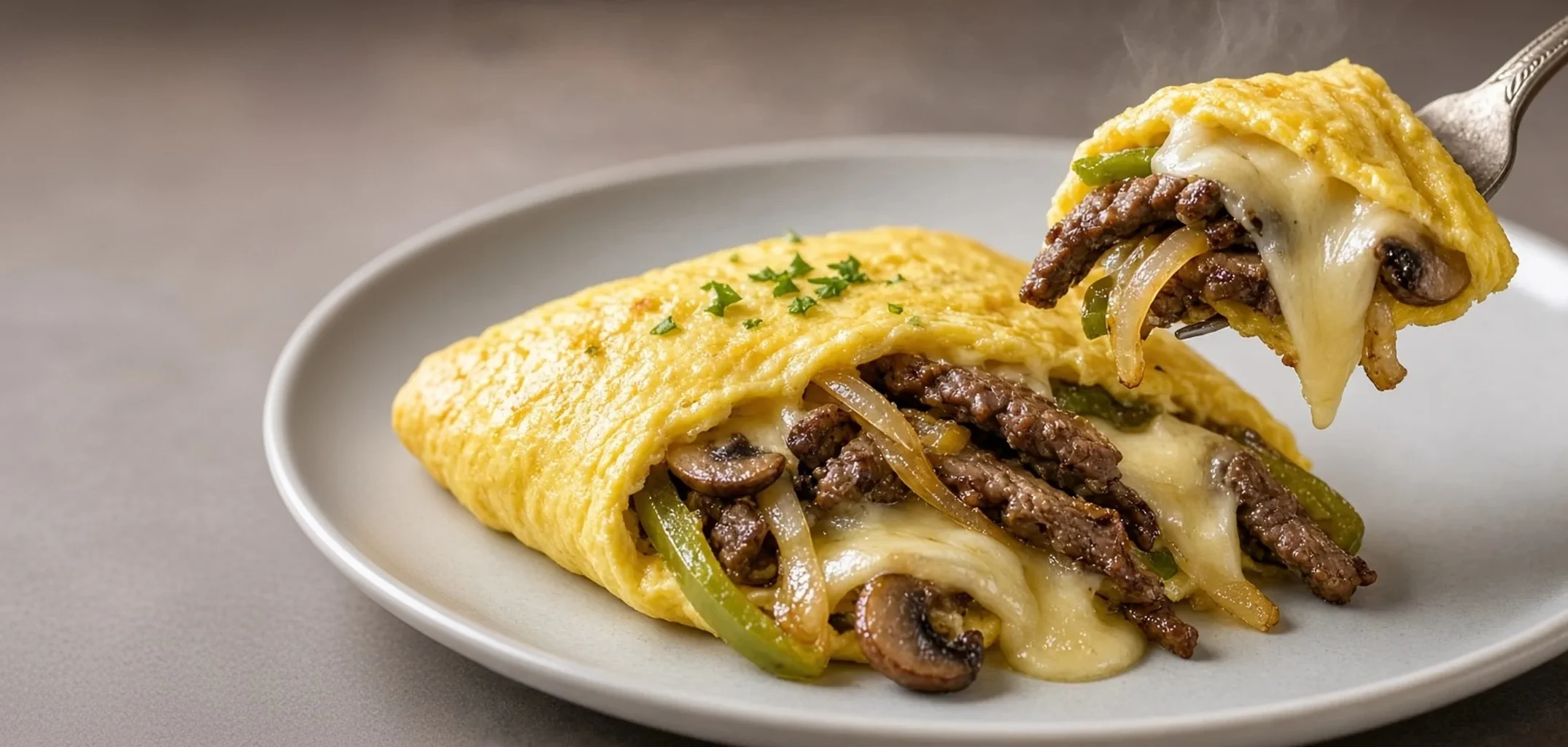
Philly cheesesteak omelette
25 min · 48 g protein · 472 cals / serving
Everything you love in a cheesesteak, folded into a fluffy omelette in place of the roll: thin strips of seared steak with soft onions, green pepper and mushrooms, a splash of Worcestershire, and provolone melting into every fold.
Ingredients
- 7 oz beef sirloin steak, raw, sliced paper-thin (freeze 20 minutes first to make this easy)
- 1 tsp olive oil
- 1/4 tsp salt
- 1/2 tsp black pepper
- 1/2 small onion, thinly sliced
- 1/2 medium green bell pepper, thinly sliced
- 4 crimini mushrooms, sliced
- 1 tsp Worcestershire sauce
- 4 large eggs
- 1/2 cup liquid egg white
- 2 tsp butter
- 2 slices provolone


Steps
- Heat the oil in a large nonstick frying pan over high heat. Add the steak in one layer, season with salt and pepper and sear 1–2 minutes, turning once, until browned. Tip it onto a plate.
- Lower the heat to medium, add the onion, pepper and mushrooms and cook 5 minutes, until soft and lightly browned. Return the steak with the Worcestershire, toss 30 seconds and spoon it all back onto the plate. Wipe the pan.
- Whisk the eggs and egg whites with a pinch of salt. Melt half the butter in the pan over medium-low heat, pour in half the eggs and cook, pulling the set edges towards the middle, until almost set on top, about 2 minutes.
- Spoon half the steak filling over one side, lay a slice of provolone on it and fold the omelette over. Cover for 1 minute so the cheese melts and the eggs are set through. Slide onto a plate and repeat for the second omelette.
Good to know
Can I use ribeye like the sandwich shops?
Yes, it is the classic cut and richer, at 48 instead of 59.
Want it like the original with American cheese?
Use 2 slices of American cheese in place of the provolone. It melts creamier, for about the same score.
Per
- Calories
- 152
- Protein
- (42%)
- 16 g
- Fat
- (52%)
- 9 g
- Carbohydrates
- (6%)
- 3 g
- of which sugar
- 1 g
- Fiber
- <1 g
- Sodium
- 279 mg
More breakfast


Computed from the ingredients with our published formula, not yet kitchen-tested. How
As written, 944 kcal goes into the pot and 761 g of ingredients comes out as about 620 g of food: 152 kcal per 100 g. Cooking moves water and energy density is the score's biggest lever, so the dish is scored as cooked, not as an average of its parts. Every ingredient links to its food page, with the same data and score. The label's percentages are each macronutrient's share of the calories. The full formula.