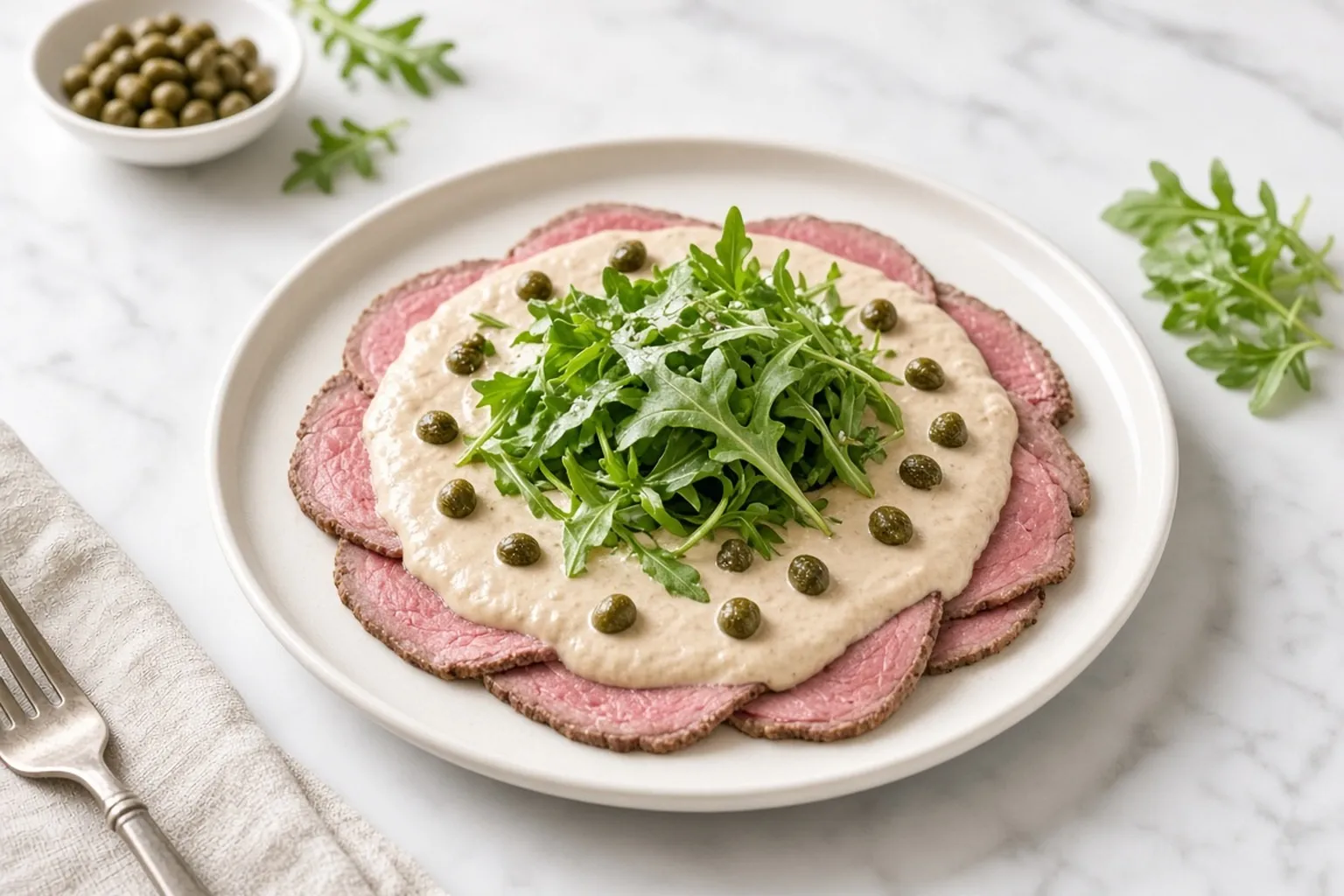
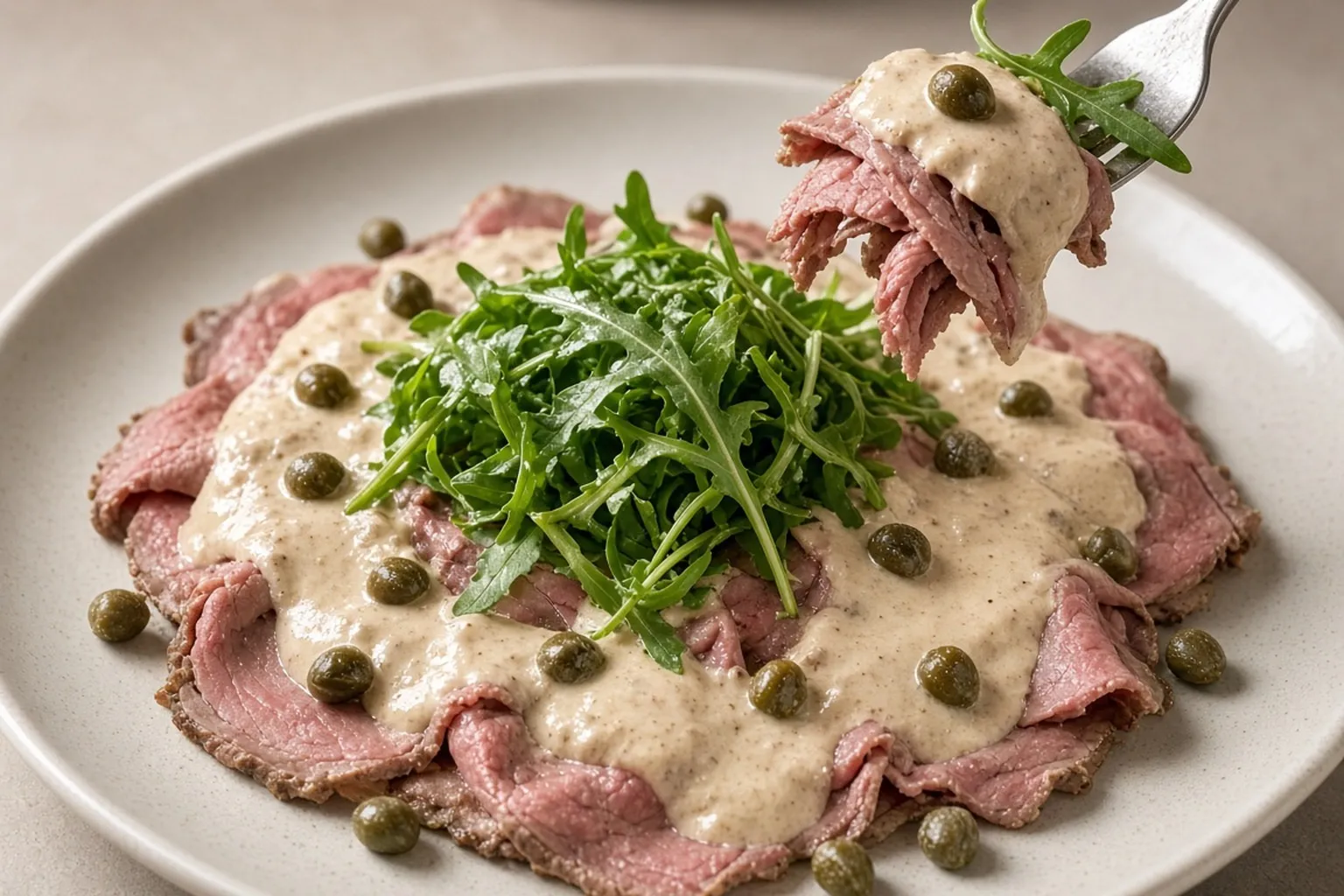
Roast beef tonnato with capers and rocket
Thin rosy slices of roast beef laid over the plate and covered in a silky, savoury tuna sauce sharpened with lemon, anchovy and capers, with a heap of lemony rocket on top. Italy's vitello tonnato made from the deli counter and a can of tuna, in ten minutes and no cooking.
- Time
- 10 min (10 prep + 0 cook)
- Servings
- 2
- Per serving
- 306 kcal
- Protein
- 40 g
Ingredients
Tuna sauce
- 1 can (5 oz), drained canned tuna
- 2 1/2 tbsp light mayonnaise
- 2 fillets anchovy fillets in oil, patted dry
- 1 tbsp capers, drained
- 4 tsp lemon juice, from 1/2 lemon
- 1/2 tsp lemon zest, finely grated
- 4 tsp water
- 1/4 tsp black pepper


- 10 oz thinly sliced deli roast beef, check the label: a few brands add milk powder or lactose
- 3 cups loosely packed arugula, rocket
- 1 tsp olive oil, extra-virgin
- 1 tsp lemon juice
- 2 tsp capers, drained, to scatter over (optional)


Steps
- Put the tuna, mayonnaise, anchovies, capers, lemon juice, zest, water and pepper in a tall jug and blend with a stick blender (or a small food processor) until smooth and creamy, about 1 minute. It should pour slowly from a spoon; add a teaspoon more water if it is too thick.
- Lay the roast beef slices over two large plates, overlapping them slightly, and spoon the tuna sauce over the meat in a thick layer.
- Toss the rocket with the olive oil and the teaspoon of lemon juice, pile it in the middle of each plate and scatter the extra capers over the sauce.
Good to know
Can I make the sauce ahead?
Yes. It keeps 3 days in a jar in the fridge and gets a little stronger. It is also very good with cold leftover chicken or turkey, or as a dip for cucumber and celery.
Can I use cold leftover roast turkey instead?
Yes, sliced roast turkey breast is milder and leaner, at about 70 instead of 75.
Alternative

Per
- Calories
- 106
- Protein
- (53%)
- 14 g
- Fat
- (40%)
- 5 g
- Carbohydrates
- (7%)
- 2 g
- of which sugar
- 1 g
- Fiber
- <1 g
- Sodium
- 673 mg
More meals


Computed from the ingredients with our published formula, not yet kitchen-tested. General guidance, not medical advice. Talk to your prescriber. How
As written, 612 kcal goes into the pot and 578 g of ingredients comes out as about 578 g of food: 106 kcal per 100 g. Cooking moves water and energy density is the score's biggest lever, so the dish is scored as cooked, not as an average of its parts. Every ingredient links to its food page, with the same data and score. The label's percentages are each macronutrient's share of the calories. The full formula.