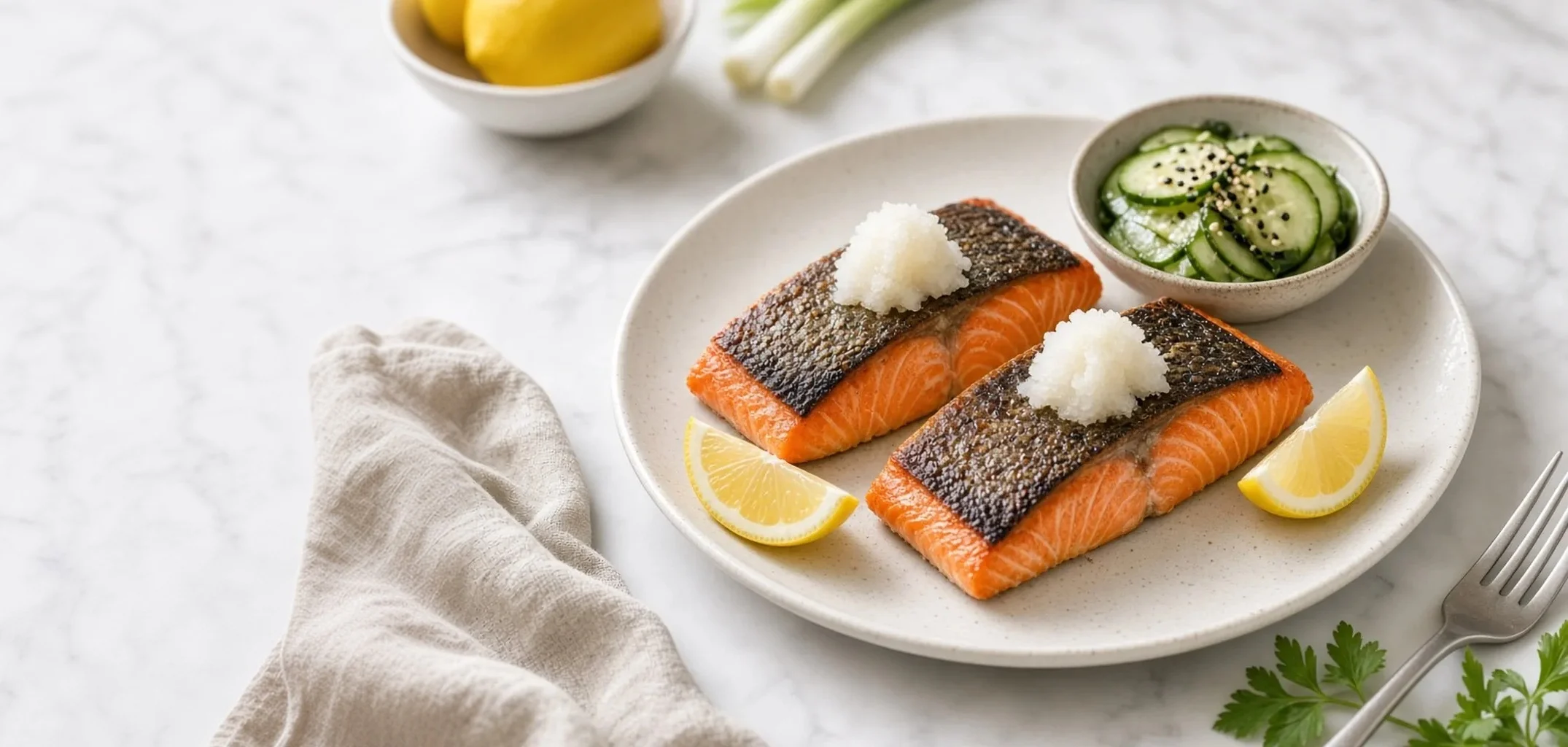
Japanese salt-grilled salmon with cucumber and wakame salad
20 min · 44 g protein · 292 cals / serving
The simplest Japanese way with salmon: fillets salted for ten minutes and grilled skin up until the skin blisters and the flesh flakes, served with a cold, sweet-sour cucumber and wakame salad, a mound of grated daikon and a wedge of lemon. Twenty minutes, and the grill does nearly all of it.
Ingredients
- 2 fillets (7 oz each) sockeye salmon, skin-on, pin bones removed
- 1/2 tsp salt


Cucumber and wakame salad
- 2/3 large (or 2 small) cucumbers, sliced paper-thin
- a pinch salt
- 2 tsp dried (20 g once soaked) wakame, dried wakame seaweed
- 3 tbsp rice vinegar, unseasoned
- 4 tsp erythritol, or 1 tbsp sugar
- 1 tsp tamari, or soy sauce
- 1 tsp toasted sesame seeds


To serve
- a 4 cm (1 1/2-inch) piece of daikon mooli (white radish), raw, peeled and finely grated
- 2 lemon wedges lemon juice


Steps
- Pat the salmon dry, sprinkle the salt evenly over both sides and leave it on a plate for 10 minutes. Meanwhile heat the grill (broiler) to high with a rack about 4 inch below it, and make the salad.
- Toss the cucumber slices with the pinch of salt and leave them 5 minutes. Cover the dried wakame with cold water and leave it 5 minutes, until soft and bright green.
- Stir the rice vinegar, erythritol and tamari until dissolved. Squeeze the cucumber hard by the handful to get rid of its water, drain and squeeze the wakame, and toss both in the dressing with the sesame seeds. Chill until you eat.
- Pat the salmon dry again and lay it skin side up on a foil-lined tray. Grill 7–9 minutes without turning, until the skin is blistered and browned and the flesh is opaque all the way through and flakes easily (145°F).
- Serve the salmon with a small mound of grated daikon (a few drops of tamari or soy on it is traditional), a lemon wedge and the cucumber salad on the side.
Good to know
Can I use farmed salmon?
Yes, it is softer and richer and forgives an extra minute under the grill, at about 59 instead of 77.
Can I salt it the night before?
Yes, that is how it is done in Japan. Salt it, wrap it and refrigerate it up to 2 days, then pat it dry and grill as above; the flesh turns firmer and more seasoned.
Per
- Calories
- 89
- Protein
- (55%)
- 13 g
- Fat
- (28%)
- 3 g
- Carbohydrates
- (17%)
- 4 g
- of which sugar
- 1 g
- Fiber
- <1 g
- Sodium
- 356 mg
More meals


Computed from the ingredients with our published formula, not yet kitchen-tested. General guidance, not medical advice. Talk to your prescriber. How
As written, 584 kcal goes into the pot and 763 g of ingredients comes out as about 653 g of food: 89 kcal per 100 g. Cooking moves water and energy density is the score's biggest lever, so the dish is scored as cooked, not as an average of its parts. Every ingredient links to its food page, with the same data and score. The label's percentages are each macronutrient's share of the calories. The full formula.