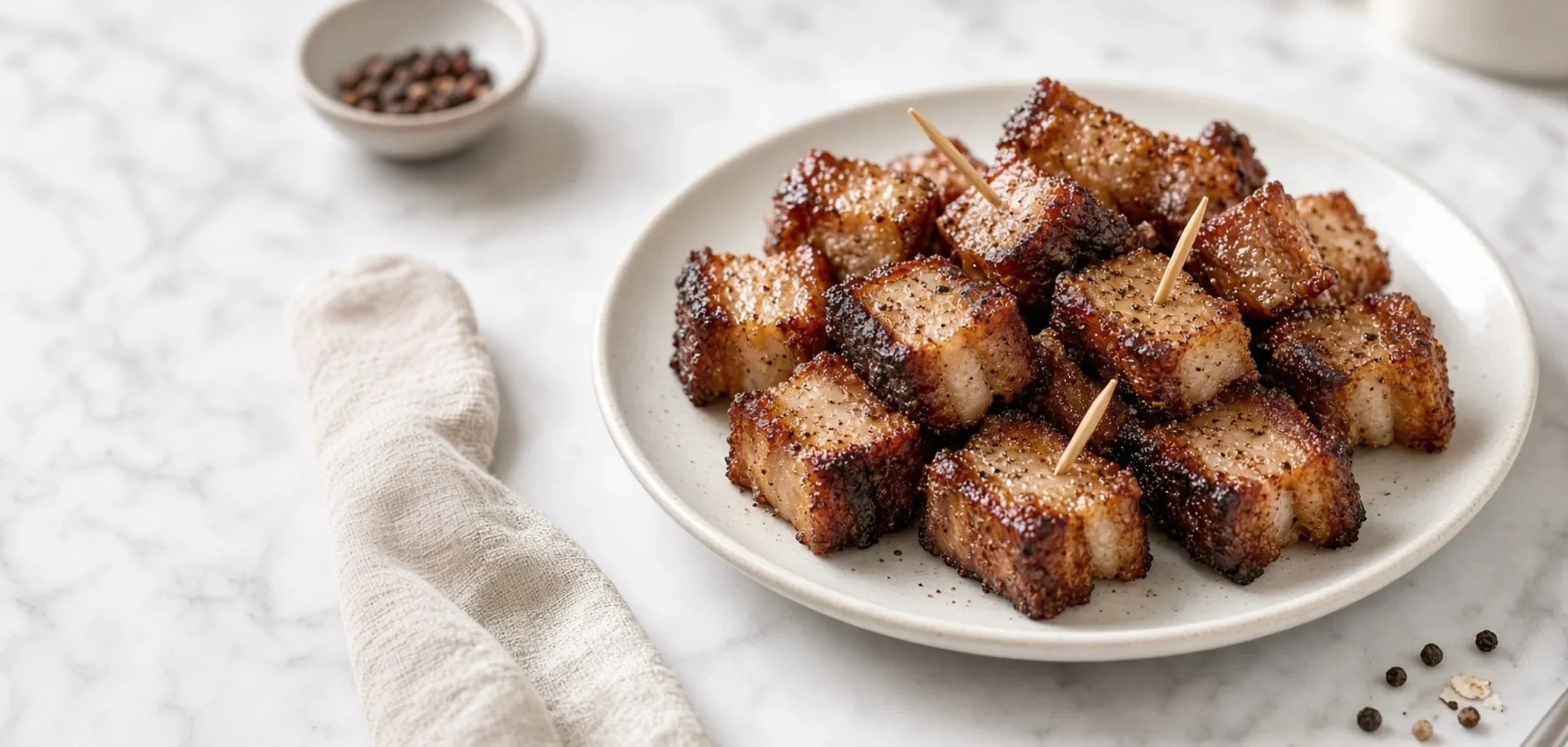
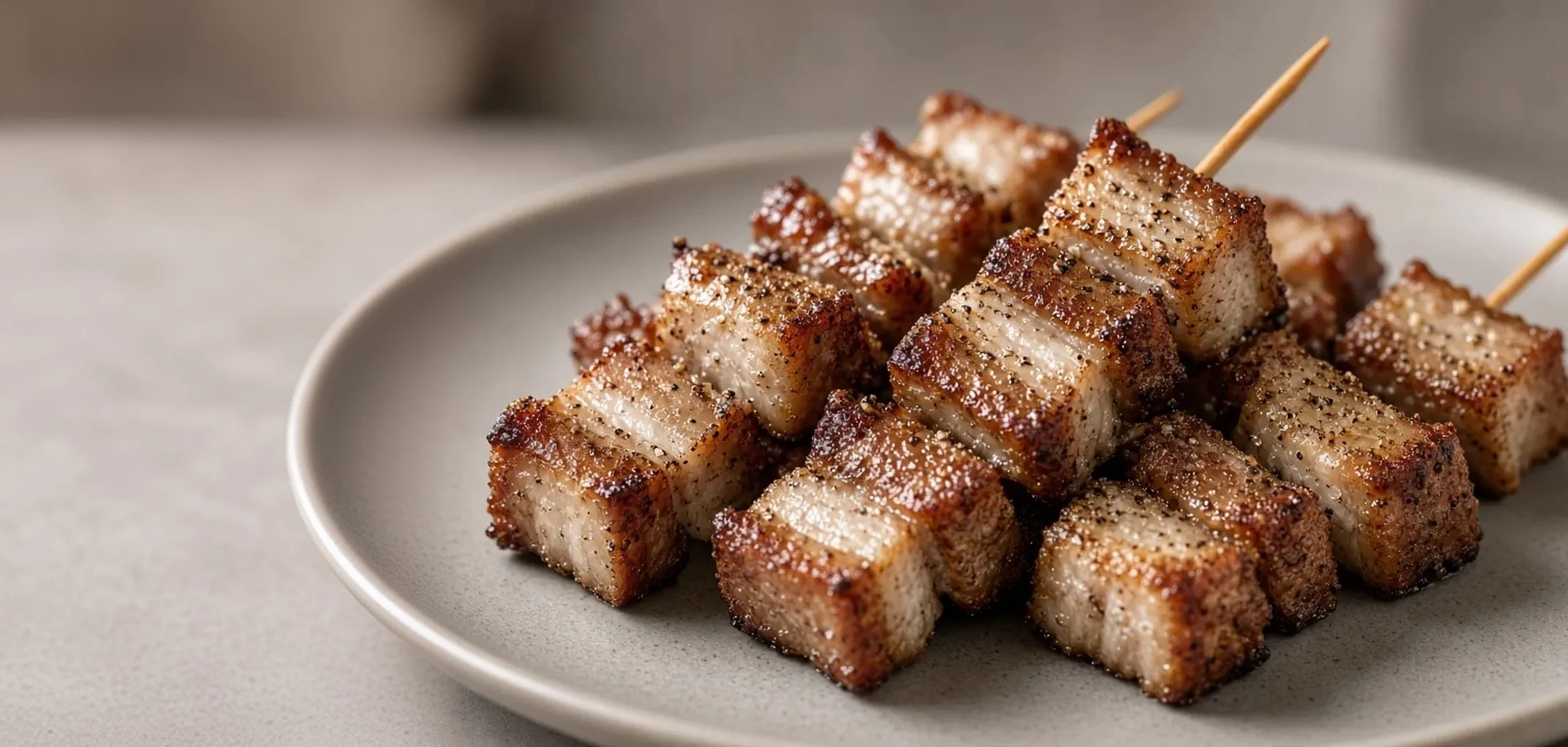
Salt-and-pepper pork belly burnt ends
180 min · 25 g protein · 412 cals / serving
Bite-sized cubes of pork belly roasted low until the fat melts and the meat turns tender, then tossed in a little butter and blasted in a hot oven until every edge is dark, crisp and crackling. The barbecue favourite without sugar or sauce, made in an ordinary oven.
Ingredients
- 2 1/4 lb skinless pork belly pork belly, cut into 4 cm (1 1/2-inch) cubes
- 1 1/2 tsp salt
- 2 tsp black pepper, coarsely ground
- 1 tsp paprika, smoked (optional)
- 1/2 tsp garlic powder (optional)
- 1 1/2 tbsp butter, melted


Steps
- Heat the oven to 275°F. Toss the pork belly cubes with the salt, pepper and, if using, the paprika and garlic powder, until every side is coated.
- Spread the cubes fat side up, with space between them, on a wire rack set over a foil-lined tray. Roast for 2 hours, until much of the fat has melted out and a skewer slides into the meat easily.
- Turn the oven up to 425°F. Pour the rendered fat out of the tray, tip the cubes into a bowl and toss them with the melted butter. Spread them back on the rack.
- Roast 15–20 minutes more, turning once, until the outsides are dark golden, crisp and crackling at the edges. Pork belly cooked this long is far past the safe 145°F.
- Rest 5 minutes and serve hot, with cocktail sticks.
Good to know
Can I smoke them?
Yes, it is the original: smoke at 250°F for about 3 hours, then toss in the butter and finish over a hotter fire or in the oven as in step 4.
What if I am not strict carnivore?
Toss them in a spoon of your favourite sugar-free barbecue sauce with the butter for the classic sticky finish.
Per 100 g
- Calories
- 411
- Protein
- (25%)
- 25 g
- Fat
- (74%)
- 33 g
- Carbohydrates
- (1%)
- 1 g
- of which sugar
- <1 g
- Fiber
- <1 g
- Sodium
- 962 mg
More snacks


Computed from the ingredients with our published formula, not yet kitchen-tested. How
As written, 2471 kcal goes into the pot and 1037 g of ingredients comes out as about 602 g of food: 411 kcal per 100 g. Cooking moves water and energy density is the score's biggest lever, so the dish is scored as cooked, not as an average of its parts. Every ingredient links to its food page, with the same data and score. The label's percentages are each macronutrient's share of the calories. The full formula.