Meals · Sandwiches, burgers & wraps
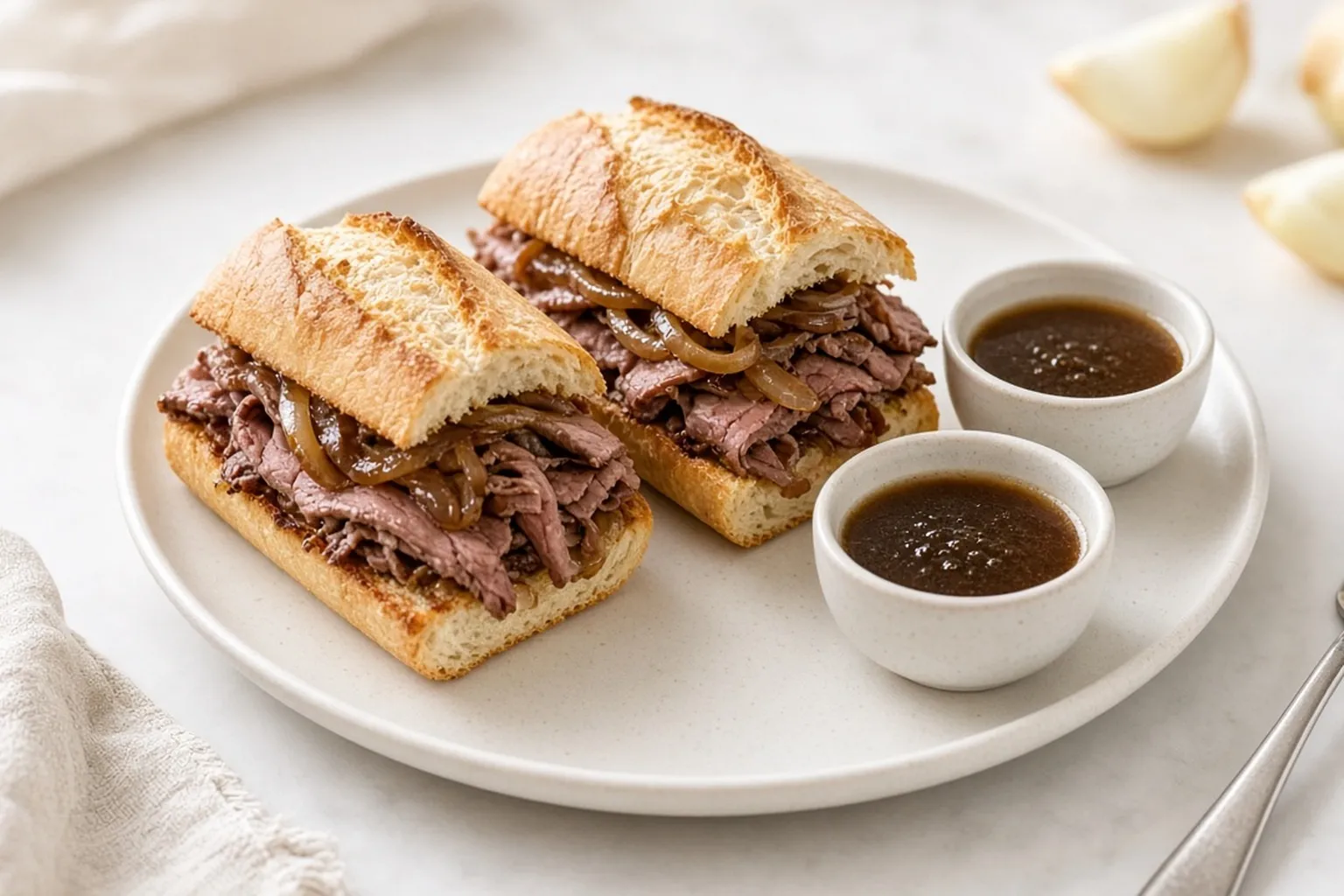
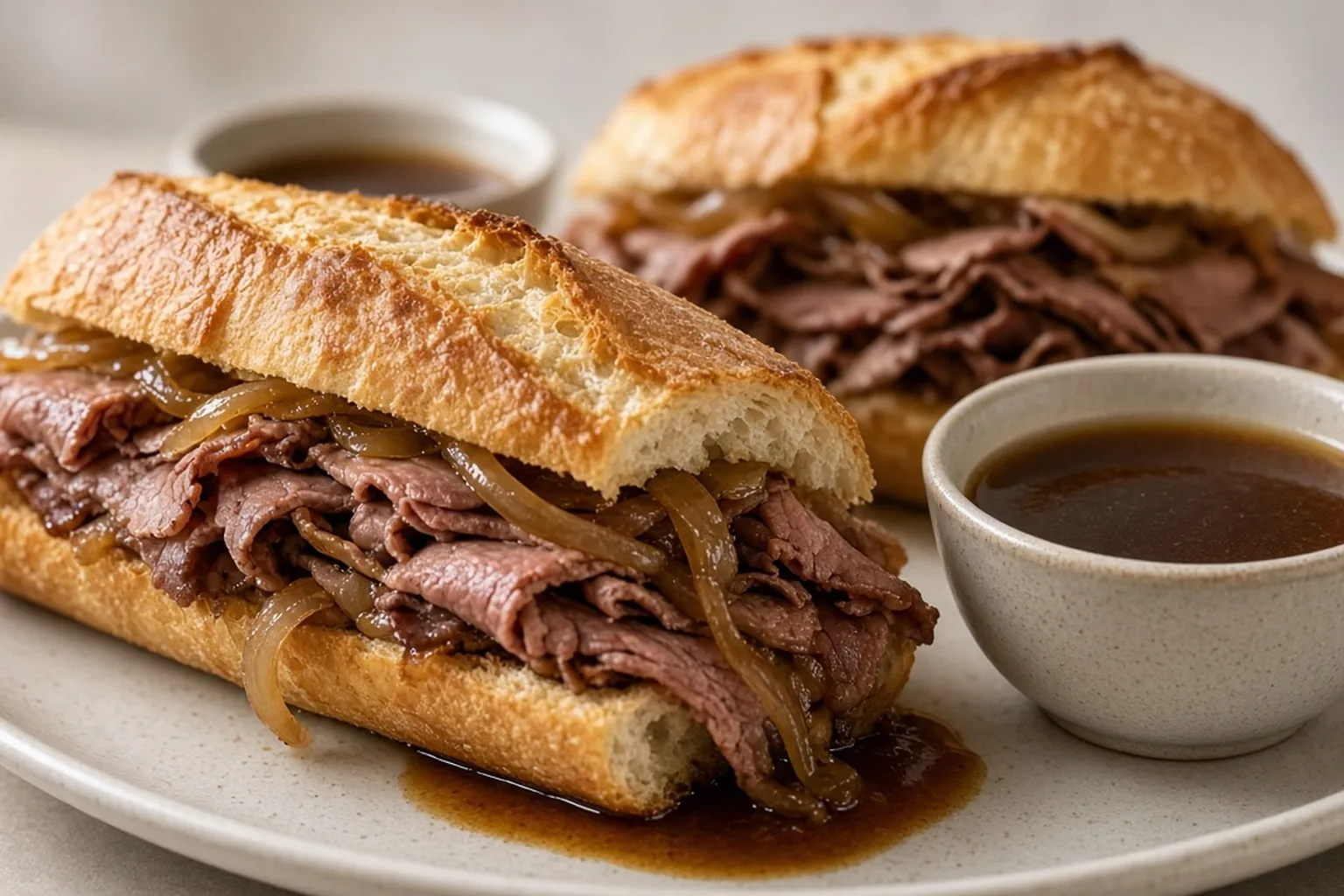
Ten-minute French dip sandwiches
Thin, tender roast beef warmed in a savoury, peppery jus with soft onions, piled into toasted rolls with a smear of Dijon and served with a cup of the hot jus for dunking every bite. The American diner classic made from deli beef in ten minutes.
- Time
- 10 min (3 prep + 7 cook)
- Servings
- 2
- Per serving
- 394 kcal
- Protein
- 33 g
Ingredients
Jus
- 1 1/2 cups low-sodium beef broth
- 1/2 small white onion, thinly sliced
- 1 tsp Worcestershire sauce
- 1/4 tsp garlic powder
- 1/4 tsp onion powder
- 1/4 tsp black pepper


- 9 oz thinly sliced deli roast beef
- 2 hoagie roll, about 6 in (15 cm) each; check the label for milk
- 2 tsp Dijon mustard


Steps
- Bring the broth, onion, Worcestershire, garlic powder, onion powder and pepper to a boil in a wide pan over high heat, then simmer 4 minutes, until the onion is soft.
- Turn the heat to low and lay the roast beef in the jus for about a minute, just until warmed through; any longer and it toughens.
- Meanwhile split the rolls and toast them cut side down in a dry pan or under the grill. Spread the insides with mustard, lift the beef and onions out of the jus with tongs and pile them in. Pour the jus into two small cups and dip each bite as you eat.
Good to know
Can I use a regular beef broth?
Yes, but it is saltier; the deli beef is already salted, so low-sodium broth keeps the jus balanced.
Can I make it on a smaller roll?
Yes, two small dinner rolls each instead of one long roll, at about 67 instead of 60.
Per
- Calories
- 100
- Protein
- (35%)
- 8 g
- Fat
- (19%)
- 2 g
- Carbohydrates
- (47%)
- 12 g
- of which sugar
- 2 g
- Fiber
- 1 g
- Sodium
- 487 mg
More meals


Computed from the ingredients with our published formula, not yet kitchen-tested. General guidance, not medical advice. Talk to your prescriber. How
As written, 788 kcal goes into the pot and 848 g of ingredients comes out as about 787 g of food: 100 kcal per 100 g. Cooking moves water and energy density is the score's biggest lever, so the dish is scored as cooked, not as an average of its parts. Every ingredient links to its food page, with the same data and score. The label's percentages are each macronutrient's share of the calories. The full formula.