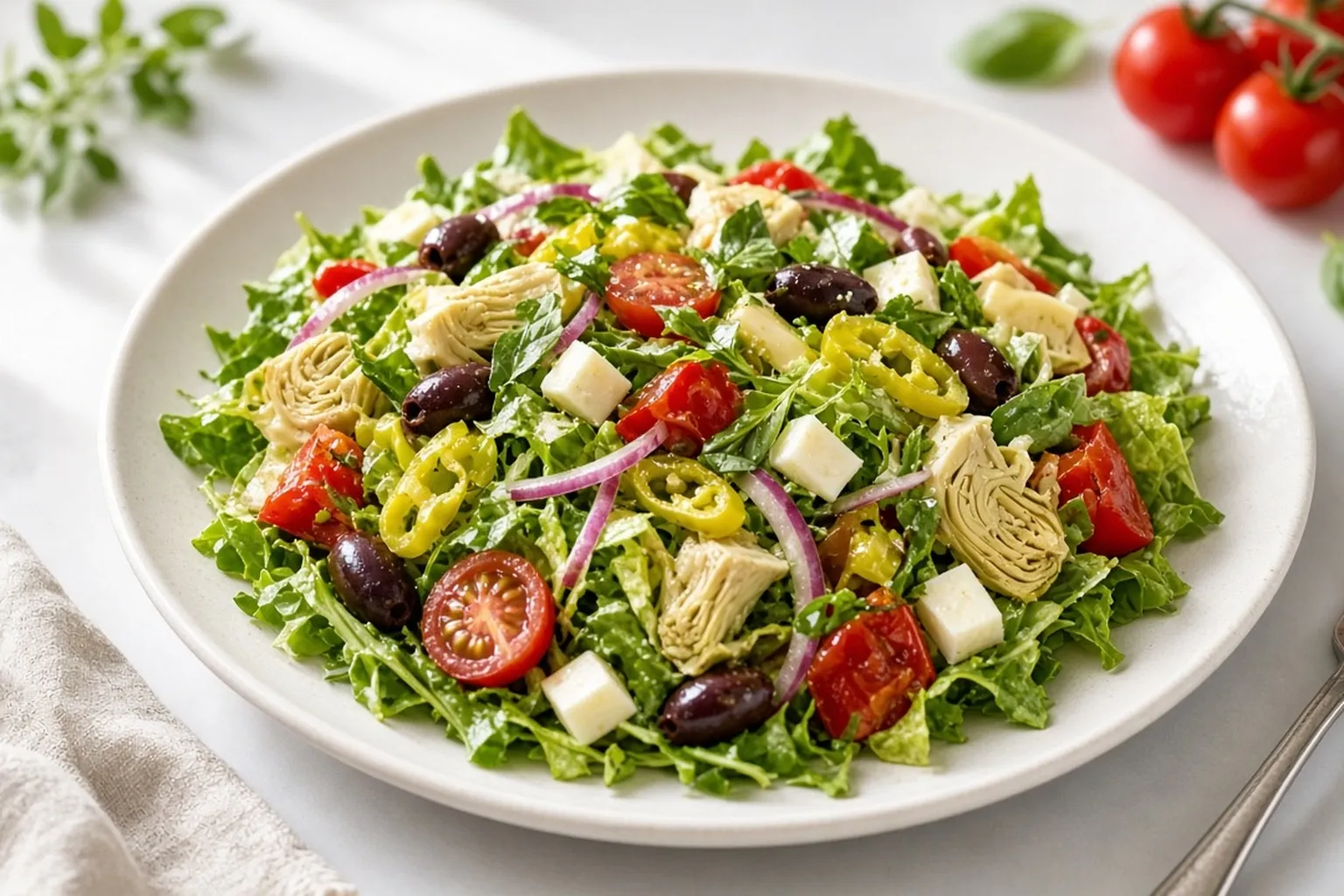
Antipasto salad with mozzarella and provolone
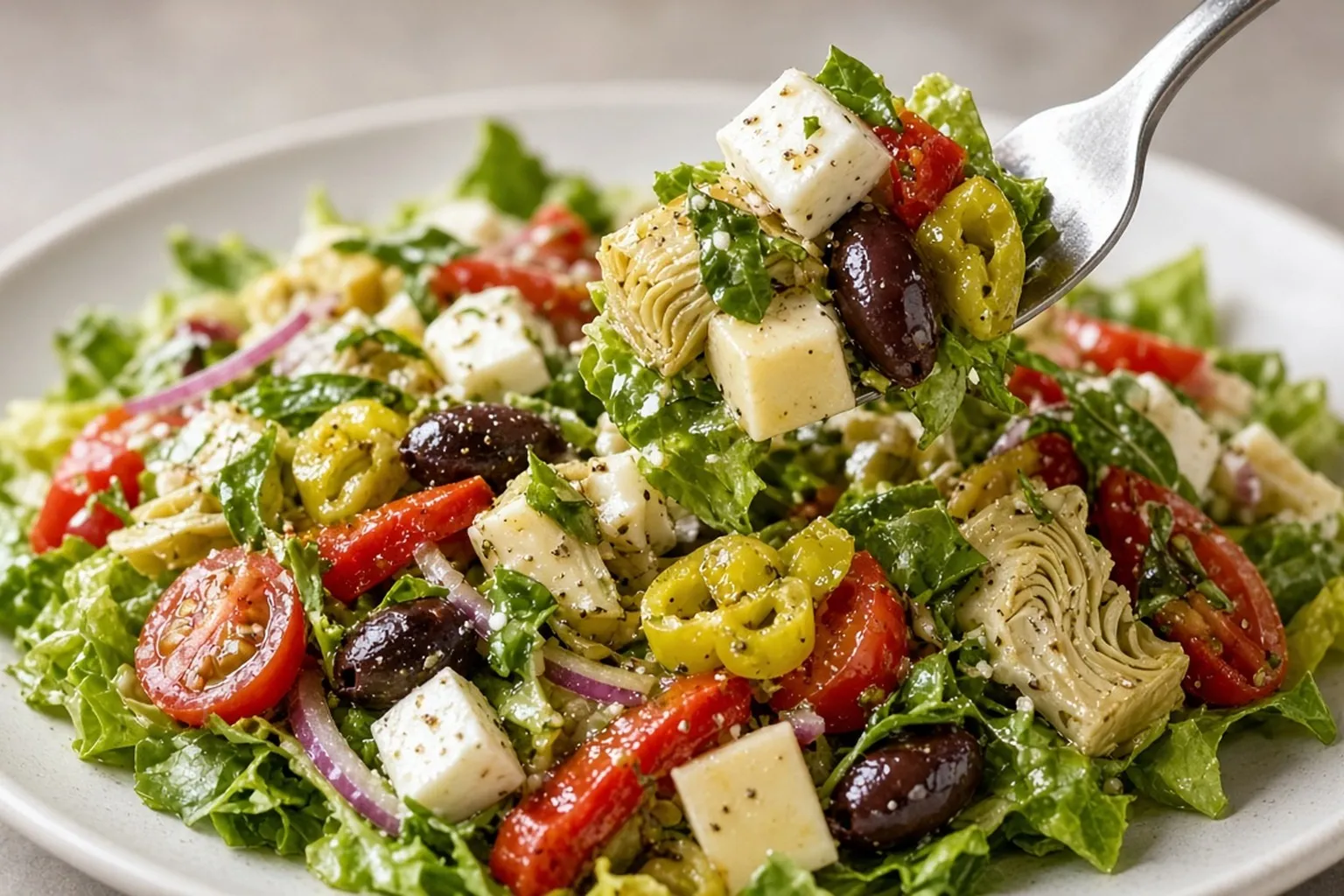
An Italian deli counter in a bowl, without the cured meat: crisp romaine and peppery arugula with little cubes of mozzarella and sharp provolone, artichoke hearts, roasted red peppers, kalamata olives, pepperoncini and cherry tomatoes, tossed in a garlicky oregano and red wine vinaigrette. No cooking, eight minutes.
- Time
- 8 min (8 prep + 0 cook)
- Servings
- 2
- Per serving
- 390 kcal
- Protein
- 30 g
Ingredients
Vinaigrette
- 1 tbsp red wine vinegar
- 1 tbsp olive oil
- 1/2 tsp dried oregano
- 1/2 clove garlic, grated
- a few grinds black pepper


- 1 small heart romaine lettuce, chopped
- 2 handfuls arugula
- 3 1/2 oz mozzarella, partly skimmed (16.5% fat), part-skim mozzarella, cut in small cubes
- 2 oz fat-free mozzarella, cut in small cubes
- 1 1/2 oz provolone, cut in small cubes; choose one labelled vegetarian if that matters to you
- 3–4 hearts from a can, drained artichoke hearts, canned, quartered
- 1 1/2 pieces from a jar roasted red peppers, drained, sliced
- 4 pepperoncini, sliced
- 3 cherry tomatoes, halved
- a few thin slices red onions
- a few leaves fresh basil


Steps
- Whisk the vinegar, oil, oregano, garlic and pepper together in the bottom of a large bowl.
- Add the lettuce, arugula, all the cheese, artichokes, peppers, olives, pepperoncini, tomatoes and onion and toss until everything glistens.
- Divide between two plates and tear the basil over the top.
Good to know
Can I pack it for lunch?
Yes: put the vinaigrette in the bottom of a jar, then the artichokes, peppers, olives, cheese and tomatoes, and the leaves on top. Shake it into a bowl when you eat; it stays crisp until lunch.
Is provolone vegetarian?
Most traditional provolone is made with animal rennet. If that matters to you, choose one labelled vegetarian or use an aged cheddar.
Per
- Calories
- 123
- Protein
- (31%)
- 9 g
- Fat
- (58%)
- 8 g
- Carbohydrates
- (11%)
- 4 g
- of which sugar
- 1 g
- Fiber
- 2 g
- Sodium
- 512 mg
More meals


Computed from the ingredients with our published formula, not yet kitchen-tested. How
As written, 779 kcal goes into the pot and 632 g of ingredients comes out as about 632 g of food: 123 kcal per 100 g. Cooking moves water and energy density is the score's biggest lever, so the dish is scored as cooked, not as an average of its parts. Every ingredient links to its food page, with the same data and score. The label's percentages are each macronutrient's share of the calories. The full formula.