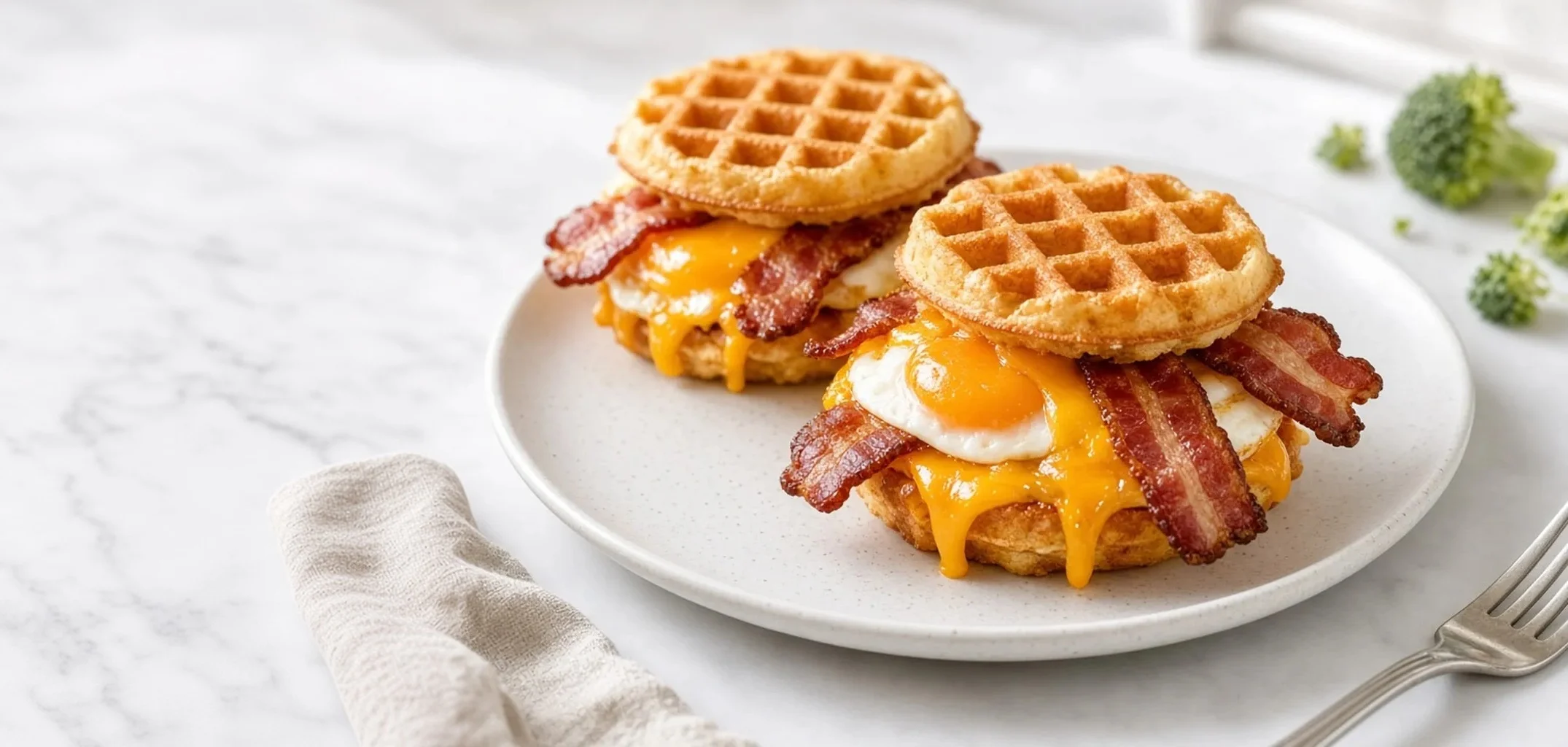
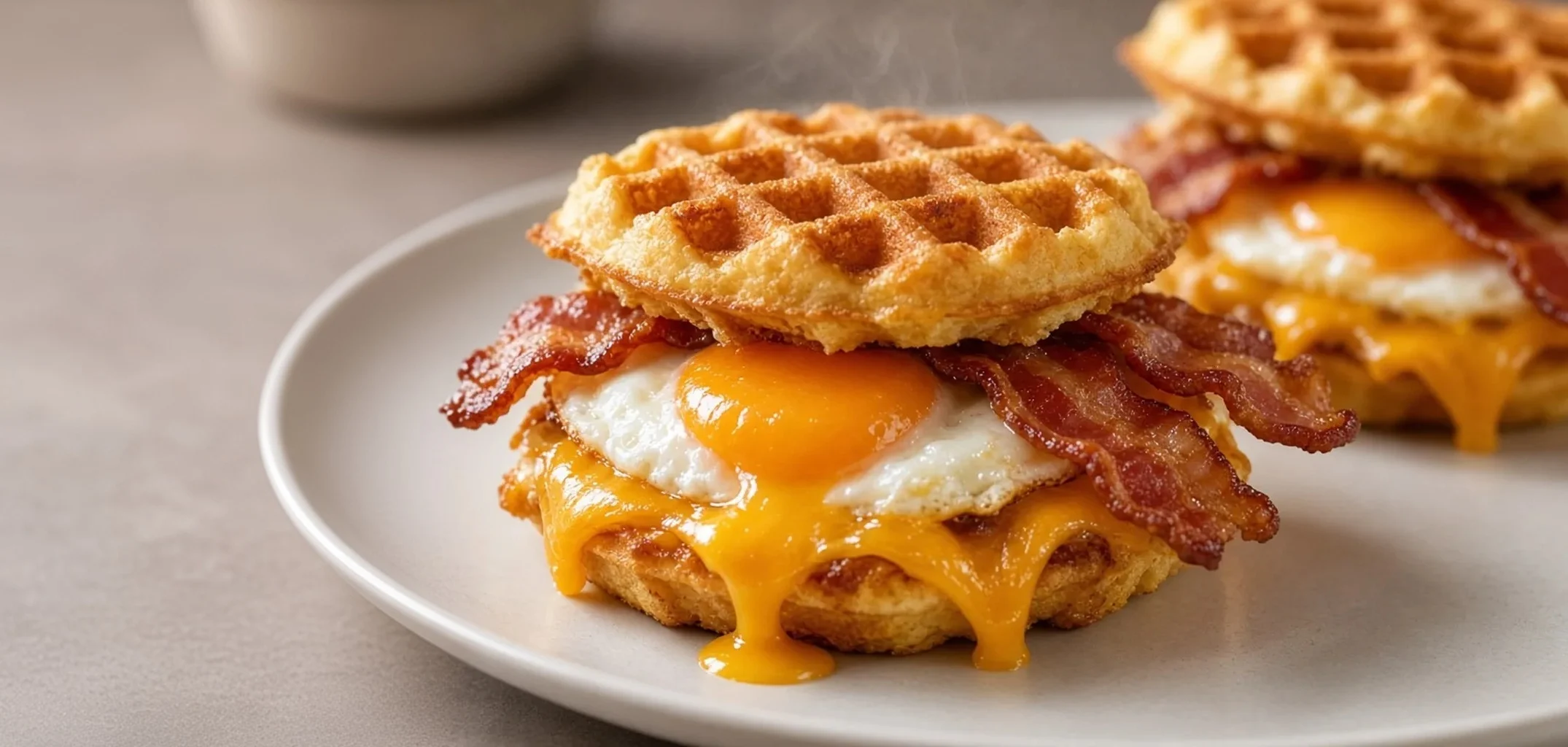
Bacon, egg and cheese chaffle sandwich
30 min · 36 g protein · 457 cals / serving
The diner breakfast sandwich with crisp cheese waffles where the bun would be: a fried egg with a jammy yolk, crisp bacon and a slice of sharp cheddar melting down the sides. Made in one waffle iron and one pan in about half an hour.
Ingredients
Chaffles
- 2 large eggs
- 1/4 cup liquid egg whites liquid egg white, or the whites of 2 eggs
- 3/4 cup shredded mozzarella cheese, part-skim, low-moisture
- a pinch salt


Filling
- 4 slices, cooked crisp bacon, about 120 g raw
- 1 tsp butter
- 2 large eggs
- 2 slices sharp cheddar cheese
- a grind black pepper


Steps
- Cook the bacon in a frying pan over medium heat, turning, until crisp, 6–8 minutes. Drain on paper towel and pour the fat out of the pan, leaving a thin film. Heat a mini waffle iron.
- Whisk 2 eggs, the egg whites and salt in a jug, then stir in the mozzarella.
- Pour a quarter of the batter into the hot iron, close and cook 3–4 minutes, until the steam has nearly stopped and the chaffle is deep golden. Lift onto a rack so it stays crisp and repeat to make 4.
- Melt the butter in the bacon pan over medium heat and crack in the other 2 eggs. Fry until the whites are set and the yolks are as you like them, 2–3 minutes; for a fully set yolk, flip and cook 1 minute more. Lay a slice of cheddar on each egg, cover the pan for 30 seconds to melt it, and grind over pepper.
- Set an egg on each of 2 chaffles, top with the bacon and close with the other chaffles. Eat warm.
Good to know
Can I make the chaffles ahead?
Yes. They keep 3 days in the fridge or 3 months frozen; crisp them in a toaster or a dry pan while the eggs fry.
Can I use a sausage patty instead of bacon?
Yes, a 2 oz pork breakfast sausage patty per sandwich, cooked to 160°F, is the other classic.
Per
- Calories
- 254
- Protein
- (32%)
- 20 g
- Fat
- (65%)
- 18 g
- Carbohydrates
- (3%)
- 2 g
- of which sugar
- 1 g
- Fiber
- <1 g
- Sodium
- 592 mg
More breakfast


Computed from the ingredients with our published formula, not yet kitchen-tested. How
As written, 914 kcal goes into the pot and 417 g of ingredients comes out as about 360 g of food: 254 kcal per 100 g. Cooking moves water and energy density is the score's biggest lever, so the dish is scored as cooked, not as an average of its parts. Every ingredient links to its food page, with the same data and score. The label's percentages are each macronutrient's share of the calories. The full formula.