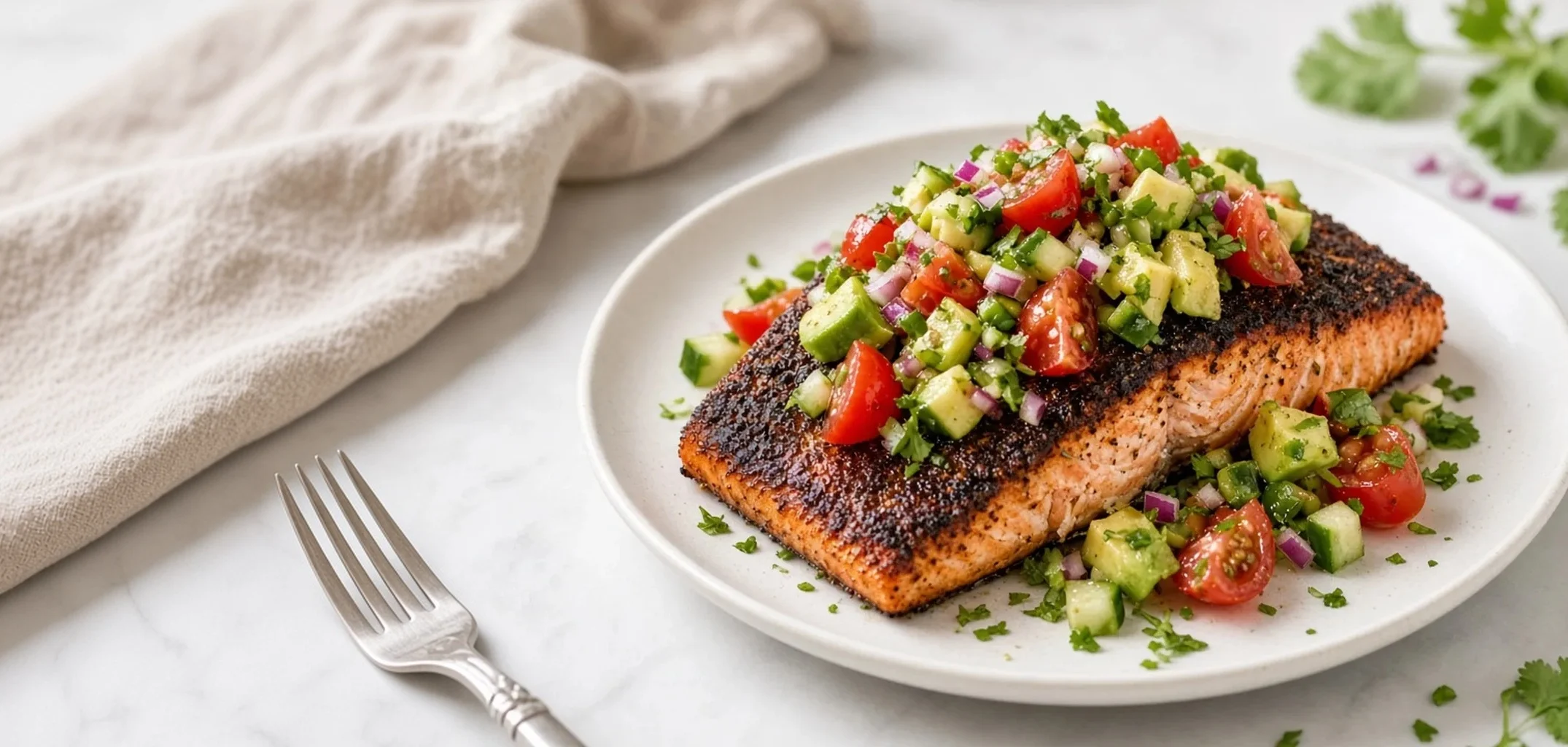
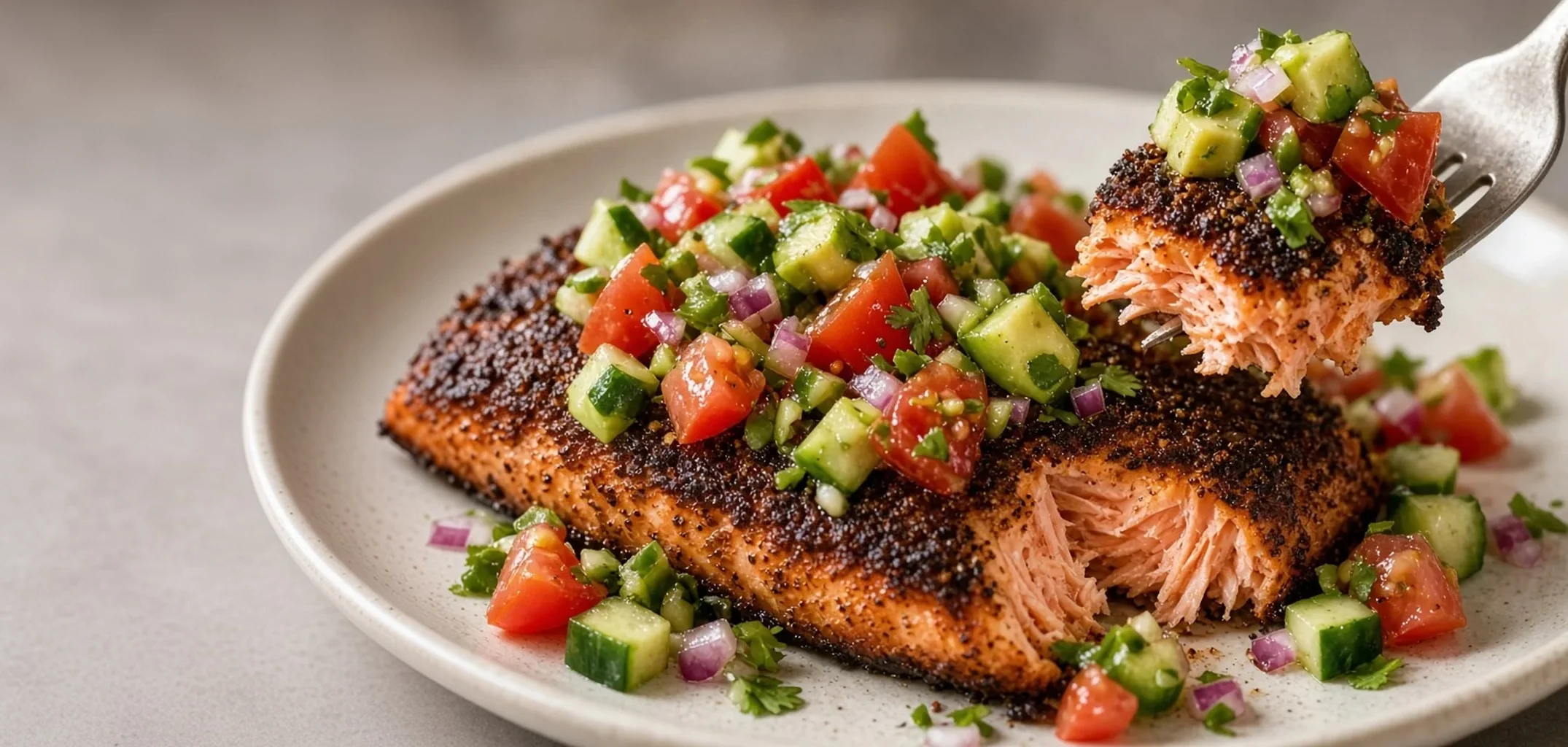
Blackened salmon with avocado salsa
20 min · 37 g protein · 433 cals / serving
Salmon fillets rubbed with a smoky Cajun spice mix and seared in a screaming-hot pan until the crust turns nearly black and the inside stays juicy, then piled with a cool salsa of avocado, tomato, cucumber, red onion, jalapeño and lime. Twenty minutes, one pan.
Ingredients
- 1 1/2 lb (4 skinless fillets) salmon, patted dry

Blackening rub
- 2 tsp paprika
- 1/2 tsp dried thyme


- 2 tsp avocado oil

Avocado salsa
- 1 large avocado, diced
- 1 1/2 cups cherry tomatoes, quartered
- 2/3 large cucumbers, diced small
- 1/4 small red onion, finely diced
- 1 small jalapeño, seeded and minced
- a small handful fresh cilantro, chopped
- 4 tsp (1 lime) lime juice
- a pinch salt


Steps
- Mix the Cajun seasoning, paprika and thyme in a small bowl. Pat the salmon dry and press the rub all over the top and sides of each fillet.
- Heat a large cast-iron or heavy frying pan over medium-high heat with the oil until it just smokes. Lay in the fillets rub side down and leave them for 3–4 minutes, until a dark, crisp crust has formed. Turn and cook 2–3 minutes more, until the salmon flakes easily and is opaque in the centre (145°F). Open a window: blackening smokes.
- While the salmon cooks, fold the avocado, tomatoes, cucumber, onion, jalapeño, cilantro, lime juice and salt together gently in a bowl. Spoon the salsa over the hot fillets and serve.
Good to know
Is blackened the same as burnt?
No. The spices toast to a very dark brown crust while the fish inside stays moist. If the rub smells acrid rather than smoky, the pan was too hot: drop it a notch for the next batch.
Can I use cod or another white fish?
Yes. Thick cod loins blacken beautifully in the same time; the dish gets leaner and scores higher (53 → 76).
Per
- Calories
- 147
- Protein
- (35%)
- 12 g
- Fat
- (58%)
- 9 g
- Carbohydrates
- (8%)
- 4 g
- of which sugar
- 1 g
- Fiber
- 1 g
- Sodium
- 174 mg
More meals


Computed from the ingredients with our published formula, not yet kitchen-tested. How
As written, 1732 kcal goes into the pot and 1334 g of ingredients comes out as about 1180 g of food: 147 kcal per 100 g. Cooking moves water and energy density is the score's biggest lever, so the dish is scored as cooked, not as an average of its parts. Every ingredient links to its food page, with the same data and score. The label's percentages are each macronutrient's share of the calories. The full formula.