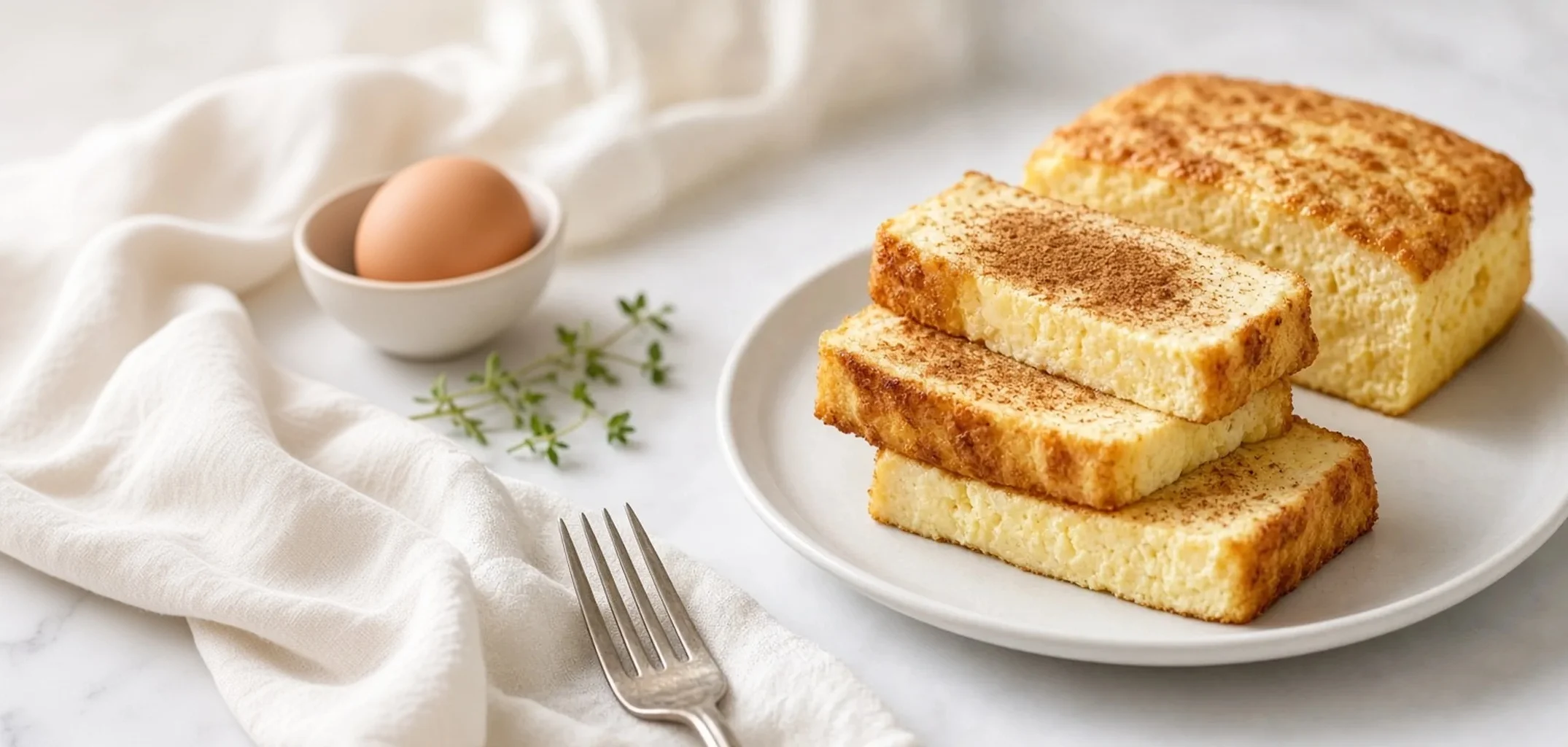
Carnivore egg loaf, fried in butter
75 min · 26 g protein · 340 cals / serving
The custardy egg loaf that every carnivore and keto feed has tried: eggs, cream cheese and blended cottage cheese baked into a soft, sliceable loaf, then fried in butter until golden at the edges, like French toast with no bread. Make it once and breakfast is ready for four mornings.
Ingredients
- 8 large eggs, at room temperature
- 1 cup liquid egg white, or the whites of 7 eggs
- 4 oz cream cheese, softened
- 3/4 cup + 2 tbsp cottage cheese (2%)
- 1/4 tsp salt
- 1 tbsp butter, for the pan
- 1/2 tsp ground cinnamon, to dust, for a sweet-style slice (optional)


Steps
- Heat the oven to 350°F and line a 23 × 13 cm (9 × 5 in) loaf pan with baking paper, leaving some overhang to lift it out.
- Blend the eggs, egg whites, cream cheese, cottage cheese and salt in a blender for 30 to 45 seconds, until completely smooth with no flecks of cheese. Let it stand 2 minutes so the foam settles, then pour it into the pan.
- Bake for 40 to 45 minutes, until puffed, golden on top and set in the middle (a knife comes out clean). It sinks as it cools; that is normal. Cool 15 minutes in the pan, then lift it out and cut into 8 thick slices.
- To serve, melt the butter in a non-stick frying pan over medium heat and fry the slices 1 to 2 minutes a side, until golden brown. Dust with cinnamon if you like it French-toast style.
Good to know
How do I keep it for the week?
Wrap the cooled loaf and keep it in the fridge for up to 4 days. Slices fry straight from the fridge in 2 minutes a side, and are firmer and easier to turn when cold.
Can I make the original all-cream-cheese loaf?
Yes: 8 oz cream cheese and no cottage cheese gives the richer, denser classic, at about 36 instead of 48.
Per
- Calories
- 156
- Protein
- (31%)
- 12 g
- Fat
- (63%)
- 11 g
- Carbohydrates
- (6%)
- 2 g
- of which sugar
- 2 g
- Fiber
- <1 g
- Sodium
- 297 mg
More breakfast


Computed from the ingredients with our published formula, not yet kitchen-tested. How
As written, 1358 kcal goes into the pot and 970 g of ingredients comes out as about 872 g of food: 156 kcal per 100 g. Cooking moves water and energy density is the score's biggest lever, so the dish is scored as cooked, not as an average of its parts. Every ingredient links to its food page, with the same data and score. The label's percentages are each macronutrient's share of the calories. The full formula.