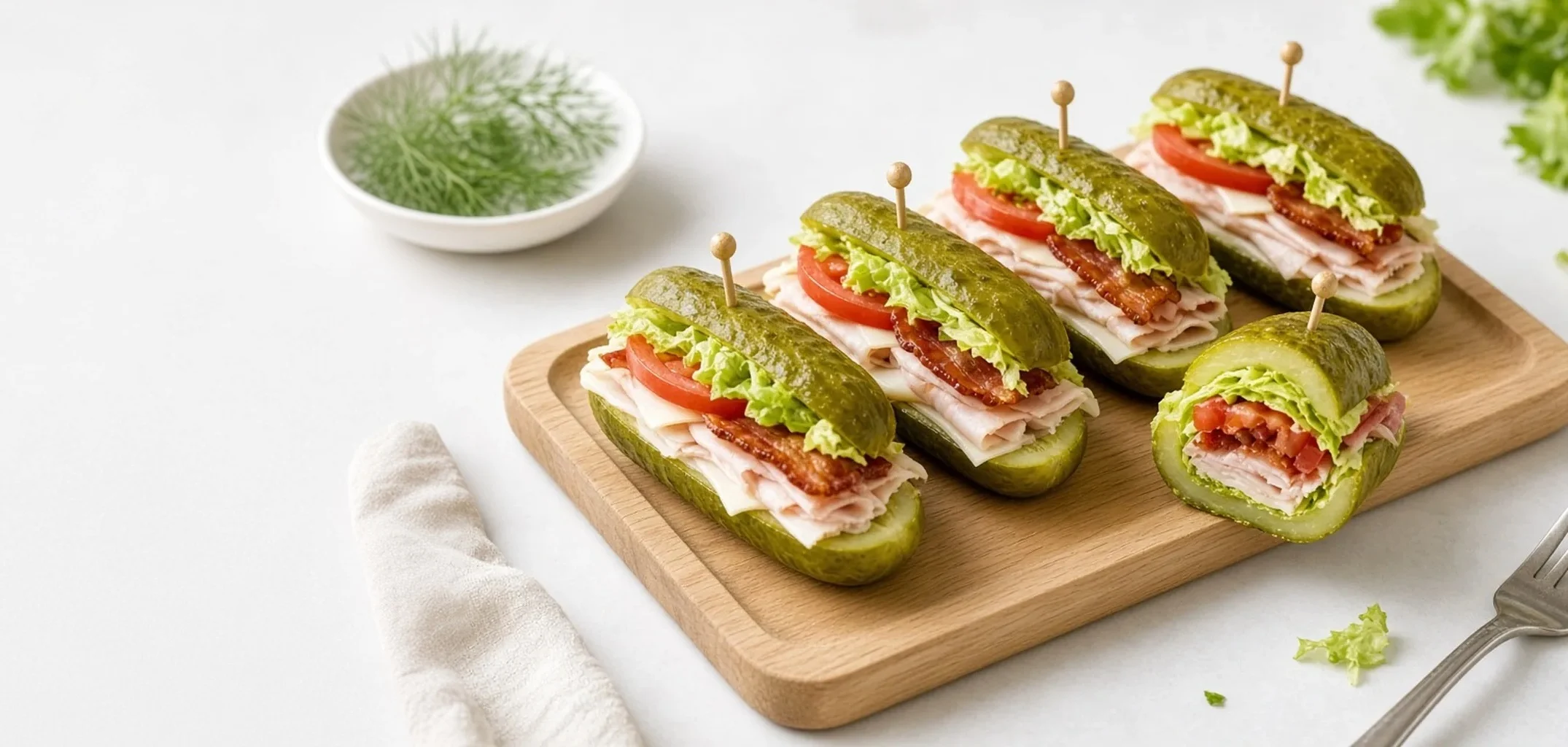
Dill pickle turkey club sandwiches
20 min · 33 g protein · 283 cals / serving
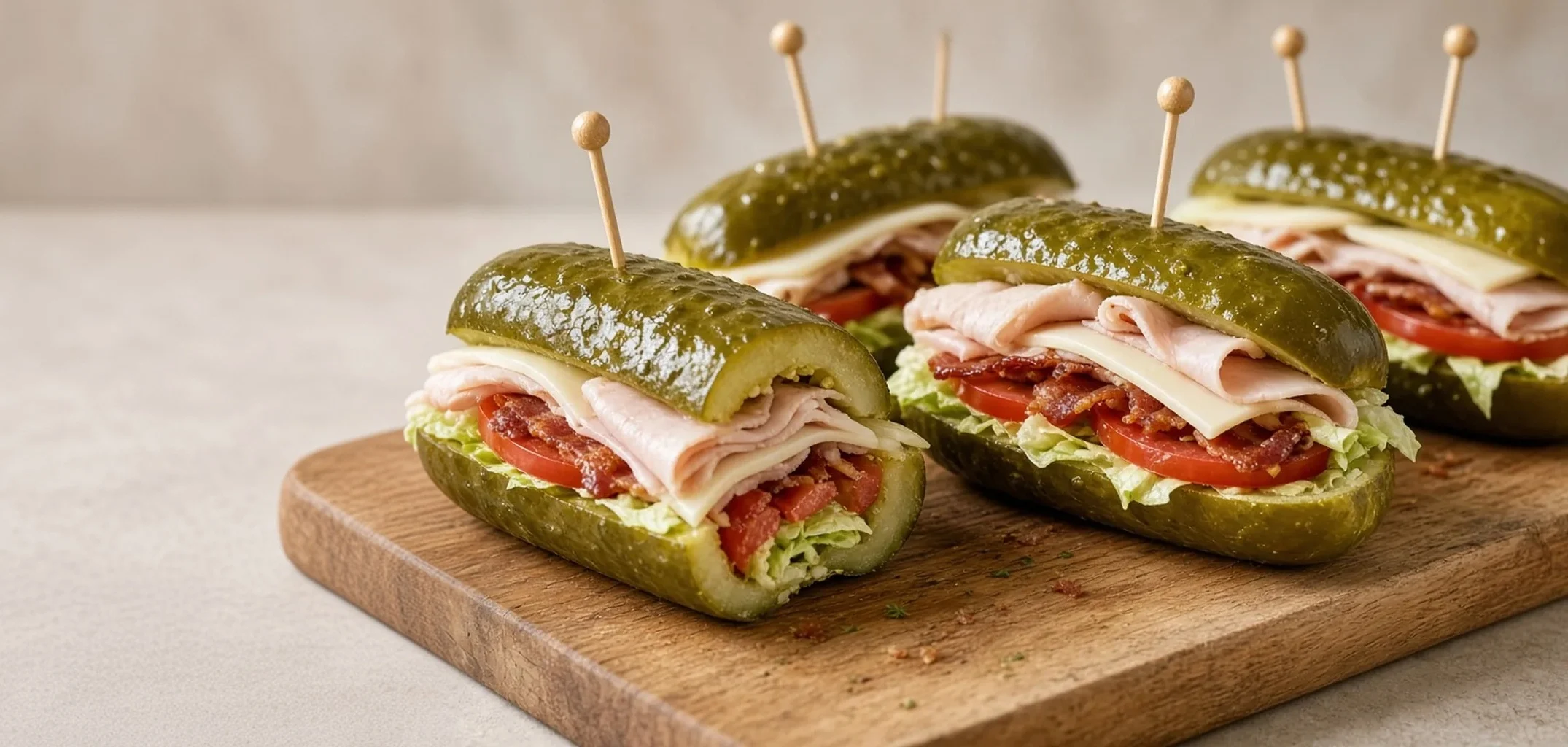
Big, crunchy dill pickles split down the middle and hollowed into a bun, then stacked with smoked turkey, provolone, crisp bacon, tomato and lettuce over a swipe of Dijon mayo. The pickle sandwich that took over social feeds, built as a proper club, and ready in twenty minutes.
Ingredients
- 4 very large whole dill pickles pickles, about 5 inches (13 cm) long, halved lengthwise and seeded (weight after hollowing)
- 2 rashers bacon, cooked, cooked crisp and halved


Spread
- 4 tsp light mayonnaise
- 1 1/2 tsp Dijon mustard


- 8 oz thinly sliced smoked turkey breast
- 2 slices provolone cheese, halved
- 4 thin slices tomato, patted dry
- 4 small leaves iceberg lettuce


Steps
- Halve the pickles lengthwise and scoop out the seedy middle with a teaspoon, leaving a sturdy shell. Lay the halves cut side down on paper towels for 5 minutes and pat them very dry inside and out, so the fillings stay put.
- While the pickles drain, cook the bacon in a frying pan over medium heat until crisp, 4 to 5 minutes, then drain it on paper towels and halve each rasher.
- Stir the mayonnaise and Dijon together and spread a thin layer inside every pickle half.
- On four of the halves, layer folded turkey, half a slice of provolone, a piece of bacon, a slice of tomato and a lettuce leaf. Press the other halves on top, push a cocktail stick through each sandwich and eat straight away.
Good to know
My pickles are small. What then?
Use sandwich-cut pickle slices as the bread: lay two or three long slices side by side, pat dry, fill and top with more slices. It is messier but tastes the same.
Can I leave out the bacon?
Yes; add an extra slice of turkey to each instead. It moves the score to about 83 from 77.
Per
- Calories
- 71
- Protein
- (47%)
- 8 g
- Fat
- (42%)
- 3 g
- Carbohydrates
- (11%)
- 2 g
- of which sugar
- 1 g
- Fiber
- 1 g
- Sodium
- 832 mg
More meals


Computed from the ingredients with our published formula, not yet kitchen-tested. How
As written, 566 kcal goes into the pot and 798 g of ingredients comes out as about 798 g of food: 71 kcal per 100 g. Cooking moves water and energy density is the score's biggest lever, so the dish is scored as cooked, not as an average of its parts. Every ingredient links to its food page, with the same data and score. The label's percentages are each macronutrient's share of the calories. The full formula.