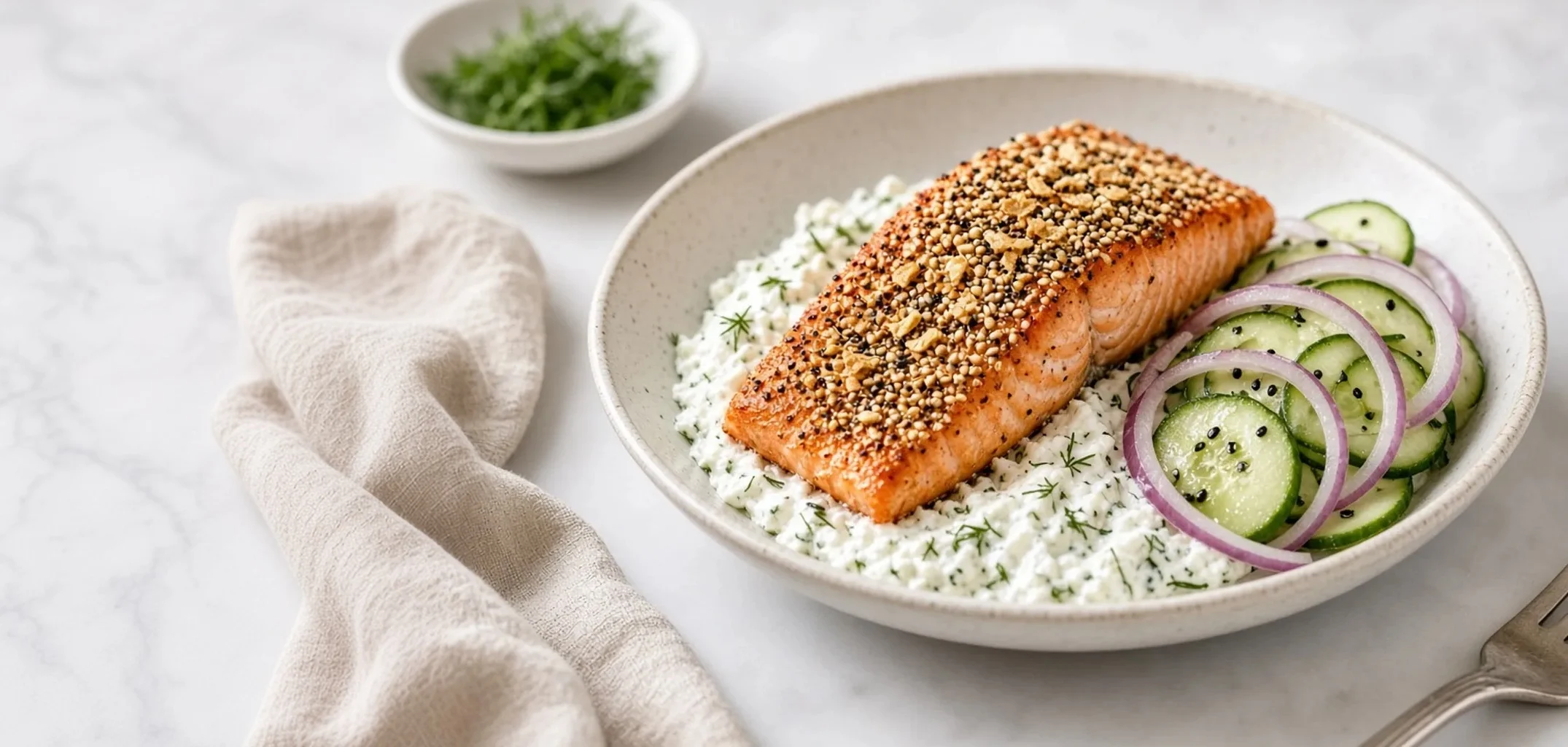
Everything bagel salmon with whipped cottage cheese
27 min · 42 g protein · 418 cals / serving
Everything a smoked salmon bagel promises, made into dinner: salmon fillets crusted with toasted sesame, poppy seeds, garlic and onion, seared until crunchy, then served on a cloud of whipped lemony dill cottage cheese with a crisp cucumber and red onion salad.
Ingredients
Whipped cottage cheese
- scant 1 cup cottage cheese (1%)
- 2 tsp lemon juice
- 2 tbsp fresh dill, chopped
- 1 small clove garlic, grated


Cucumber salad
- 1 large cucumber, thinly sliced
- 1/4 small red onion, very thinly sliced
- 1 tbsp red wine vinegar
- a pinch salt


- 4 skin-on fillets (6 oz each) salmon, patted dry
- 2 tsp Dijon mustard
- 2 1/2 tbsp everything bagel seasoning
- 2 tsp olive oil


Steps
- Blend or whisk the cottage cheese with the lemon juice and garlic until completely smooth and fluffy, about a minute, then stir in the dill.
- Toss the cucumber and red onion with the vinegar and salt and leave to soften while the salmon cooks.
- Brush the flesh side of each fillet thinly with Dijon and press it firmly into the everything bagel seasoning. Heat the oil in a large non-stick pan over medium heat and lay the fillets in crust side down. Cook 3–4 minutes until the seeds are toasted and golden, turn onto the skin and cook 4–5 minutes more, until the salmon flakes easily and is opaque in the centre (145°F).
- Spread the whipped cottage cheese on four plates, set the salmon on top and serve the cucumber salad alongside.
Good to know
My crust fell off. What happened?
The pan was too hot or the fish was moved too soon. Keep it at medium so the seeds toast instead of burning, and leave the fillets alone until the crust releases on its own.
Is the seasoning salty?
Most blends contain salt, so this recipe adds none to the fish. If yours is salt-free, add a pinch.
Per
- Calories
- 146
- Protein
- (42%)
- 15 g
- Fat
- (53%)
- 8 g
- Carbohydrates
- (6%)
- 2 g
- of which sugar
- 1 g
- Fiber
- <1 g
- Sodium
- 224 mg
More meals


Computed from the ingredients with our published formula, not yet kitchen-tested. How
As written, 1674 kcal goes into the pot and 1283 g of ingredients comes out as about 1150 g of food: 146 kcal per 100 g. Cooking moves water and energy density is the score's biggest lever, so the dish is scored as cooked, not as an average of its parts. Every ingredient links to its food page, with the same data and score. The label's percentages are each macronutrient's share of the calories. The full formula.