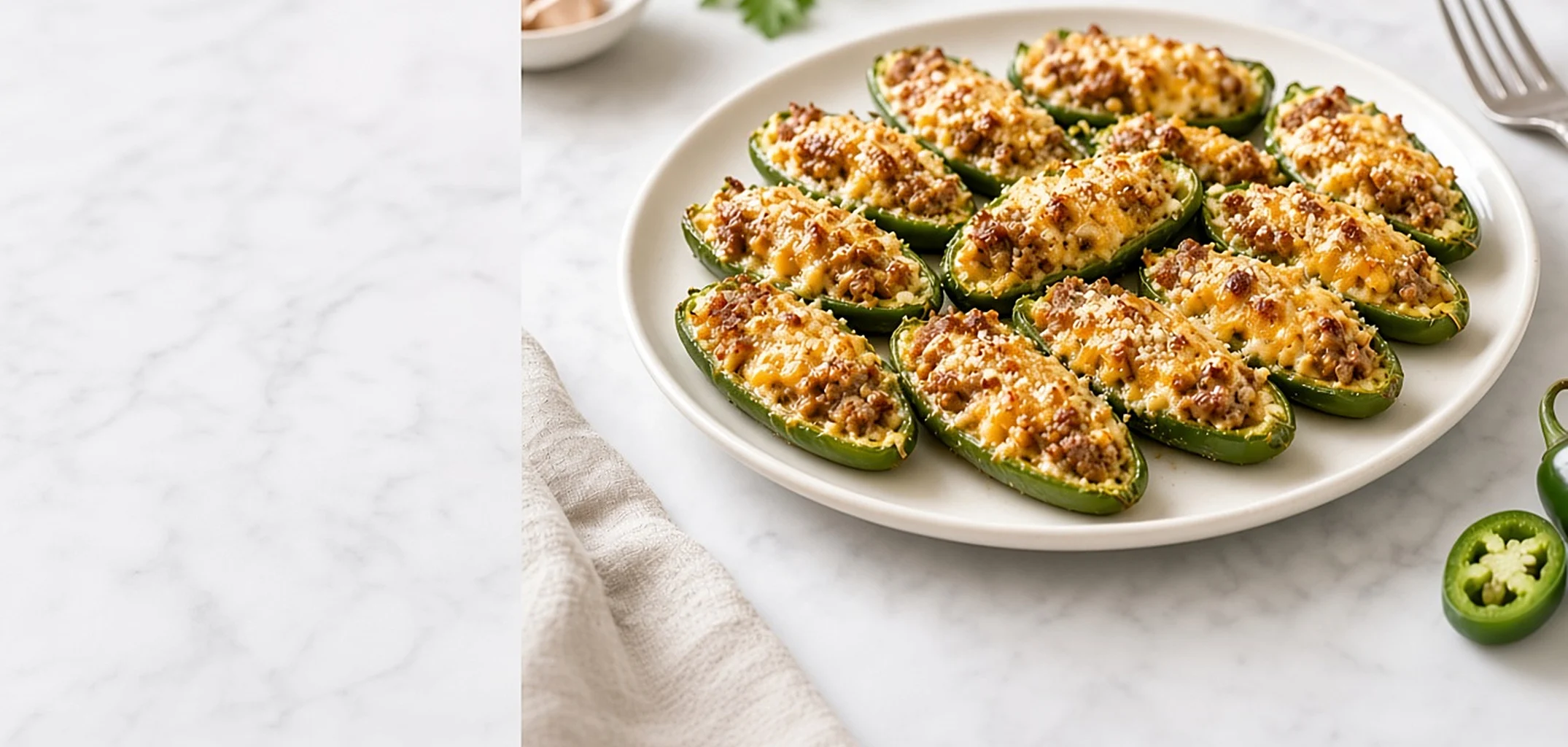
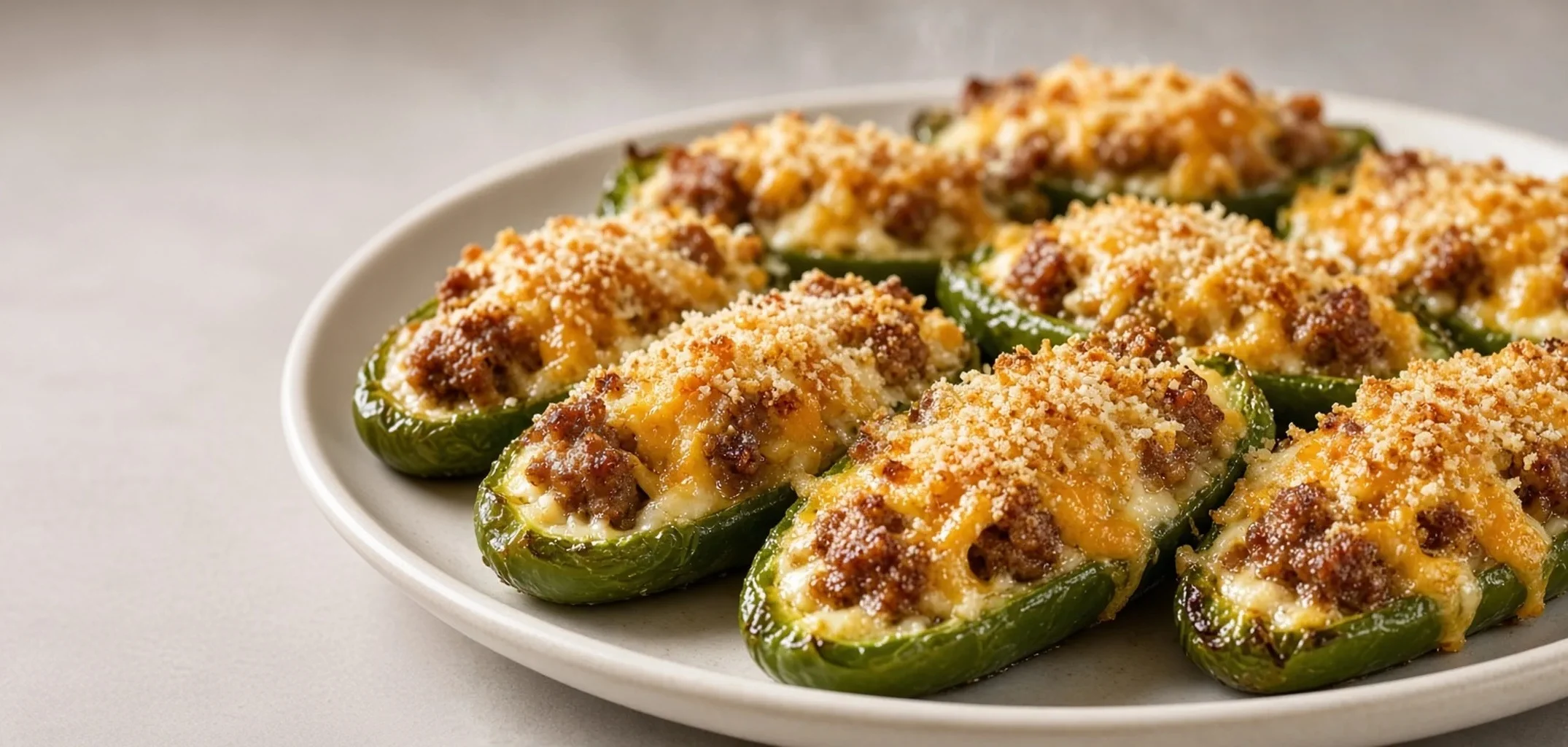
Sausage-stuffed jalapeños
50 min · 21 g protein · 313 cals / serving
Jalapeño halves heaped with browned Italian-seasoned sausage, cream cheese and cheddar and baked until the filling bubbles and the tops turn golden. A meatier cousin of the classic popper, with a gentle heat that builds.
Ingredients
- 5 oz raw Italian sausage, hot or mild, casings removed
- 5 oz raw turkey sausage, Italian-style if you can find it, casings removed
- 12 large jalapeño, halved lengthways, seeds and ribs scraped out
- 1/2 cup light cream cheese, softened
- 2/3 cup reduced fat cheddar cheese, shredded
- 1/2 tsp garlic powder
- 1/2 tsp paprika, smoked (optional)
- 3 tbsp grated parmesan


Steps
- Heat the oven to 400°F. Brown both sausages in a frying pan over medium-high heat, breaking them into small crumbs, for 7–8 minutes, until no pink remains and it reaches 165°F. Drain off the fat and let it cool for a few minutes.
- Lay the jalapeño halves cut side up on a parchment-lined baking tray. Wear gloves or wash your hands well after handling them.
- Mix the warm sausage with the cream cheese, cheddar, garlic powder and smoked paprika if using until it holds together.
- Pack the filling into the pepper halves, mounding it up, and sprinkle with the parmesan. Bake 18–20 minutes, until the peppers are tender and the tops are golden and bubbling. Cool 5 minutes before serving.
Good to know
How do I control the heat?
Scrape out every seed and white rib for mild poppers; leave a few ribs in for heat. Hot Italian sausage adds more kick than the peppers do.
Can I use all pork sausage?
Yes, it is the richer, traditional filling; the score goes from 39 to 31.
Per
- Calories
- 187
- Protein
- (27%)
- 12 g
- Fat
- (59%)
- 12 g
- Carbohydrates
- (13%)
- 7 g
- of which sugar
- 2 g
- Fiber
- 1 g
- Sodium
- 484 mg
More snacks


Computed from the ingredients with our published formula, not yet kitchen-tested. How
As written, 1252 kcal goes into the pot and 788 g of ingredients comes out as about 670 g of food: 187 kcal per 100 g. Cooking moves water and energy density is the score's biggest lever, so the dish is scored as cooked, not as an average of its parts. Every ingredient links to its food page, with the same data and score. The label's percentages are each macronutrient's share of the calories. The full formula.