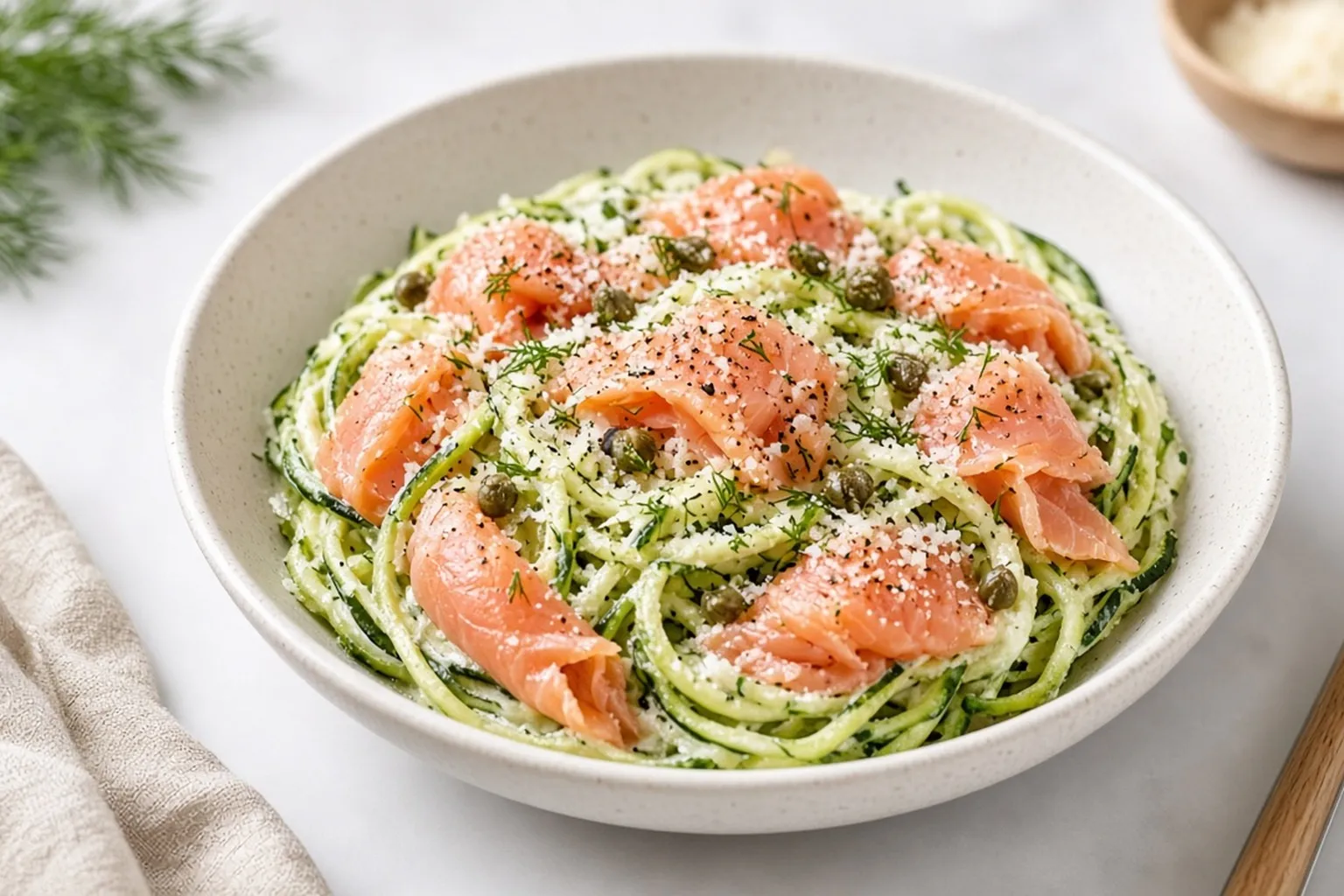
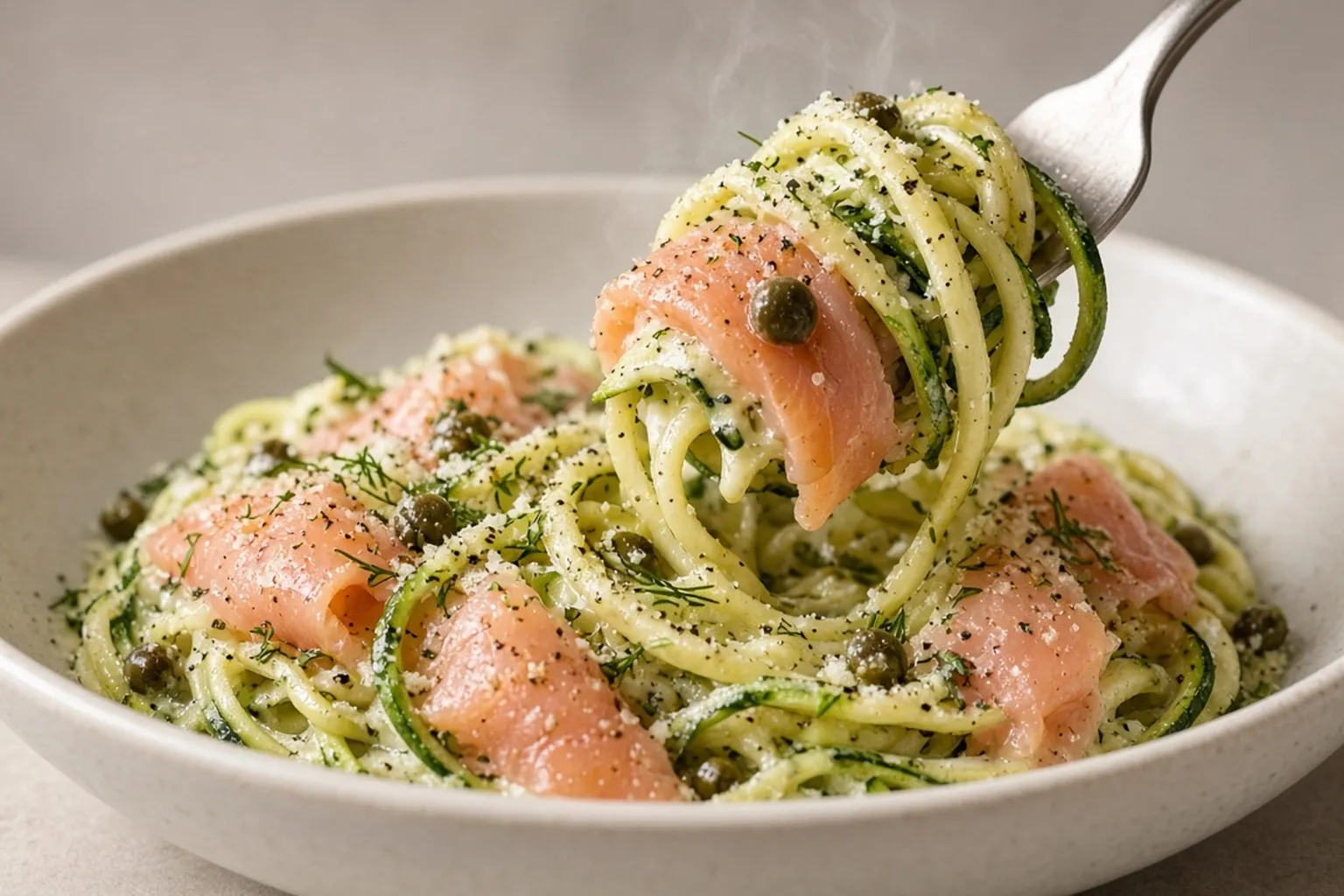
Smoked salmon zucchini noodles in lemon-caper cream
Zucchini noodles warmed for two minutes in a garlicky pan, then tossed in a lemony cream-cheese and parmesan sauce with salty capers and folded through with ribbons of smoked salmon and fresh dill. A ten-minute bowl that eats like a creamy pasta.
- Time
- 9 min (4 prep + 5 cook)
- Servings
- 2
- Per serving
- 380 kcal
- Protein
- 35 g
Ingredients
- 1 tsp olive oil
- 1 clove garlic, grated
- 14 oz (2 medium) zucchini, spiralized, or ready zucchini noodles
- 3 tbsp light cream cheese
- 1 tbsp lemon juice
- 1 tsp lemon zest
- 3 tbsp finely grated parmesan
- 1 tbsp capers, drained
- 8 1/2 oz smoked salmon (cold-smoked), torn in ribbons
- 2 tbsp fresh dill, chopped
- plenty black pepper


Steps
- Heat the oil in a large frying pan over medium-high heat, add the garlic for 20 seconds, then the zucchini noodles. Toss with tongs for 2 minutes, just until warm and barely softened; any longer and they go watery.
- Lower the heat, add the cream cheese, lemon juice and zest, parmesan and capers, and toss for a minute until the cheese melts into a glossy sauce that coats the noodles.
- Take the pan off the heat, fold in the smoked salmon and dill so the salmon just warms through, grind over plenty of pepper and serve straight away.
Good to know
Can I use hot-smoked salmon?
Yes: flake it in big pieces instead of tearing ribbons. It is richer, and the bowl scores 53 instead of 59.
My sauce turned watery.
The zucchini cooked too long and gave up its water. Pat the noodles dry before they go in, and keep them in the pan only until warm.
Per
- Calories
- 110
- Protein
- (37%)
- 10 g
- Fat
- (54%)
- 7 g
- Carbohydrates
- (10%)
- 3 g
- of which sugar
- 2 g
- Fiber
- 1 g
- Sodium
- 509 mg
More meals


Computed from the ingredients with our published formula, not yet kitchen-tested. How
As written, 760 kcal goes into the pot and 745 g of ingredients comes out as about 690 g of food: 110 kcal per 100 g. Cooking moves water and energy density is the score's biggest lever, so the dish is scored as cooked, not as an average of its parts. Every ingredient links to its food page, with the same data and score. The label's percentages are each macronutrient's share of the calories. The full formula.