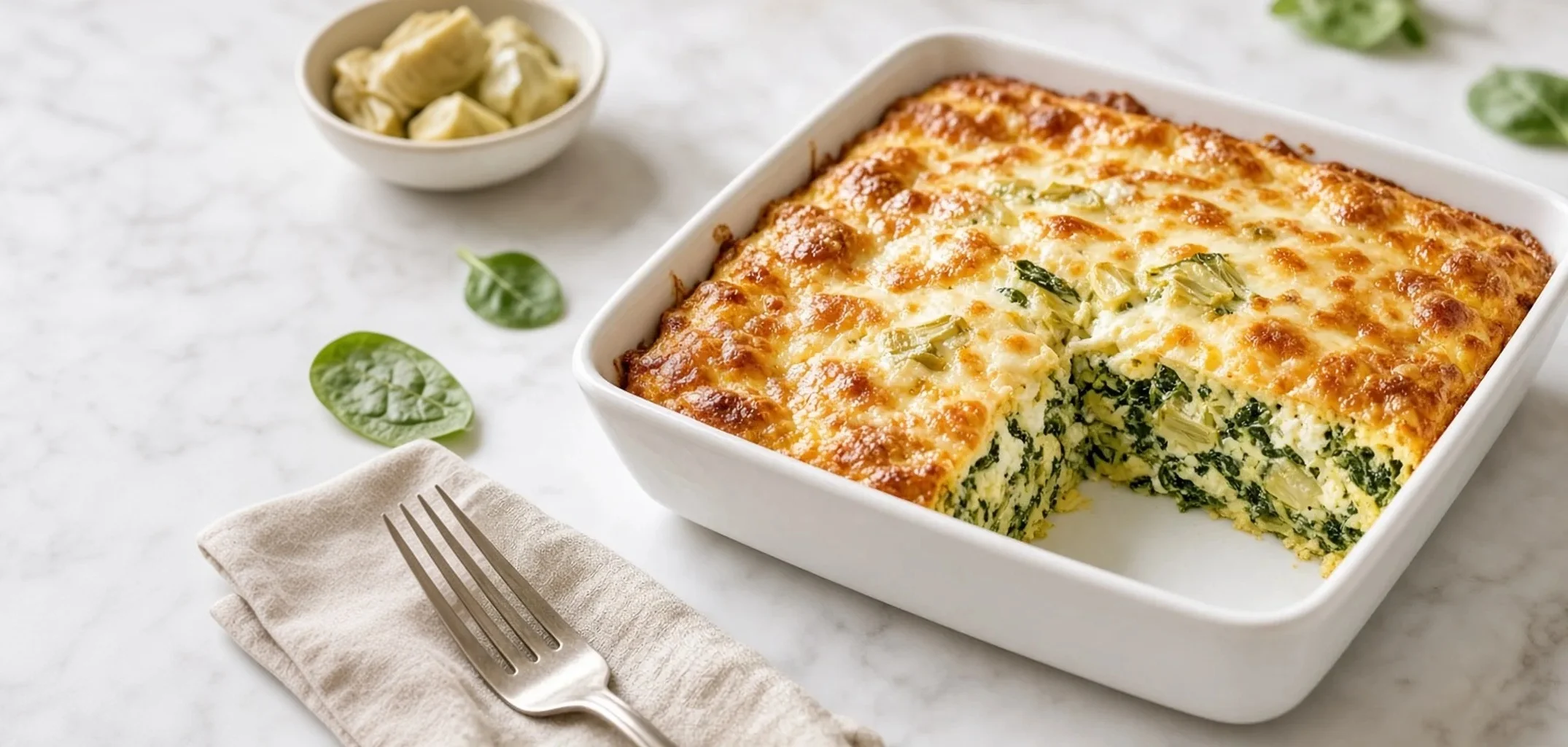
Spinach artichoke egg casserole
60 min · 30 g protein · 332 cals / serving
Your favourite party dip turned into breakfast: tender artichoke hearts, spinach and garlic baked in fluffy eggs with creamy cottage cheese, parmesan and a stretchy mozzarella top. It slices cleanly, so it works for brunch or for a week of breakfasts.
Ingredients
- 1 tsp olive oil, plus a little for the dish
- 1/4 medium onion, finely diced
- 2 cloves garlic, minced
- 5 oz spinach, frozen, from a 10 oz (280 g) box of frozen chopped spinach, thawed and squeezed dry (about 150 g)
- 1 can (14 oz), drained artichoke hearts, canned, quartered hearts in water, chopped
- 8 large eggs
- 1/2 cup liquid egg white
- 1/2 cup cottage cheese (1%), blended smooth
- 1/3 cup grated parmesan
- 1/2 tsp salt
- 1/2 tsp black pepper
- 1 pinch red pepper flakes (optional)
- 3/4 cup shredded mozzarella


Steps
- Heat the oven to 350°F and oil a 8 inch square baking dish.
- Warm the oil in a frying pan over medium heat and cook the onion 4 minutes, until soft. Add the garlic for 30 seconds, then the squeezed spinach, and stir until any last water has steamed off.
- Whisk the eggs, egg whites, blended cottage cheese, parmesan, salt, pepper and chilli flakes (if using) in a large bowl. Stir in the spinach mixture and the artichokes and pour into the dish.
- Top with the mozzarella and bake 35–40 minutes, until puffed, golden at the edges and set in the centre (160°F).
- Rest 5 minutes, then cut in 4 squares.
Good to know
Can I use fresh spinach?
Wilt 10 oz of baby spinach in the pan, then squeeze it dry once cool. It ends up about the same weight as the thawed frozen spinach.
Can I use ricotta instead of cottage cheese?
Yes, part-skim ricotta gives a softer, more dip-like set, at 54 instead of 58.
Per
- Calories
- 123
- Protein
- (37%)
- 11 g
- Fat
- (50%)
- 7 g
- Carbohydrates
- (13%)
- 5 g
- of which sugar
- 1 g
- Fiber
- 1 g
- Sodium
- 364 mg
More breakfast


Computed from the ingredients with our published formula, not yet kitchen-tested. How
As written, 1329 kcal goes into the pot and 1156 g of ingredients comes out as about 1085 g of food: 123 kcal per 100 g. Cooking moves water and energy density is the score's biggest lever, so the dish is scored as cooked, not as an average of its parts. Every ingredient links to its food page, with the same data and score. The label's percentages are each macronutrient's share of the calories. The full formula.