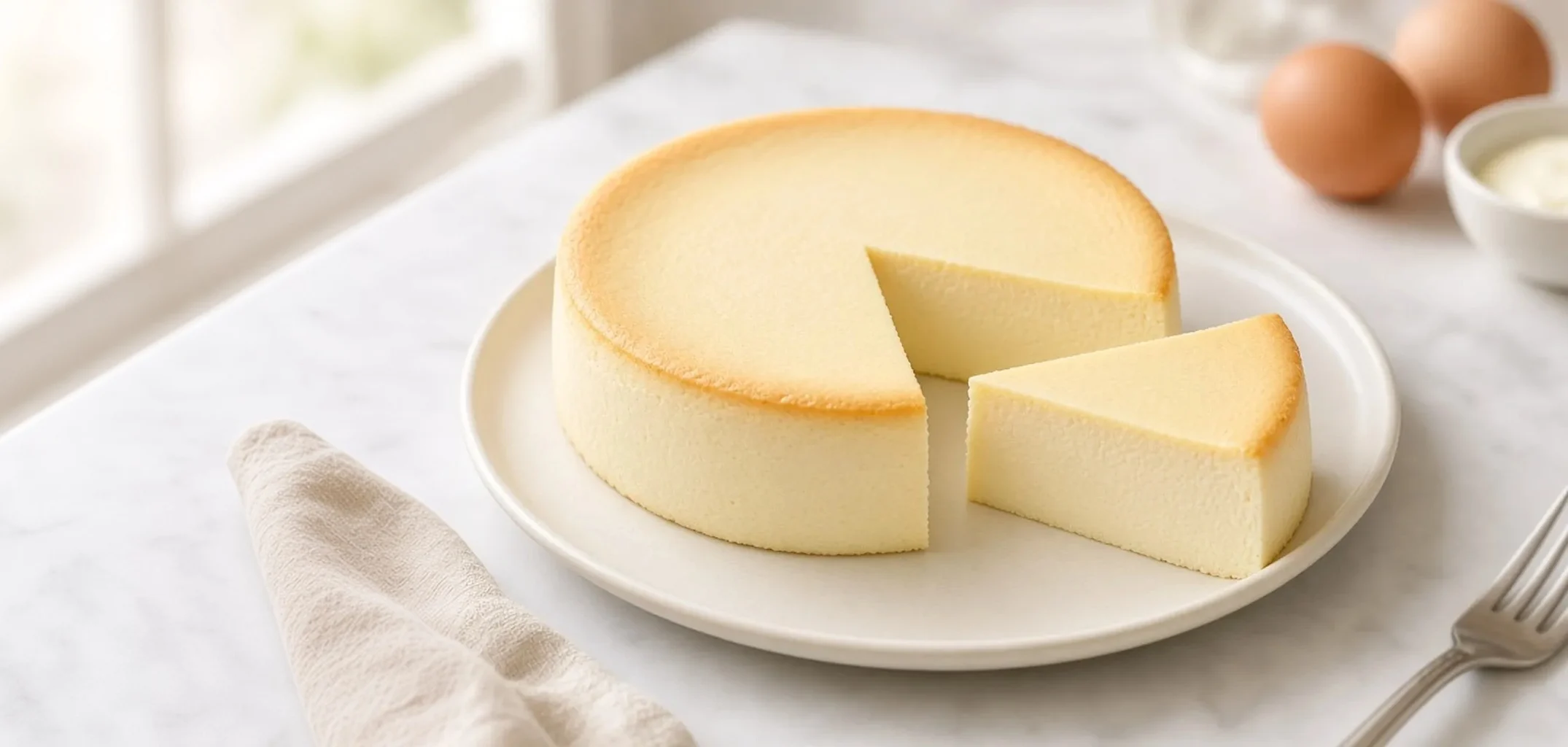
Carnivore crustless cheesecake
90 min · 15 g protein · 239 cals / serving
A tall, creamy baked cheesecake with no crust and no sweetener: cream cheese and silky blended cottage cheese, set with eggs in a gentle water bath. It tastes of fresh dairy, mild and gently tangy, like the filling of a New York cheesecake before the sugar goes in.
Ingredients
- 2 cups cottage cheese cottage cheese (2%), 2% fat
- 8 oz cream cheese cream cheese, full-fat block, at room temperature
- 3 large eggs, at room temperature
- scant 1/2 cup liquid egg whites liquid egg white, or the whites of 3 eggs
- a pinch salt
- 1 tsp vanilla extract (optional)


Steps
- Heat the oven to 300°F and put a kettle on to boil. Butter an 7 inch springform pan or line it with parchment, and wrap the outside in two layers of foil so no water can get in.
- Blend the cottage cheese in a food processor or blender for 2 minutes, until completely smooth with no curds left. Add the cream cheese and salt and blend again until silky.
- Add the eggs, egg whites and, if using, the vanilla, and pulse just until mixed; over-blending whips in air that makes the top crack.
- Pour into the pan and set it in a roasting tin. Pour boiling water into the tin to come halfway up the side of the springform. Bake 60–70 minutes, until the edge is set and the center still wobbles like jelly when you nudge the pan; the center should reach about 160°F.
- Turn off the oven, prop the door open a crack and leave the cheesecake inside for 1 hour. Lift it out of the water, unwrap and chill at least 4 hours, or overnight, before slicing with a hot knife.
Good to know
Will it taste sweet?
No. It tastes of fresh, creamy dairy, mild and tangy, which is what many carnivore eaters come to love. If you are not strict carnivore, 3 tbsp of erythritol blended in with the cream cheese makes it a classic dessert cheesecake.
Can I make it with all cream cheese?
Yes, use 24 oz cream cheese and no cottage cheese. It is denser and richer, at about 22 instead of 41.
Why did mine crack?
Too hot, too much air beaten in, or cooled too fast. The water bath and the slow cool in the switched-off oven are what keep the top smooth.
Per
- Calories
- 164
- Protein
- (26%)
- 10 g
- Fat
- (65%)
- 12 g
- Carbohydrates
- (9%)
- 4 g
- of which sugar
- 3 g
- Fiber
- 0 g
- Sodium
- 343 mg
More desserts


Computed from the ingredients with our published formula, not yet kitchen-tested. How
As written, 1434 kcal goes into the pot and 931 g of ingredients comes out as about 875 g of food: 164 kcal per 100 g. Cooking moves water and energy density is the score's biggest lever, so the dish is scored as cooked, not as an average of its parts. Every ingredient links to its food page, with the same data and score. The label's percentages are each macronutrient's share of the calories. The full formula.