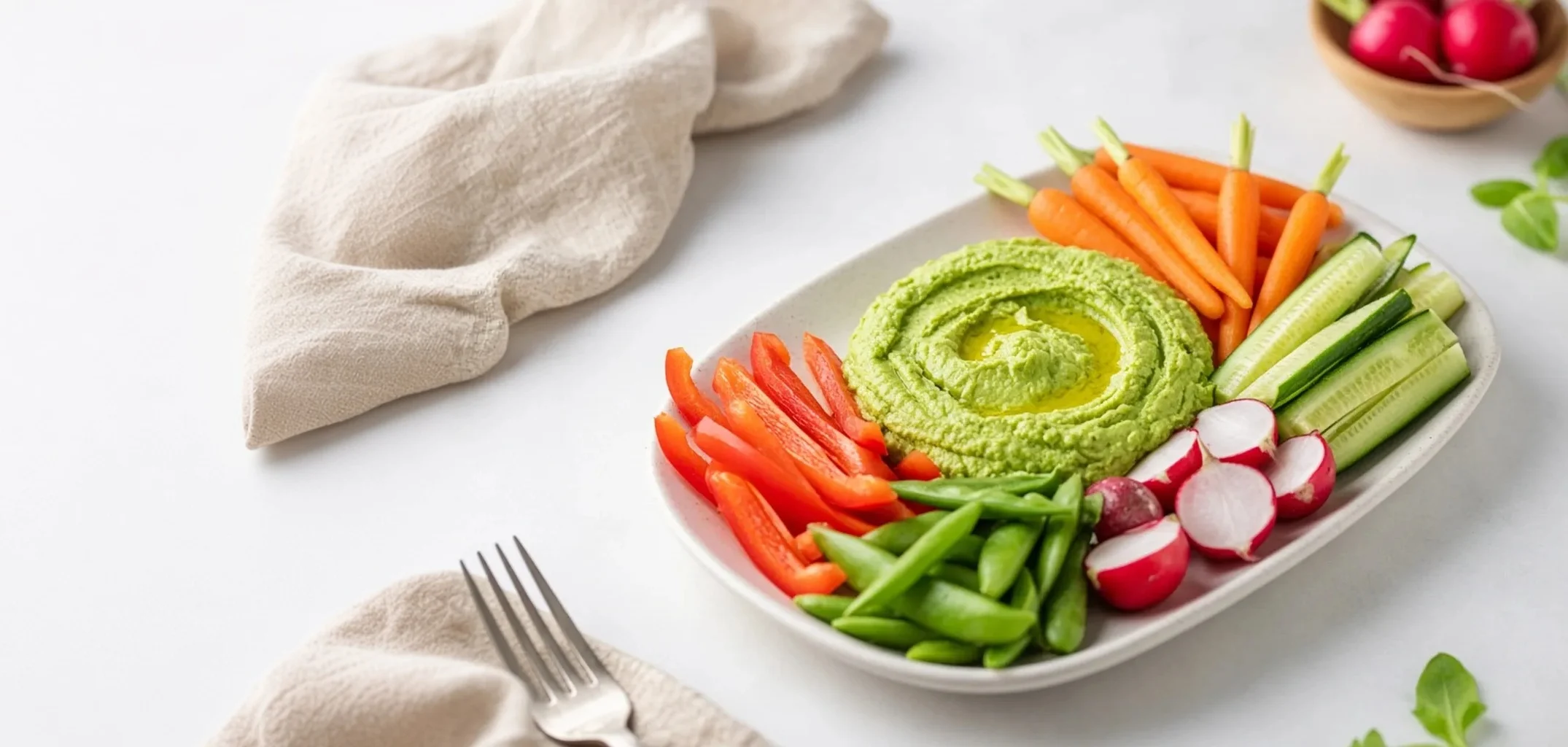
Edamame hummus with crudités
20 min · 13 g protein · 222 cals / serving
A bright green hummus blended from edamame, tahini, lemon and garlic, smooth and nutty with a little cumin, served with a big plate of crunchy raw vegetables for dipping. It keeps for days, so it is ready whenever you want a snack.
Ingredients
Edamame hummus
- 2 cups frozen, shelled edamame, frozen
- 2 tbsp tahini
- 3 tbsp lemon juice
- 1 tsp lemon zest
- 2 cloves garlic
- 1/2 tsp ground cumin
- 1/2 tsp salt
- 4 tbsp water, cold, more as needed
- 2 tsp olive oil


Crudités
- 1 1/2 cups baby carrots
- 1 medium cucumber, cut in spears
- 1 1/2 cups sugar snap peas
- 8–10 radishes, halved
- 1 large red bell pepper, cut in strips


Steps
- Boil the edamame for 5 minutes (or microwave them, covered, with 2 tbsp water for 4 minutes), drain and run under cold water until cool; cooked beans blend smoother than thawed ones. Then blend the edamame, tahini, lemon juice and zest, garlic, cumin, salt and water in a food processor for 2–3 minutes, scraping down twice, until as smooth as it will go. Add another spoon of water if it is too thick to swirl.
- Taste for salt and lemon, spoon into a bowl, swirl the top with the back of the spoon and drizzle with the olive oil.
- Arrange the carrots, cucumber, snap peas, radishes and pepper around the hummus to dip.
Good to know
How long does it keep?
Four days in a covered container in the fridge; a thin film of oil or lemon juice on top keeps it bright green. It tastes even better after an hour's rest.
No tahini?
Use a teaspoon of toasted sesame oil for the sesame flavour, or the same amount of sunflower seed butter.
Per
- Calories
- 71
- Protein
- (23%)
- 4 g
- Fat
- (44%)
- 3 g
- Carbohydrates
- (33%)
- 7 g
- of which sugar
- 3 g
- Fiber
- 2 g
- Sodium
- 109 mg
More snacks


Computed from the ingredients with our published formula, not yet kitchen-tested. How
As written, 889 kcal goes into the pot and 1257 g of ingredients comes out as about 1257 g of food: 71 kcal per 100 g. Cooking moves water and energy density is the score's biggest lever, so the dish is scored as cooked, not as an average of its parts. Every ingredient links to its food page, with the same data and score. The label's percentages are each macronutrient's share of the calories. The full formula.