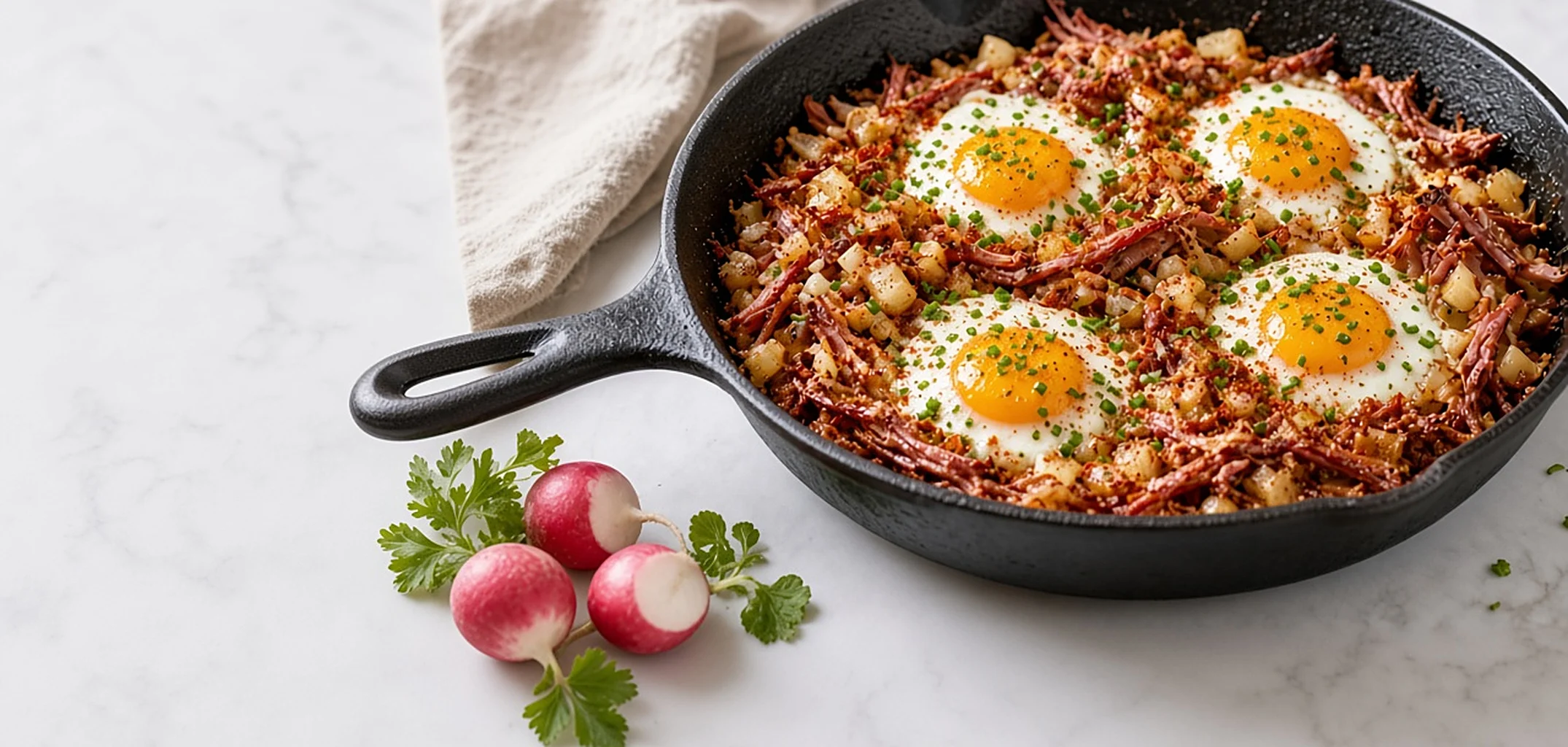
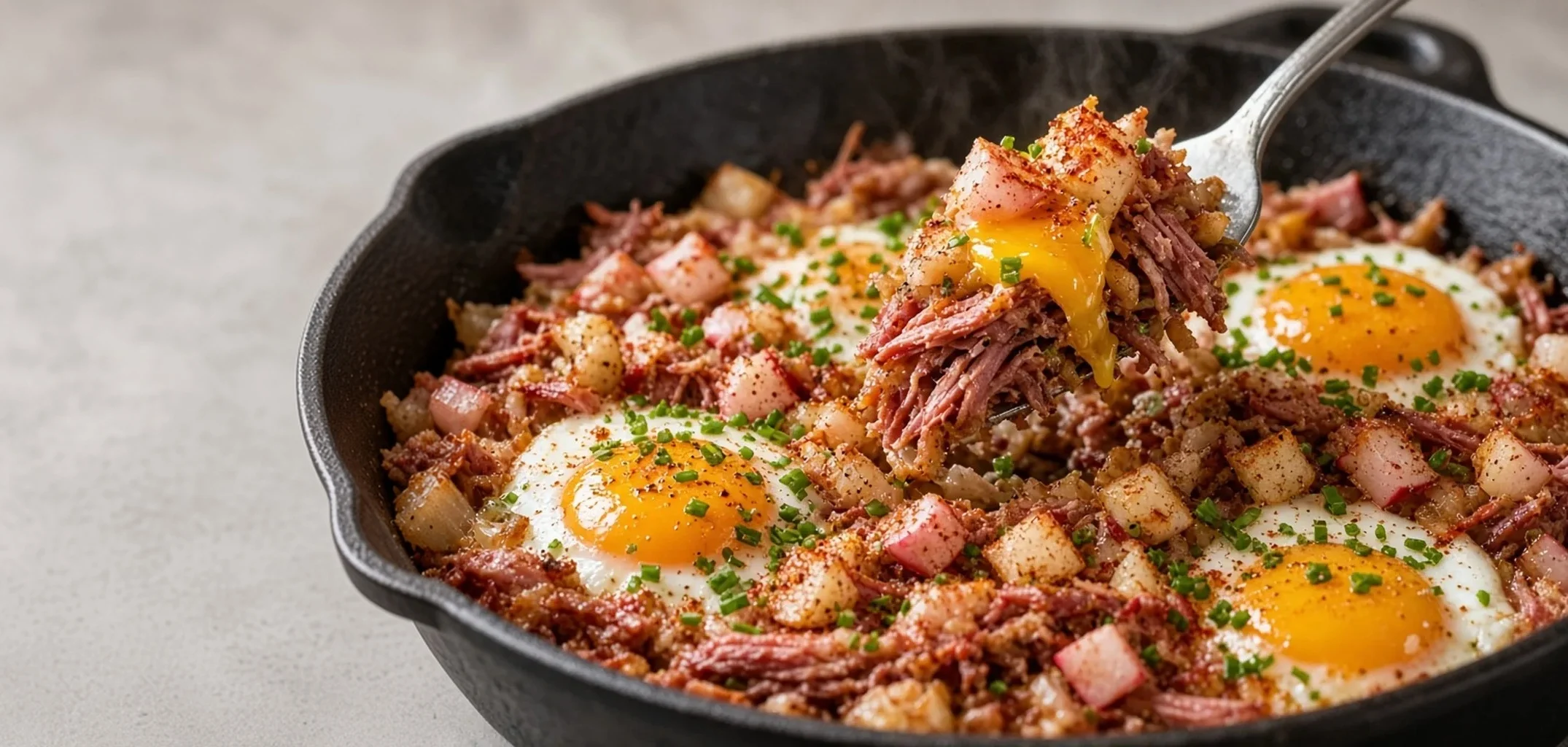
Radish corned beef hash with fried eggs
35 min · 51 g protein · 492 cals / serving
Diner-style corned beef hash, crisp and browned on the bottom, where diced radishes stand in for potatoes. Cooked down with onion and paprika they turn tender and mild, nothing like a raw radish, and a runny fried egg on each plate finishes it.
Ingredients
- 2 tsp butter
- 2 tsp olive oil
- 1 lb radish, trimmed, cut in 1 cm (1/2 inch) dice
- 1/2 medium onion, diced
- 1 tsp paprika
- 1/2 tsp garlic powder
- 2 cans (12 oz each) corned beef, canned, broken up
- 1/2 tsp black pepper
- 4 large eggs
- 1 tbsp fresh chives, snipped


Steps
- Heat the butter and oil in a large cast-iron or nonstick skillet over medium heat. Add the radishes and onion and cook 10–12 minutes, stirring now and then, until the radishes are tender when pierced and browned in places.
- Stir in the paprika and garlic powder, then the corned beef and pepper, breaking the meat up with a spatula and mixing it through.
- Press the hash flat and leave it alone for 5 minutes, until a brown crust forms underneath. Turn it in sections and press again for 3–4 minutes more.
- Make 4 wells in the hash, crack an egg into each, cover and cook 4–5 minutes, until the whites are set and the yolks still runny. (Or fry the eggs separately and lay one on each serving.) Scatter with chives.
Good to know
Will it taste of radish?
Hardly. Cooking takes away the peppery bite and leaves them mild and tender, a little like turnip. Cut them small so they brown.
Have leftover corned beef from a brisket?
Use the same weight, diced small. It is a little fattier than canned, at 40 instead of 57.
Per
- Calories
- 165
- Protein
- (42%)
- 17 g
- Fat
- (52%)
- 9 g
- Carbohydrates
- (6%)
- 3 g
- of which sugar
- 2 g
- Fiber
- 1 g
- Sodium
- 531 mg
More breakfast


Computed from the ingredients with our published formula, not yet kitchen-tested. How
As written, 1970 kcal goes into the pot and 1438 g of ingredients comes out as about 1195 g of food: 165 kcal per 100 g. Cooking moves water and energy density is the score's biggest lever, so the dish is scored as cooked, not as an average of its parts. Every ingredient links to its food page, with the same data and score. The label's percentages are each macronutrient's share of the calories. The full formula.