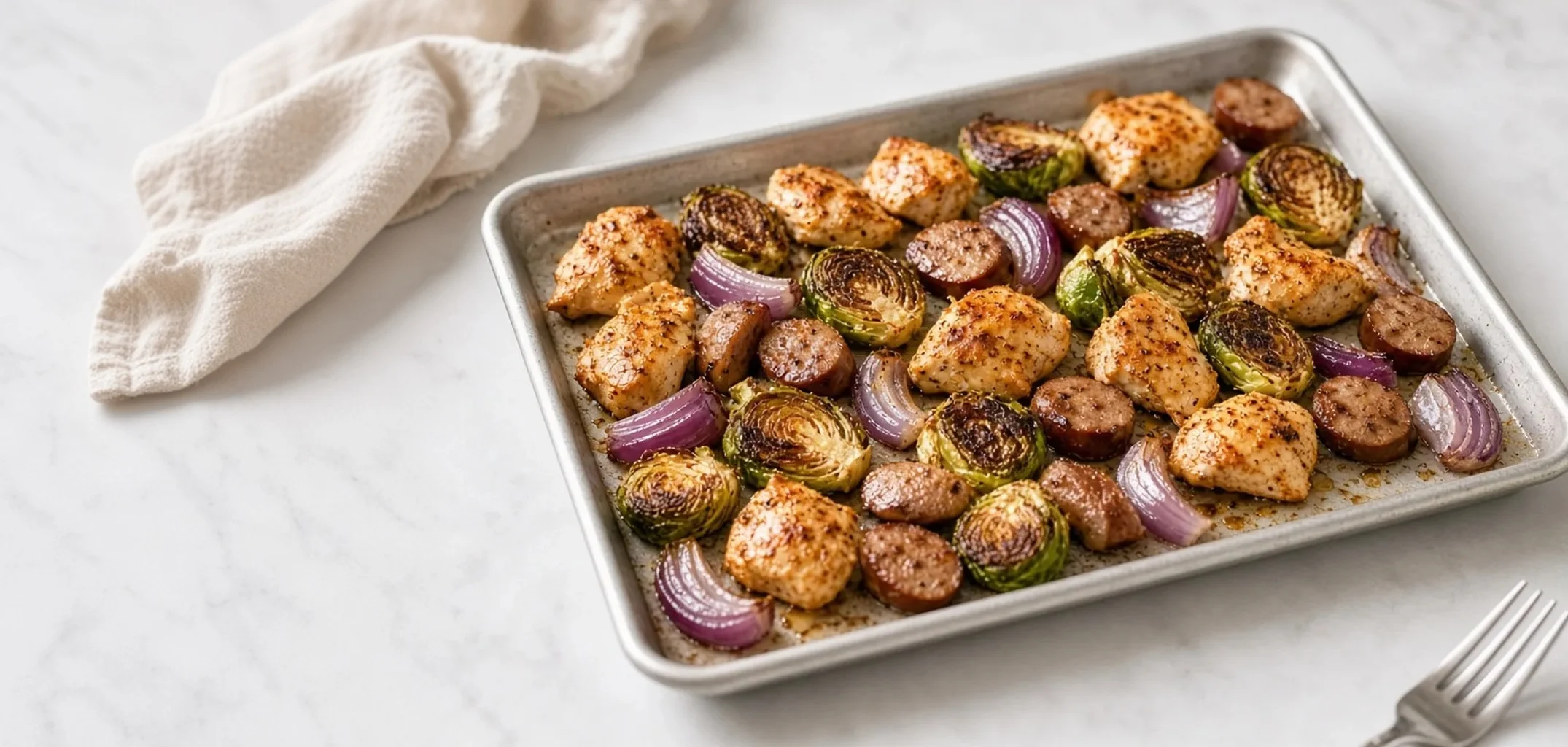
Sheet-pan chicken, sausage and Brussels sprouts
45 min · 46 g protein · 462 cals / serving
Golden chunks of chicken breast and browned slices of chicken sausage roasted on one tray with crisp-edged Brussels sprouts and red onion, then tossed in a tangy Dijon glaze. A weeknight tray bake that portions straight into four lunch boxes.
Ingredients
- 1 1/4 lb Brussels sprouts, trimmed and halved
- 1 large red onion, cut into wedges
- 2 tbsp olive oil
- 3/4 tsp salt
- 1/2 tsp black pepper
- 1 lb 2 oz chicken breast, roasted, cut into 3 cm (1 1/4 inch) chunks
- 4 links (about 11 oz) chicken sausage, raw, sliced into thick coins
- 1 tsp paprika
- 1/2 tsp garlic powder
- 1 tsp dried thyme


Dijon glaze
- 1 1/2 tbsp Dijon mustard
- 1 tbsp red wine vinegar
- 1 tsp olive oil


Steps
- Heat the oven to 425°F. Toss the sprouts and onion with the oil, salt and pepper on a large rimmed tray and turn the sprouts cut side down. Roast for 10 minutes.
- Toss the chicken and sausage with the paprika, garlic powder and thyme, scatter them over the tray between the vegetables and roast for 15–20 minutes more, turning once, until the sprouts are browned and the chicken reaches 165°F.
- Whisk the Dijon, vinegar and oil together, drizzle over the hot tray and toss. Serve, or divide into four boxes; it keeps 4 days and reheats well in the microwave or a hot oven.
Good to know
Can I make it with only sausage?
Yes, use 800 g of chicken sausage and no breast. It tastes richer and comes out at 42 instead of 59.
My sprouts came out soft, not crisp. Why?
The tray was crowded. Use two trays if yours is small, and make sure the sprouts lie cut side down so they brown.
Per
- Calories
- 145
- Protein
- (41%)
- 14 g
- Fat
- (46%)
- 7 g
- Carbohydrates
- (13%)
- 6 g
- of which sugar
- 2 g
- Fiber
- 2 g
- Sodium
- 377 mg
More meals


Computed from the ingredients with our published formula, not yet kitchen-tested. How
As written, 1848 kcal goes into the pot and 1630 g of ingredients comes out as about 1275 g of food: 145 kcal per 100 g. Cooking moves water and energy density is the score's biggest lever, so the dish is scored as cooked, not as an average of its parts. Every ingredient links to its food page, with the same data and score. The label's percentages are each macronutrient's share of the calories. The full formula.