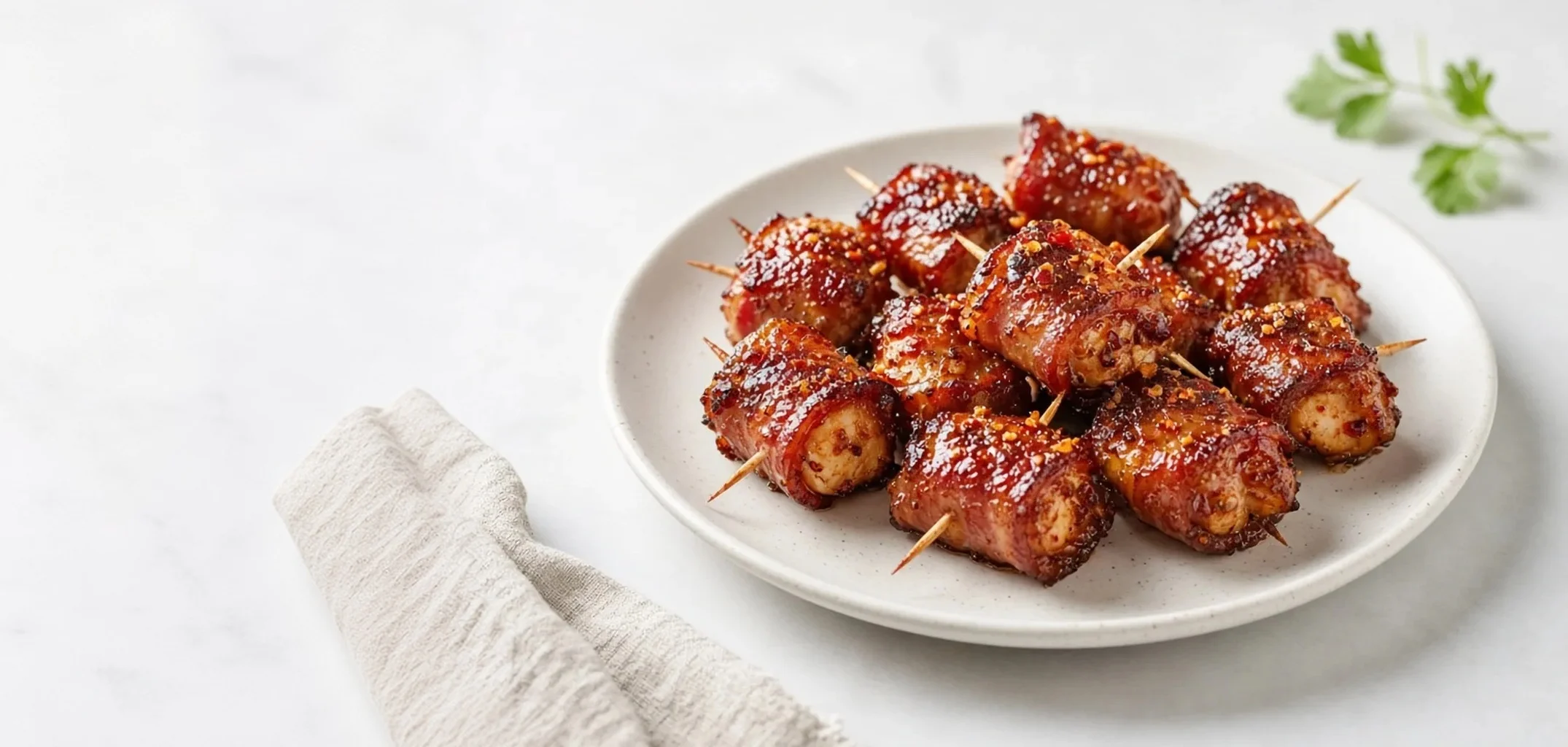
Sweet and spicy bacon-wrapped chicken bites
60 min · 33 g protein · 231 cals / serving
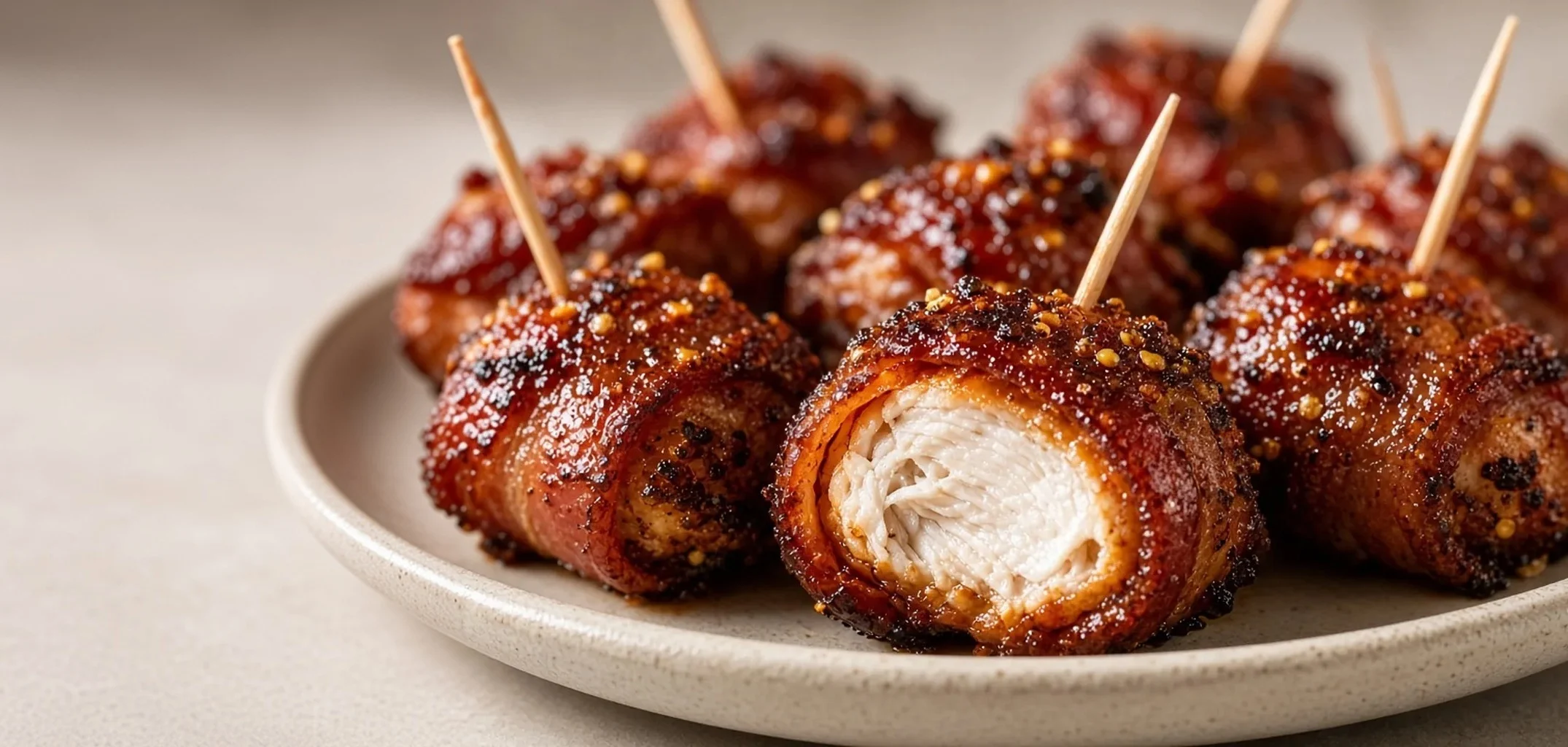
Juicy chunks of chicken breast wrapped in bacon, rolled in a sweet-hot crust of chili powder, smoked paprika and a little sweetener, and baked until the bacon is crisp and caramelised. Toothpick party food that tastes like barbecue.
Ingredients
- 12 thin slices bacon, cut in half crosswise; the weight is the crisp bacon you eat
- 1 1/2 lb chicken breast, roasted, cut into 24 chunks of about 3 cm (1 1/4 inch)


Crust
- 1 1/2 tbsp erythritol, brown-sugar style if you have it
- 1 tsp brown sugar
- 1 1/2 tsp chili powder
- 1 tsp paprika, smoked
- 1/2 tsp garlic powder
- a pinch salt
- a pinch cayenne pepper (optional)


Steps
- Heat the oven to 400°F. Lay the half slices of bacon on a lined tray and bake 8 minutes, until they are starting to render but still pliable. Let them cool enough to handle.
- Mix the sweetener, brown sugar, chili powder, smoked paprika, garlic powder, salt and cayenne if using in a shallow bowl. Toss the chicken chunks in half of it.
- Wrap each chunk in a half slice of bacon and secure with a toothpick. Set them on a wire rack over a lined tray and sprinkle the rest of the crust over the tops.
- Bake 20–25 minutes, until the bacon is crisp and the chicken reaches 165°F in the centre. For extra crunch, grill (broil) for the last 2 minutes, watching closely so the sugar does not burn. Rest 5 minutes and serve warm.
Good to know
Why par-cook the bacon?
Raw bacon needs longer than a chunk of chicken breast to crisp, so without a head start you get either chewy bacon or dry chicken.
Can I use chicken thighs?
Yes, they stay juicier and forgive an extra minute in the oven; the score goes from 77 to 60.
Per
- Calories
- 217
- Protein
- (57%)
- 31 g
- Fat
- (36%)
- 9 g
- Carbohydrates
- (7%)
- 4 g
- of which sugar
- 1 g
- Fiber
- <1 g
- Sodium
- 424 mg
More snacks


Computed from the ingredients with our published formula, not yet kitchen-tested. General guidance, not medical advice. Talk to your prescriber. How
As written, 1386 kcal goes into the pot and 829 g of ingredients comes out as about 640 g of food: 217 kcal per 100 g. Cooking moves water and energy density is the score's biggest lever, so the dish is scored as cooked, not as an average of its parts. Every ingredient links to its food page, with the same data and score. The label's percentages are each macronutrient's share of the calories. The full formula.