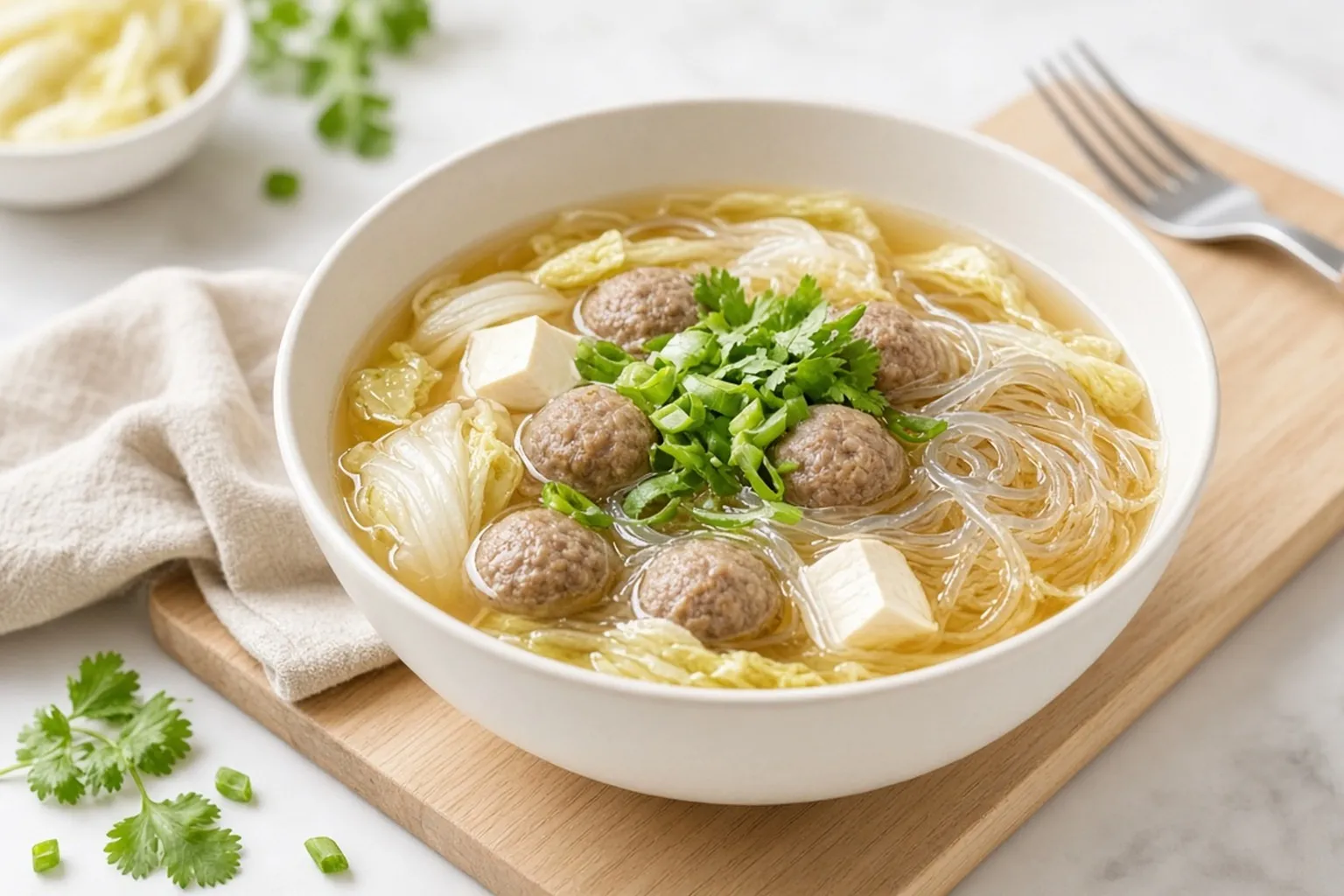
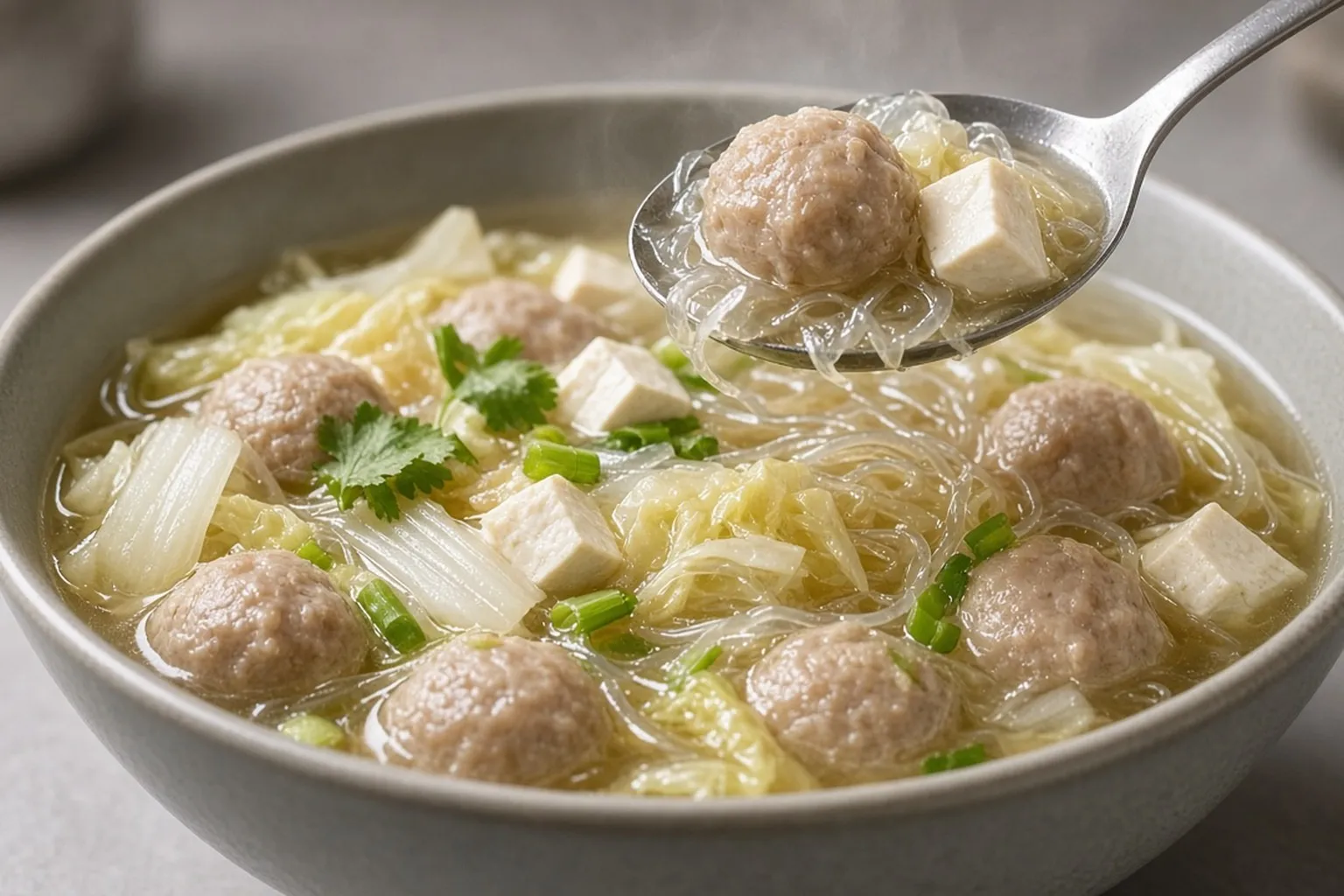
Thai glass noodle soup with pork meatballs and tofu
A clear, peppery, garlicky broth with little tender pork meatballs, slippery glass noodles, sweet napa cabbage and silky cubes of soft tofu, finished with green onion and coriander. Thailand's gentle everyday soup, gaeng jued, in one pot and ten minutes.
- Time
- 10 min (4 prep + 6 cook)
- Servings
- 2
- Per serving
- 401 kcal
- Protein
- 36 g
Ingredients
- 3 cups chicken broth, low-sodium
- 1 3/4 oz dry (about 200 g soaked) glass noodles, glass noodles (bean thread), soaked


Meatballs
- 9 oz pork mince, raw, about 10 % fat
- 2 cloves garlic, finely grated
- 1/2 tsp white pepper, ground


- 1 tbsp + 1 tsp fish sauce, 1 tsp in the pork, the rest in the broth
- 3 cups Chinese cabbage, napa cabbage, cut in 1 in (2–3 cm) pieces
- 5 oz soft tofu, cut in cubes
- 2 green onions, sliced
- a small handful fresh cilantro, coriander leaves


Steps
- Pour the broth into a pot and bring it to a simmer over high heat.
- Meanwhile cover the glass noodles with just-boiled water from the kettle for 3 minutes, then drain them and snip them shorter with scissors.
- Mix the pork with the garlic, white pepper and a teaspoon of the fish sauce. Drop it in rough teaspoonfuls straight into the simmering broth and simmer 4 minutes, until they float and are cooked through (160°F in the middle, no pink).
- Add the cabbage, drained noodles and tofu, and simmer 2 minutes more, until the noodles turn clear and the cabbage stems are just tender. Season with the rest of the fish sauce.
- Ladle into two big bowls and scatter with green onion and coriander.
Good to know
Can I use minced chicken instead?
Yes, Thai cooks use either; minced chicken cooks the same way to 165°F, at about 84 instead of 81.
Can I make it hot?
Gaeng jued is meant to be mild and peppery; add sliced chilli or a spoon of chilli flakes in fish sauce at the table.
Per
- Calories
- 54
- Protein
- (36%)
- 5 g
- Fat
- (38%)
- 2 g
- Carbohydrates
- (26%)
- 4 g
- of which sugar
- 1 g
- Fiber
- <1 g
- Sodium
- 309 mg
More meals


Computed from the ingredients with our published formula, not yet kitchen-tested. General guidance, not medical advice. Talk to your prescriber. How
As written, 802 kcal goes into the pot and 1573 g of ingredients comes out as about 1473 g of food: 54 kcal per 100 g. Cooking moves water and energy density is the score's biggest lever, so the dish is scored as cooked, not as an average of its parts. Every ingredient links to its food page, with the same data and score. The label's percentages are each macronutrient's share of the calories. The full formula.