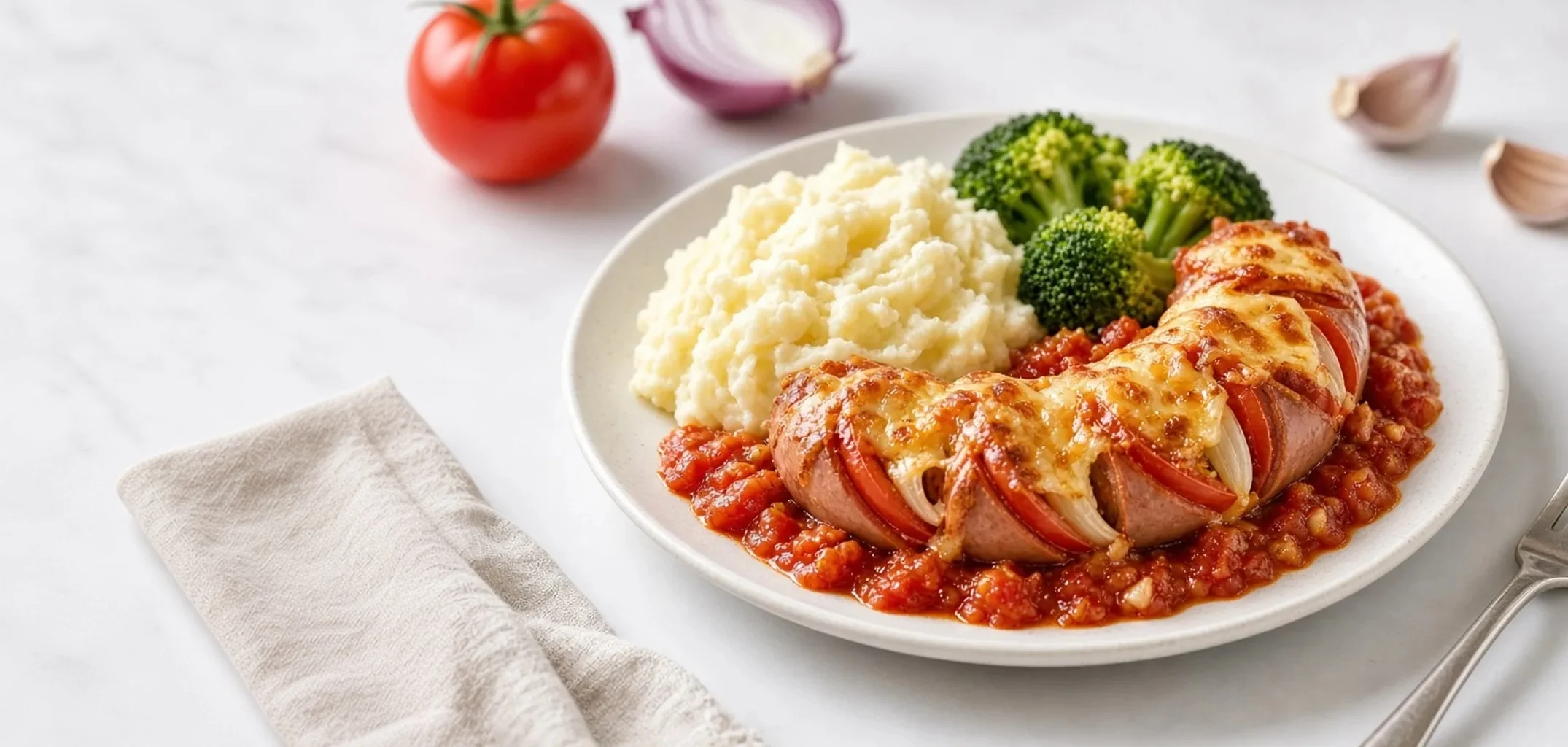
Ugnsbakad falukorv (oven-baked Swedish sausage) with tomato and cheese
30 min · 26 g protein · 472 cals / serving
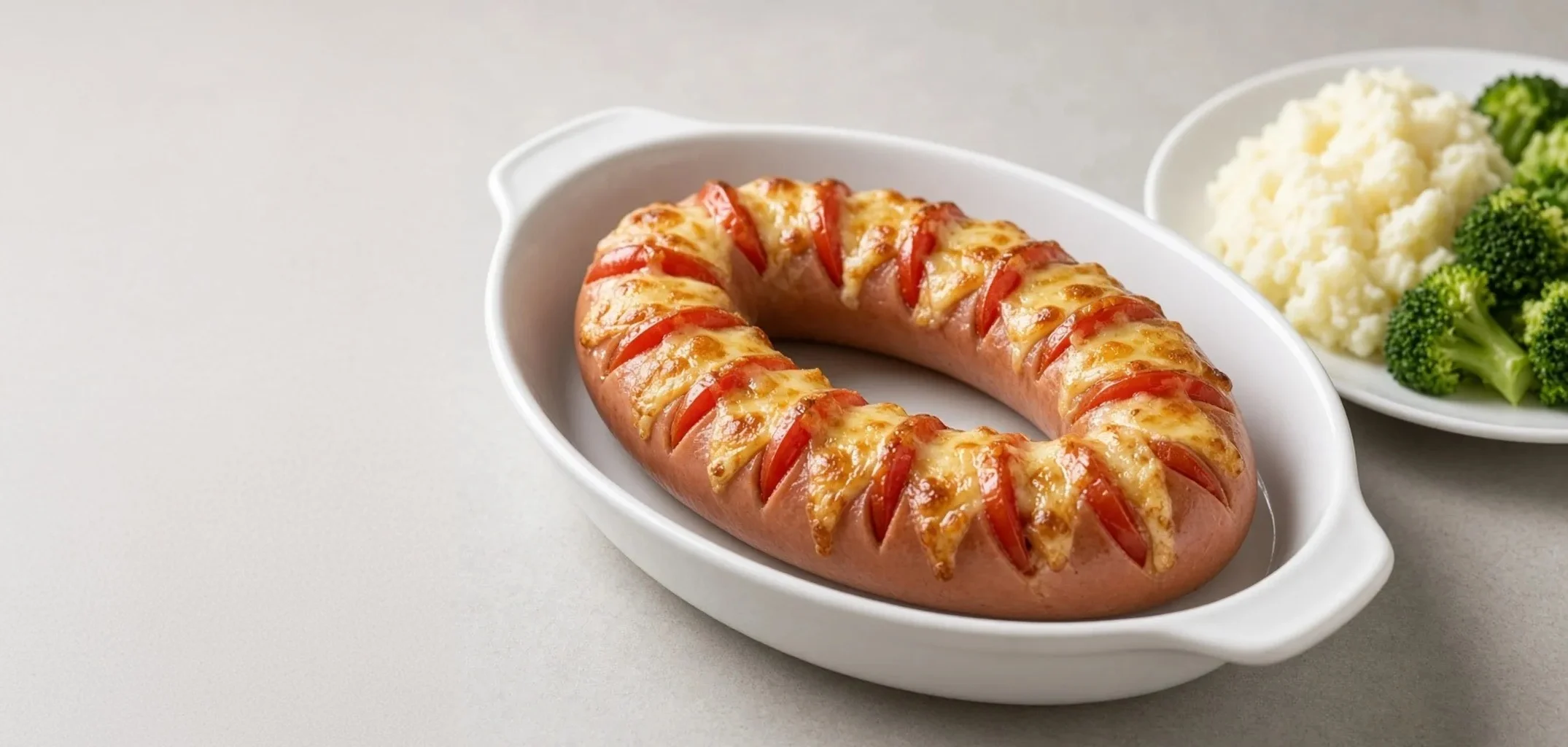
The children's favourite from every Swedish kitchen: a ring of falukorv sliced like a fan, with tomato and onion tucked into every cut, brushed with mustard and ketchup, covered in melting cheese and baked in a quick garlicky tomato sauce. With fluffy potatismos to catch the sauce and broccoli on the side.
Ingredients
Potatismos
- 1 3/4 lb potato, floury (mjölig), peeled and cut into chunks
- 3/4 cup + 1 tbsp skimmed milk, 0.5% fat, fortified, hot
- 2 tsp butter
- 1/2 tsp salt


- 1 ring (about 1 lb 2 oz) middagskorv (swedish dinner sausage), 9% fat, lean falukorv or middagskorv, about 9 % fat; check the pack if you cook gluten-free
- 1 tbsp French mustard, French-style (Dijon) mustard
- 1 tbsp ketchup
- 2 tomatoes, sliced
- 1 onion, cut into thin wedges
- 1 can (14 oz) crushed tomatoes, canned, with liquid
- 1 clove garlic, grated
- 1 tsp dried oregano, or dried French herbs
- 1/2 tsp black pepper
- 2/3 cup hard cheese, 17% fat, grated (a 17 % hard cheese)


To serve
- 14 oz frozen chopped broccoli, frozen florets

Steps
- Heat the oven to 435°F. Put the potatoes on to boil in salted water for 15–18 minutes, until soft.
- Cut the sausage almost all the way through at 3/4 inch intervals, so it holds together like a fan, and curve it into an ovenproof dish. Brush it all over with the mustard and ketchup, and tuck a slice of tomato and a wedge of onion into every cut.
- Stir the crushed tomatoes with the garlic, oregano and pepper and pour it round the sausage.
- Scatter the cheese over the sausage and bake 20 minutes, until the cheese is melted and golden, the sauce is bubbling and the sausage is piping hot through, 165°F.
- Meanwhile, cook the broccoli in boiling water for 3–4 minutes and drain. Drain the potatoes and mash them with the hot milk, butter and salt. Cut the sausage into pieces at the table and serve with the tomato sauce, mash and broccoli. Leftovers keep 3 days in the fridge; reheat sausage, sauce and mash together.
Good to know
Can I use ordinary falukorv?
Yes, it is the classic. Regular falukorv has more than twice the fat, so the dish turns richer and heavier, at about 52 instead of 67.
Macaroni instead of mash?
Boiled macaroni with the tomato sauce spooned over is the other way Swedish children like it; serve the broccoli all the same.
Per
- Calories
- 75
- Protein
- (23%)
- 4 g
- Fat
- (28%)
- 2 g
- Carbohydrates
- (50%)
- 10 g
- of which sugar
- 2 g
- Fiber
- 2 g
- Sodium
- 192 mg
More meals


Computed from the ingredients with our published formula, not yet kitchen-tested. How
As written, 1886 kcal goes into the pot and 2709 g of ingredients comes out as about 2525 g of food: 75 kcal per 100 g. Cooking moves water and energy density is the score's biggest lever, so the dish is scored as cooked, not as an average of its parts. Every ingredient links to its food page, with the same data and score. The label's percentages are each macronutrient's share of the calories. The full formula.