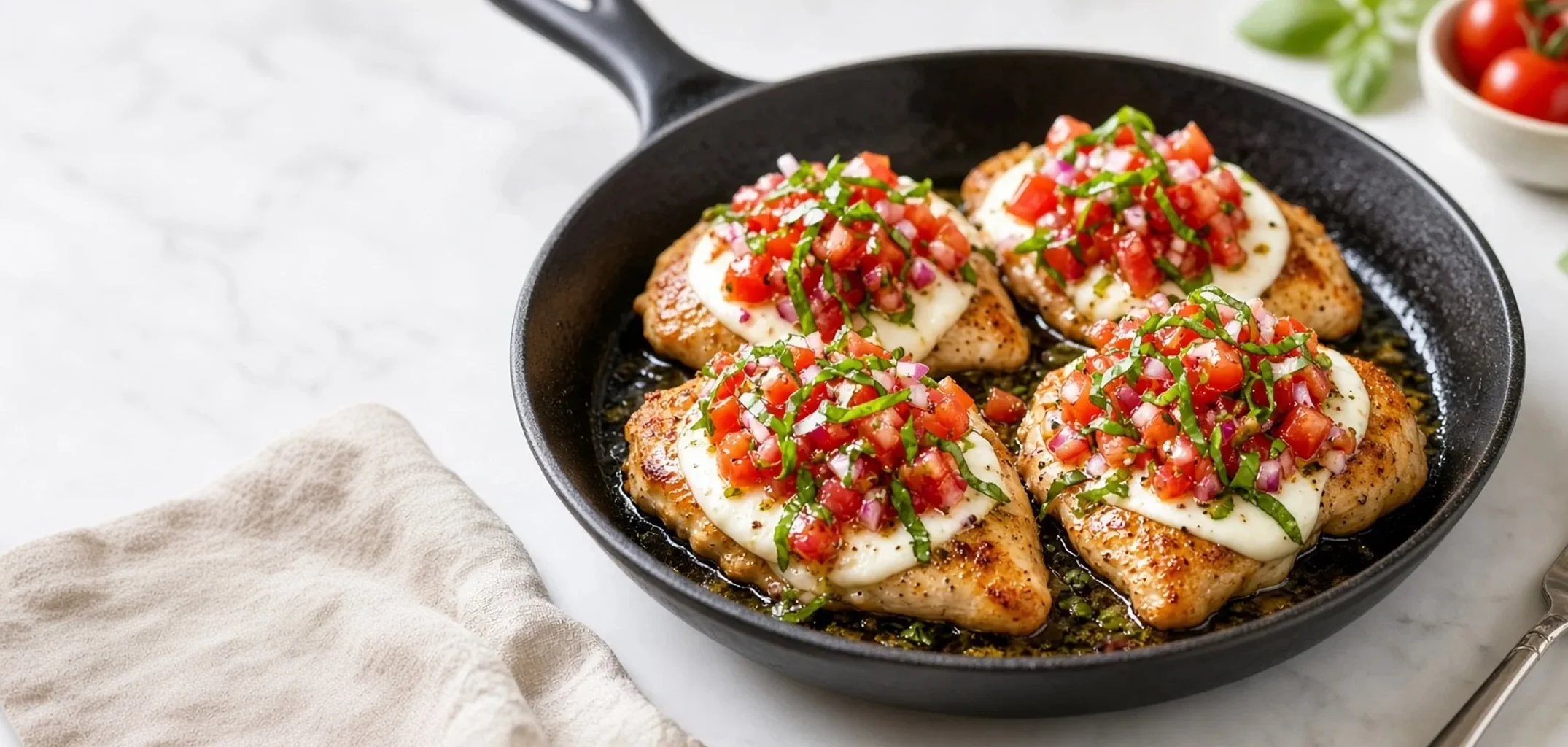
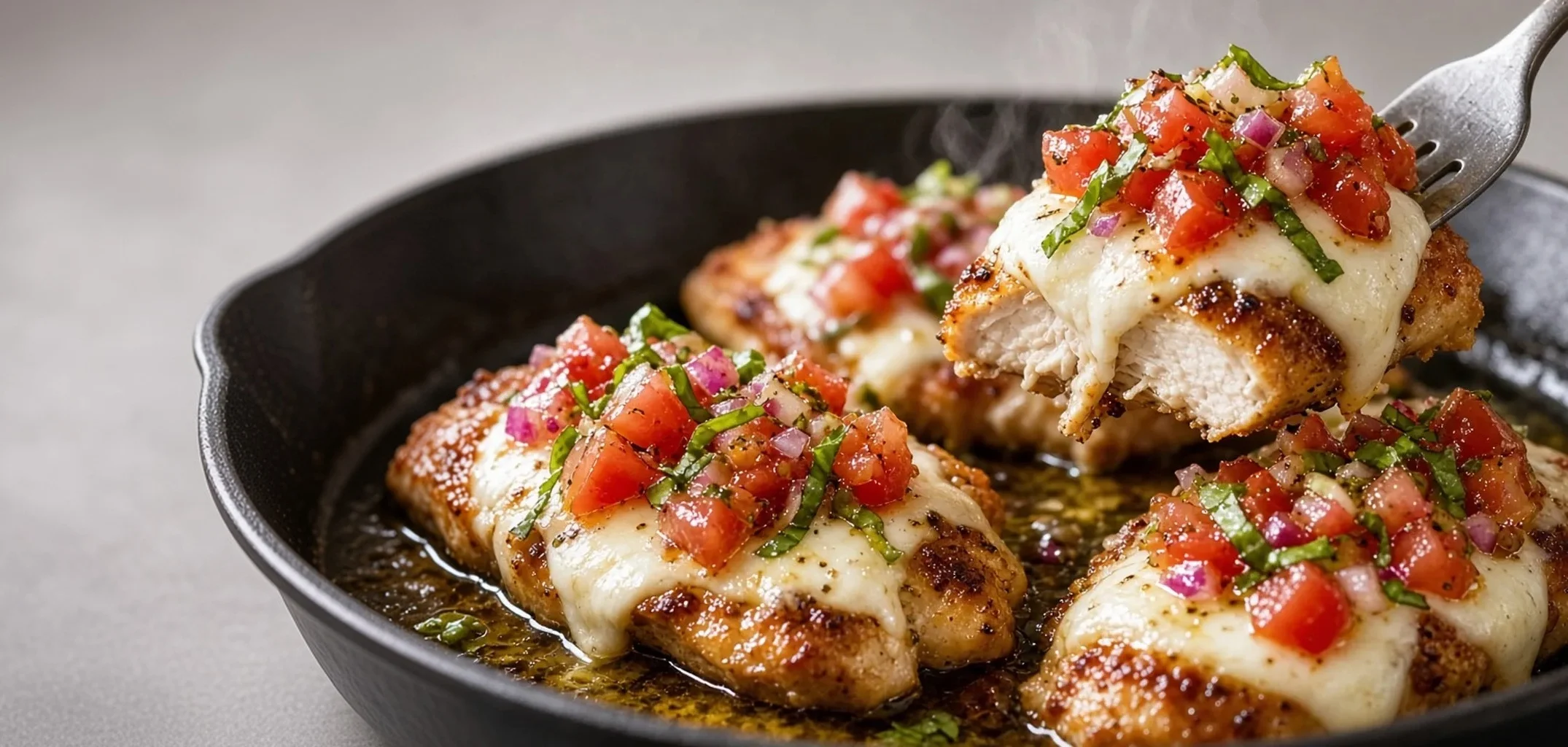
Bruschetta chicken with melted mozzarella
30 min · 48 g protein · 368 cals / serving
Juicy seared chicken breasts with melted mozzarella, piled high with a fresh bruschetta topping of ripe tomatoes, garlic, basil and a splash of balsamic. All the summer flavour of the appetizer, made into a dinner with no bread at all.
Ingredients
Bruschetta topping
- 5 plum tomatoes Roma tomatoes, seeded and diced
- 1/4 small red onion, very finely chopped
- 2 cloves garlic, minced
- 1/4 cup fresh basil, thinly sliced
- 2 tsp olive oil
- 1 tbsp balsamic vinegar


- 3/4 tsp salt, divided
- 4 small breasts (1 lb 10 oz) chicken breast, roasted, pounded to an even 2 cm (3/4 inch)
- 1/2 tsp black pepper
- 1 tsp Italian seasoning
- 2 tsp olive oil
- 4 slices (3 1/2 oz) mozzarella cheese


Steps
- Stir the tomatoes, red onion, garlic, basil, olive oil, balsamic and a third of the salt in a bowl. Leave it to sit while the chicken cooks.
- Pat the chicken dry and season with the rest of the salt, the pepper and Italian seasoning.
- Heat the oil in a large skillet over medium-high heat and sear the breasts 5–6 minutes a side, until golden and 165°F in the thickest part.
- Turn the heat to low, lay a slice of mozzarella on each breast, cover the pan and leave 2 minutes until the cheese melts. Spoon the bruschetta topping and its juices over the top and serve. The chicken keeps 2 days in the fridge; store the topping separately and spoon it on cold.
Good to know
Can I grill the chicken instead?
Yes. Grill it over medium-high heat for 5–6 minutes a side, lay the mozzarella on for the last minute with the lid down, then top as above.
Per
- Calories
- 137
- Protein
- (54%)
- 18 g
- Fat
- (39%)
- 6 g
- Carbohydrates
- (7%)
- 3 g
- of which sugar
- 1 g
- Fiber
- 1 g
- Sodium
- 282 mg
More meals


Computed from the ingredients with our published formula, not yet kitchen-tested. General guidance, not medical advice. Talk to your prescriber. How
As written, 1472 kcal goes into the pot and 1270 g of ingredients comes out as about 1075 g of food: 137 kcal per 100 g. Cooking moves water and energy density is the score's biggest lever, so the dish is scored as cooked, not as an average of its parts. Every ingredient links to its food page, with the same data and score. The label's percentages are each macronutrient's share of the calories. The full formula.