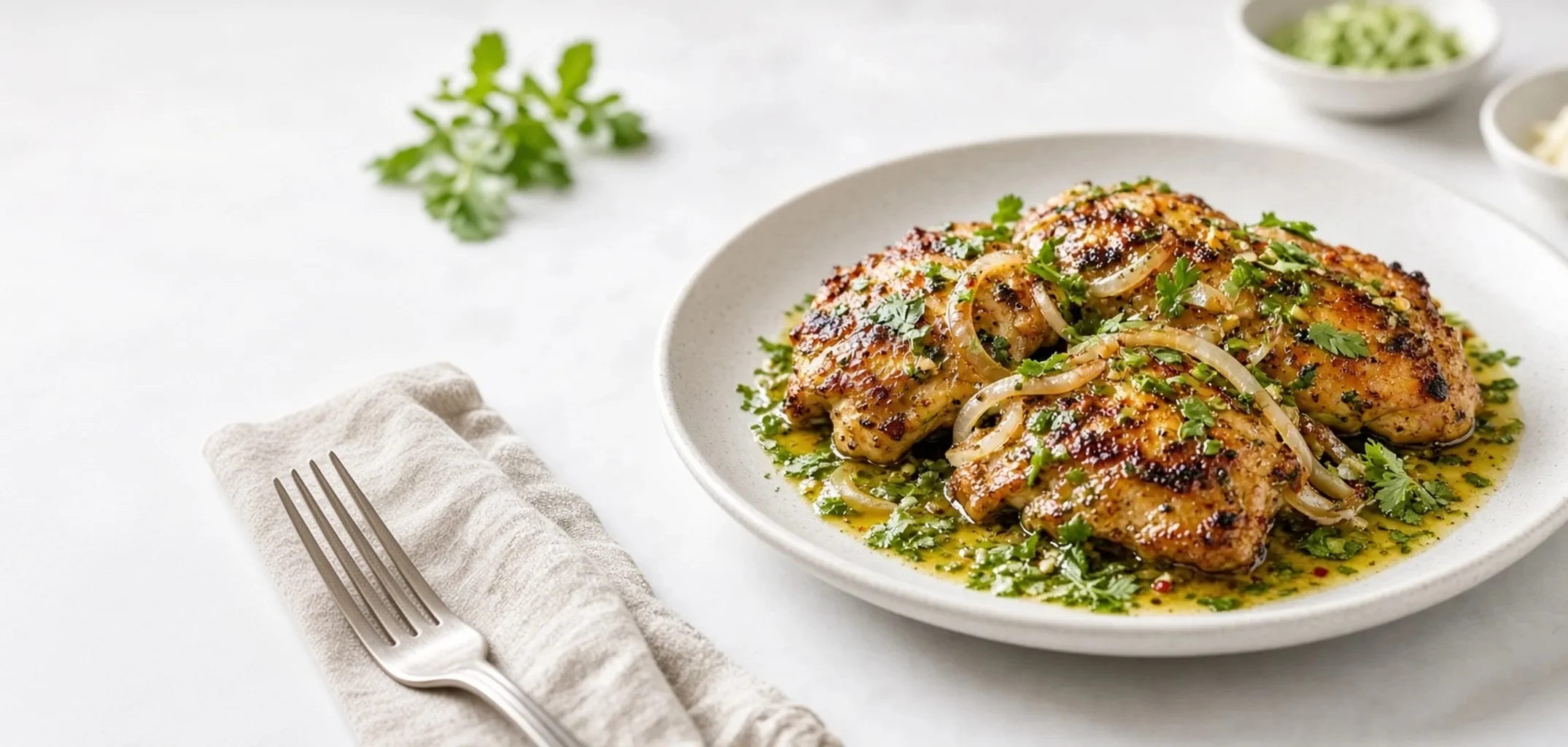
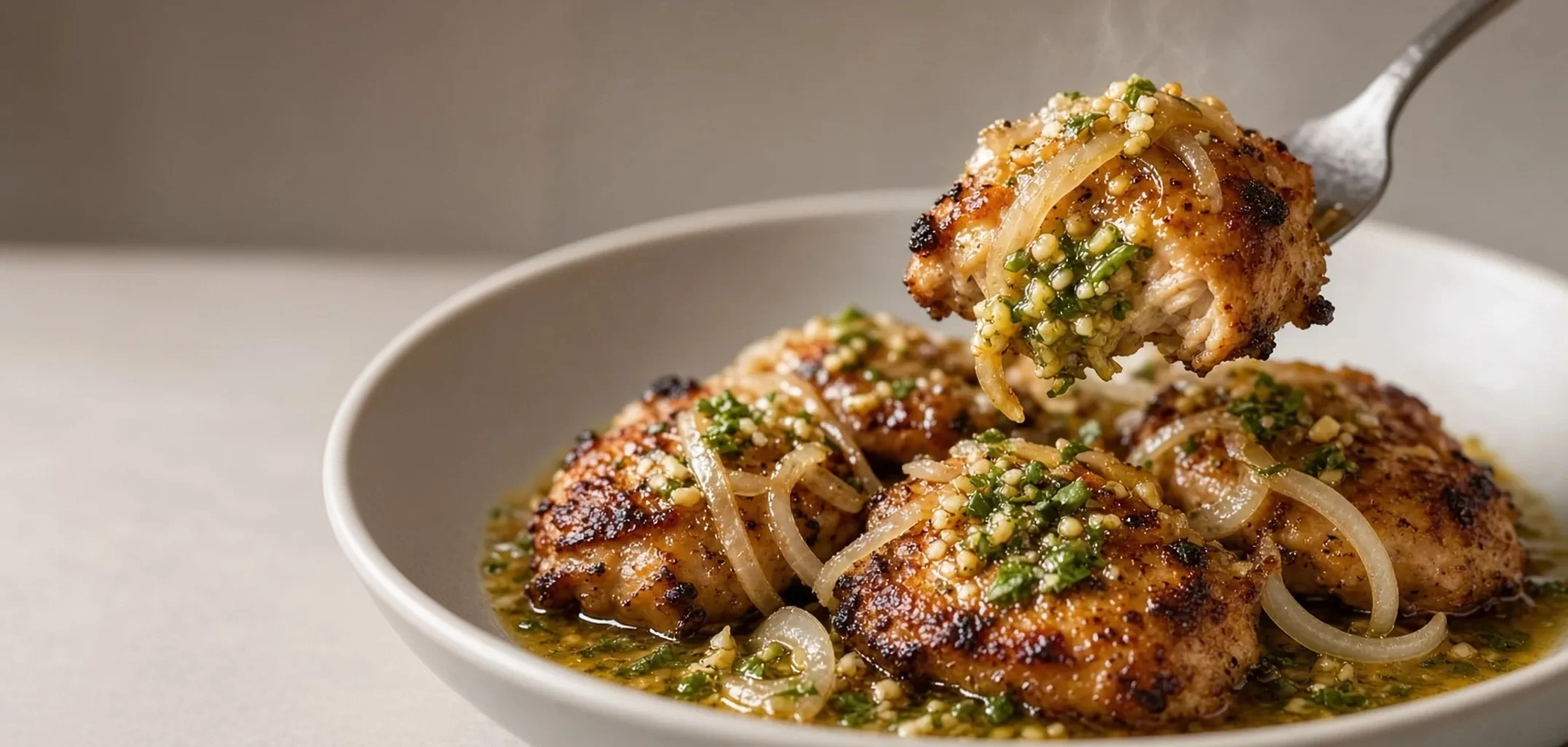
Cuban mojo chicken thighs with seared onions
65 min · 43 g protein · 408 cals / serving
Chicken thighs soaked in a bright Cuban mojo of orange, lime, a whole lot of garlic, cumin, oregano and fresh herbs, then seared until golden and charred. Sweet seared onions on top and fresh mojo spooned over at the table.
Ingredients
Mojo
- 1/3 cup orange juice, freshly squeezed
- 1/4 cup lime juice
- 2 tbsp olive oil, divided
- 8 cloves garlic, minced
- 1 tsp ground cumin
- 1 tsp dried oregano
- 1/4 cup fresh cilantro, chopped
- 1 tbsp fresh mint, chopped
- 1 tsp salt
- 1/2 tsp black pepper


- 2 lb (about 8) chicken thigh
- 1 medium white onion, sliced into thin rings


Steps
- Whisk together the orange juice, lime juice, 1 1/2 tablespoons of the oil, the garlic, cumin, oregano, cilantro, mint, salt and pepper. Pour a third of it into a small bowl, cover and refrigerate: that is the sauce for the table.
- Turn the chicken in the remaining two thirds of the mojo and refrigerate 30 minutes to 4 hours.
- Heat the rest of the oil in a large heavy frying pan or grill pan over medium-high heat. Lift the thighs out of the marinade (throw away what is left in the bowl) and cook 5–6 minutes a side, until well browned and 165°F in the thickest part. Move to a plate to rest.
- Add the onion to the hot pan and cook 4–5 minutes, stirring, until soft and charred in spots, scraping up the browned bits.
- Pile the onions over the chicken and spoon the reserved fresh mojo over at the table. Keeps 3 days in the fridge; keep the fresh mojo separate.
Good to know
Can I use sour orange juice?
Yes, it is the original. Use 2/3 cup of sour orange (naranja agria) in place of the orange and lime juices.
Can I make it with pork instead?
Mojo is just as classic on pork. Use boneless pork loin chops and cook them to 145°F with a 3-minute rest, at about the same score.
Per
- Calories
- 181
- Protein
- (43%)
- 19 g
- Fat
- (49%)
- 10 g
- Carbohydrates
- (8%)
- 4 g
- of which sugar
- 2 g
- Fiber
- 1 g
- Sodium
- 383 mg
More meals


Computed from the ingredients with our published formula, not yet kitchen-tested. How
As written, 1633 kcal goes into the pot and 1281 g of ingredients comes out as about 900 g of food: 181 kcal per 100 g. Cooking moves water and energy density is the score's biggest lever, so the dish is scored as cooked, not as an average of its parts. Every ingredient links to its food page, with the same data and score. The label's percentages are each macronutrient's share of the calories. The full formula.