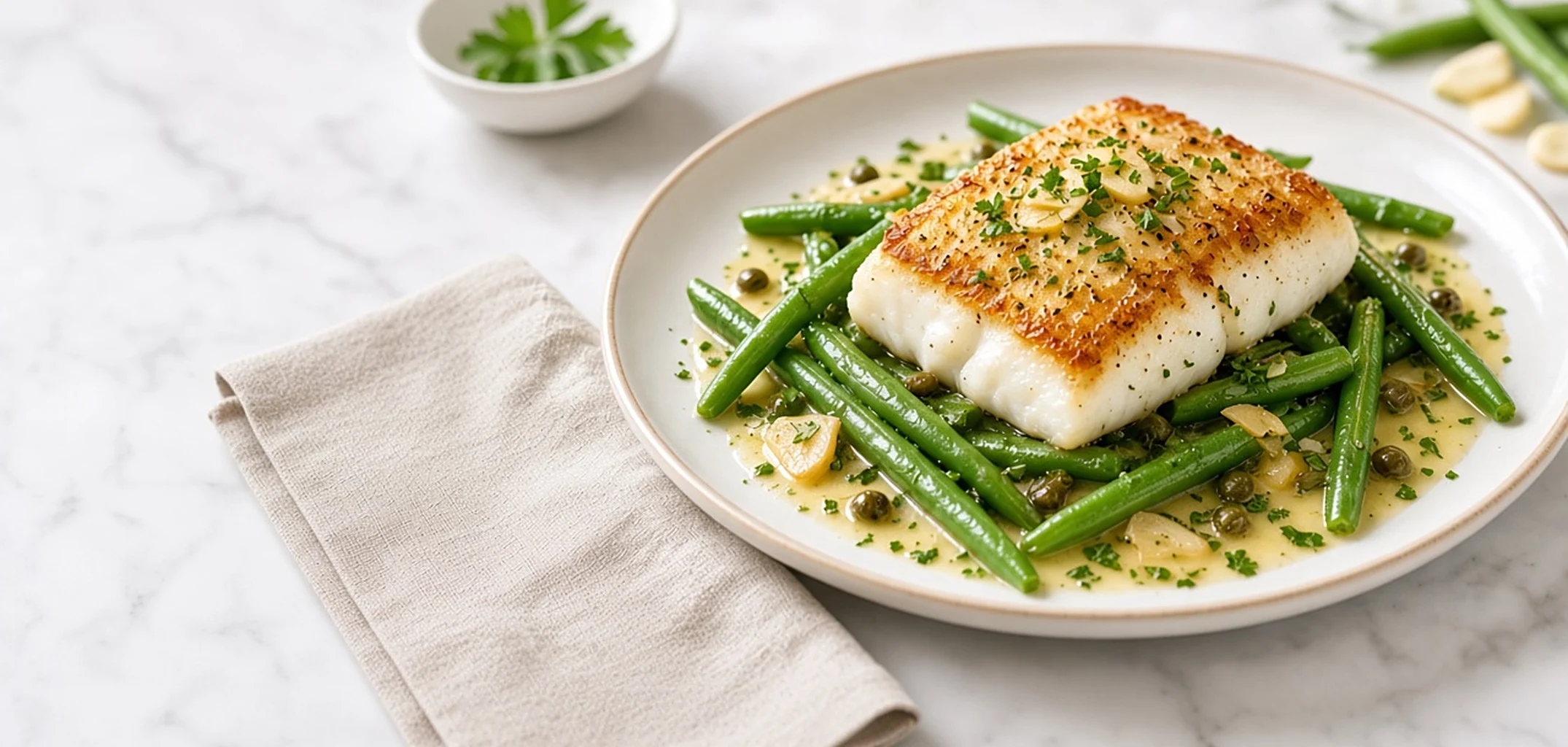
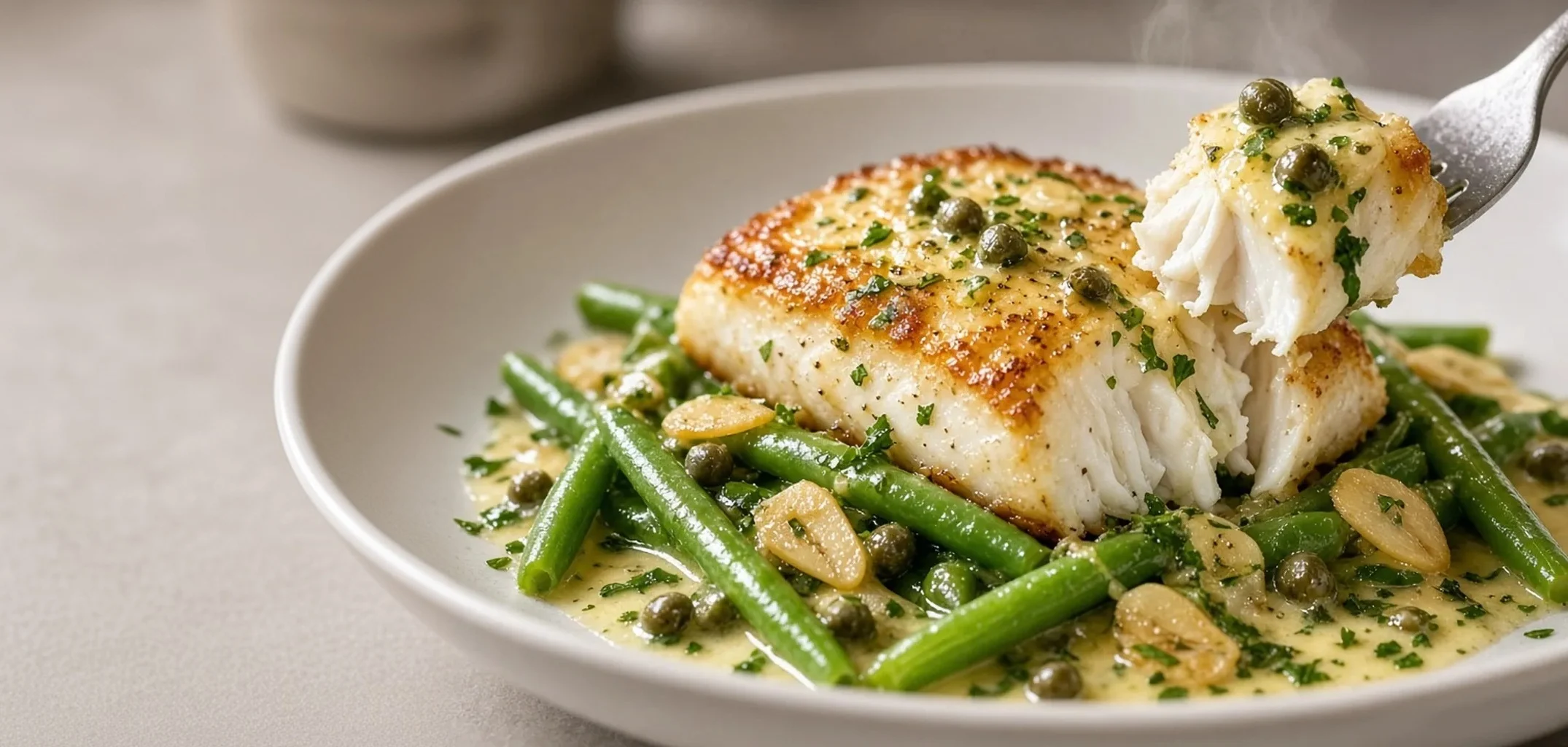
Halibut piccata
30 min · 37 g protein · 332 cals / serving
The chicken piccata sauce on a meaty white fish: halibut dusted in almond flour and seared golden, then bathed in a bright pan sauce of white wine, lemon, capers and a knob of butter. Served over crisp garlicky green beans, on the table in 30 minutes.
Ingredients
- 14 oz green beans, trimmed
- 3 cloves garlic, sliced
- 4 tsp olive oil, divided
- 1 1/2 lb (4 fillets) raw halibut, thawed if frozen, patted very dry
- 1/4 tsp salt
- 1/4 cup almond flour
- 1/3 cup dry white wine white wine
- 1/2 cup fish stock
- 2 tbsp lemon juice
- 2 tbsp capers, drained
- 2 tbsp butter, cold, cubed
- 2 tbsp fresh parsley, chopped
- a few grinds black pepper


Steps
- Cook the green beans in boiling salted water for 3 minutes, drain, then toss them in a large frying pan with 1 tsp of the oil and the garlic over medium heat for 2 minutes until glossy and fragrant. Divide between four warm plates.
- Wipe out the pan and heat the remaining oil over medium-high heat. Salt the halibut and dust each fillet lightly in almond flour. Sear for 3–4 minutes a side, until golden and the fish flakes and is opaque in the centre (145°F). Lay it on the beans.
- Pour the wine into the hot pan and let it bubble hard for 2 minutes, scraping up the browned bits. Add the fish stock, lemon juice and capers and simmer 2 minutes until reduced by about half. Off the heat, swirl in the cold butter until the sauce turns glossy, stir in the parsley and pepper, and spoon it over the fish.
Good to know
Can I make it without wine?
Yes: use more fish stock in its place and an extra squeeze of lemon. The sauce is a little less deep but still bright and tangy.
Halibut is expensive. What else works?
Thick cod or haddock loins take the same time and sauce. Thin fillets like sole need only 1–2 minutes a side (66 → 61).
Per
- Calories
- 117
- Protein
- (47%)
- 13 g
- Fat
- (42%)
- 5 g
- Carbohydrates
- (11%)
- 4 g
- of which sugar
- 1 g
- Fiber
- 1 g
- Sodium
- 205 mg
About 75% of the alcohol remains after cooking; the label counts only that.
More meals


Computed from the ingredients with our published formula, not yet kitchen-tested. How
As written, 1328 kcal goes into the pot and 1420 g of ingredients comes out as about 1140 g of food: 117 kcal per 100 g. Cooking moves water and energy density is the score's biggest lever, so the dish is scored as cooked, not as an average of its parts. Every ingredient links to its food page, with the same data and score. The label's percentages are each macronutrient's share of the calories. The full formula.