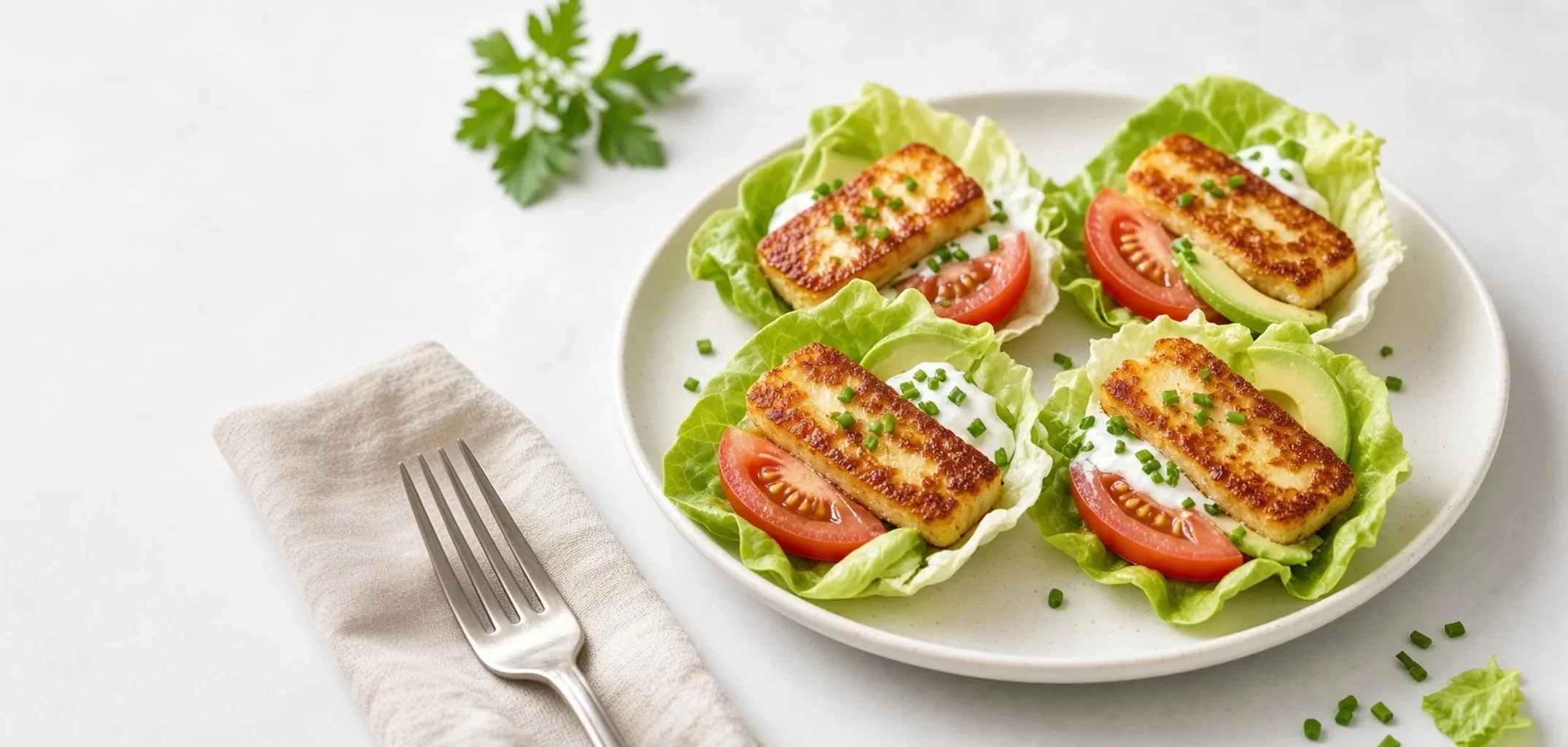
Halloumi, lettuce and tomato wraps with avocado
10 min · 29 g protein · 415 cals / serving
The HLT, the vegetarian answer to a BLT, without the bread: thick slices of halloumi fried golden and squeaky, tucked into soft butter-lettuce cups with ripe tomato, avocado and a lemony chive yogurt. Ten minutes and one pan.
Ingredients


Chive yogurt
- 1/2 cup nonfat Greek yogurt
- 2 tsp lemon juice
- 1 small clove garlic, grated
- 2 tbsp fresh chives, finely snipped
- 1/4 tsp black pepper


- 1 large head (10–12 leaves) butterhead lettuce, butter, Bibb or Little Gem
- 1 large tomato, sliced
- 1/2 large avocado, sliced


Steps
- Heat the oil in a large non-stick frying pan over medium-high heat. Lay in the halloumi slices in one layer and fry 2–3 minutes a side, until deep golden; turn each slice once the underside lets go of the pan on its own.
- While it fries, stir the yogurt, lemon juice, garlic, chives and pepper together in a small bowl. No salt: the halloumi brings plenty.
- Separate the lettuce into cups and spread each with a spoon of the chive yogurt. Fill with tomato and avocado, lay the hot halloumi on top and fold up to eat. Halloumi turns rubbery as it cools, so eat it straight away.
Good to know
No avocado?
Use sliced cucumber instead for crunch; the wraps come out at 57 instead of 51.
Can I grill the halloumi?
Yes: on a hot griddle pan or barbecue it takes the same 2–3 minutes a side and comes off with dark stripes. Brush the slices with the oil instead of oiling the pan.
Per
- Calories
- 120
- Protein
- (28%)
- 8 g
- Fat
- (62%)
- 8 g
- Carbohydrates
- (10%)
- 4 g
- of which sugar
- 2 g
- Fiber
- 1 g
- Sodium
- 446 mg
More meals


Computed from the ingredients with our published formula, not yet kitchen-tested. How
As written, 829 kcal goes into the pot and 705 g of ingredients comes out as about 693 g of food: 120 kcal per 100 g. Cooking moves water and energy density is the score's biggest lever, so the dish is scored as cooked, not as an average of its parts. Every ingredient links to its food page, with the same data and score. The label's percentages are each macronutrient's share of the calories. The full formula.