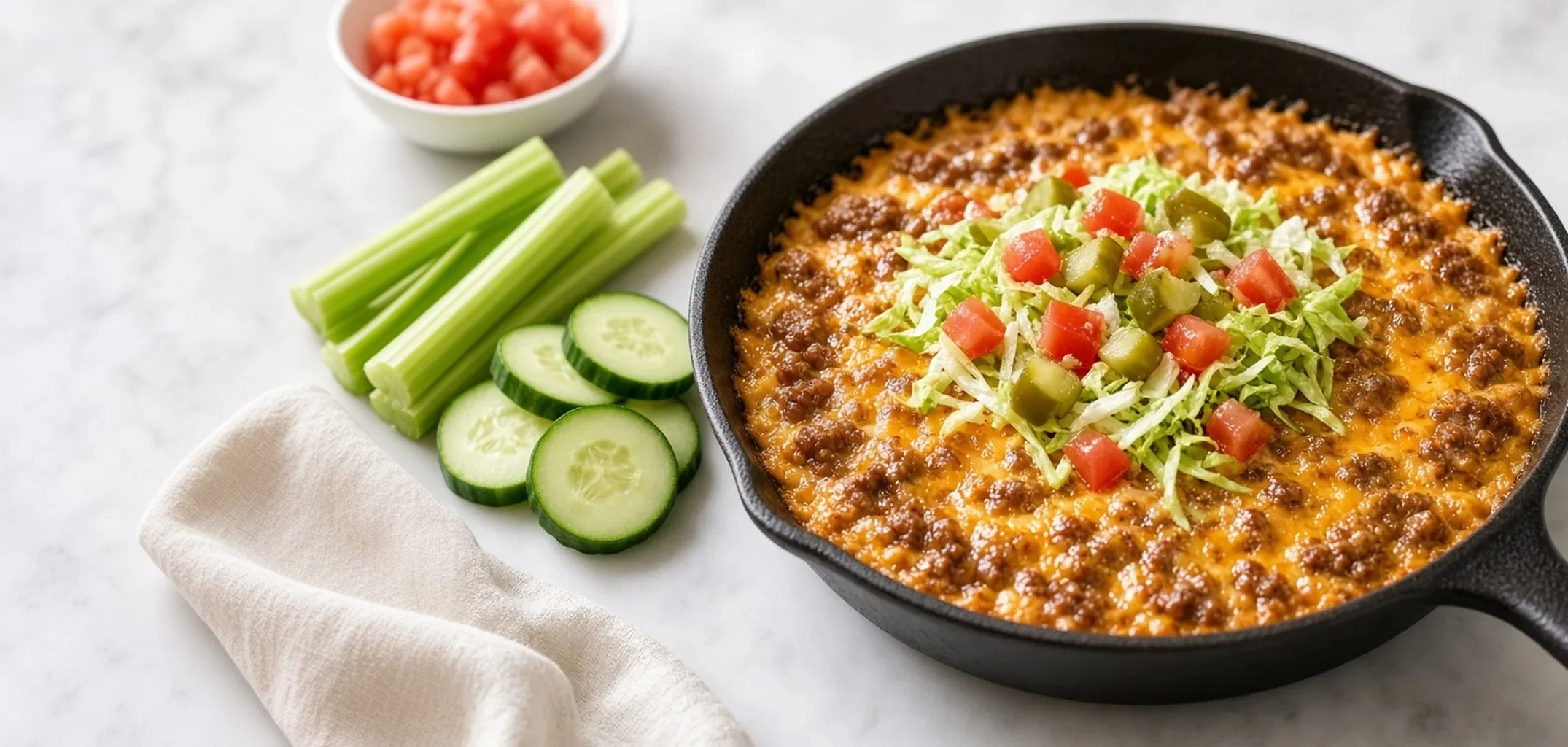
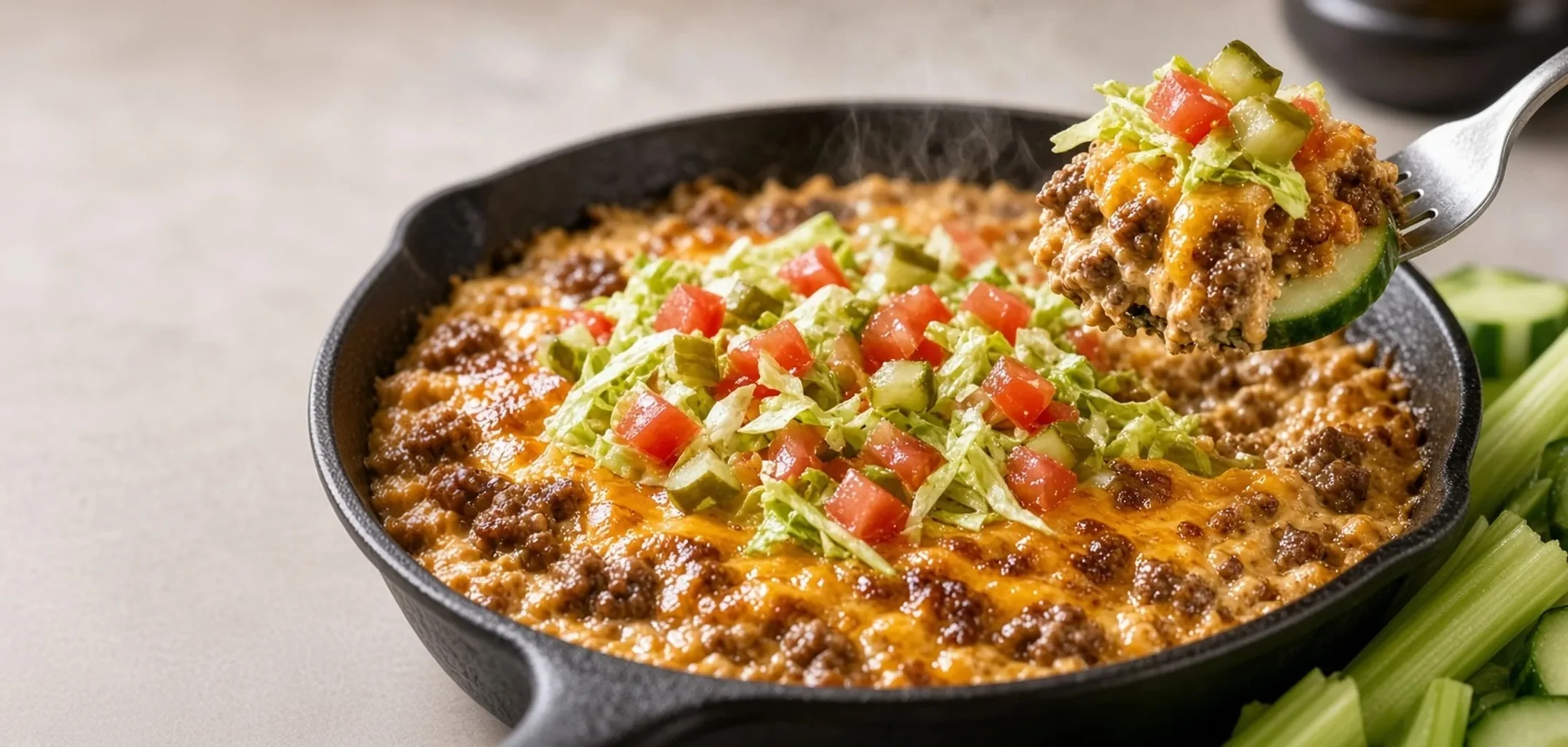
Hot cheeseburger dip
45 min · 21 g protein · 212 cals / serving
A bubbling skillet of seasoned beef and onion in a creamy, melty cheddar base, spiked with ketchup and mustard and topped like a burger with shredded lettuce, tomato and dill pickles. Scoop it up with celery and cucumber, game-day style.
Ingredients
- 1 small white onion, finely chopped
- 2 cloves garlic, minced
- 1/4 tsp salt
- 3/4 cup + 2 tbsp cottage cheese (1%)
- 1/2 cup light cream cheese, softened
- 2 tbsp ketchup, no added sugar
- 1 tbsp yellow mustard
- 1 tsp Worcestershire sauce
- 1 1/4 cups reduced fat cheddar cheese, shredded, divided


Burger toppings
- 1/2 cup iceberg lettuce, finely shredded
- 1 Roma tomato, diced
- 2 spears reduced sodium dill pickles, diced


Steps
- Heat the oven to 375°F.
- Brown the beef with the onion, garlic and salt in a 10 inch ovenproof skillet over medium-high heat, breaking it into small crumbs, for 8–10 minutes, until the onion is soft and the beef has no pink left and reaches 160°F. Drain off any fat.
- Blend the cottage cheese until completely smooth. Off the heat, stir it into the beef with the cream cheese, ketchup, mustard, Worcestershire and two thirds of the cheddar until creamy. Smooth the top and scatter over the rest of the cheddar.
- Bake 15–20 minutes, until bubbling at the edges and the cheese on top has melted.
- Top with the shredded lettuce, tomato and pickles and serve hot, with the celery and cucumber for dipping.
Good to know
Why blend the cottage cheese?
Blended smooth it turns into a creamy sauce in the oven and nobody can tell it is there. Left in curds it stays lumpy.
Can I make it in a slow cooker?
Yes. Brown the beef first, then stir everything except the toppings together in a small slow cooker and keep it on low for up to 2 hours, stirring now and then.
Per
- Calories
- 119
- Protein
- (41%)
- 12 g
- Fat
- (48%)
- 6 g
- Carbohydrates
- (10%)
- 3 g
- of which sugar
- 2 g
- Fiber
- 1 g
- Sodium
- 272 mg
More snacks


Computed from the ingredients with our published formula, not yet kitchen-tested. How
As written, 1695 kcal goes into the pot and 1598 g of ingredients comes out as about 1420 g of food: 119 kcal per 100 g. Cooking moves water and energy density is the score's biggest lever, so the dish is scored as cooked, not as an average of its parts. Every ingredient links to its food page, with the same data and score. The label's percentages are each macronutrient's share of the calories. The full formula.