Keto meatball parmesan casserole
60 min · 56 g protein · 514 cals / serving
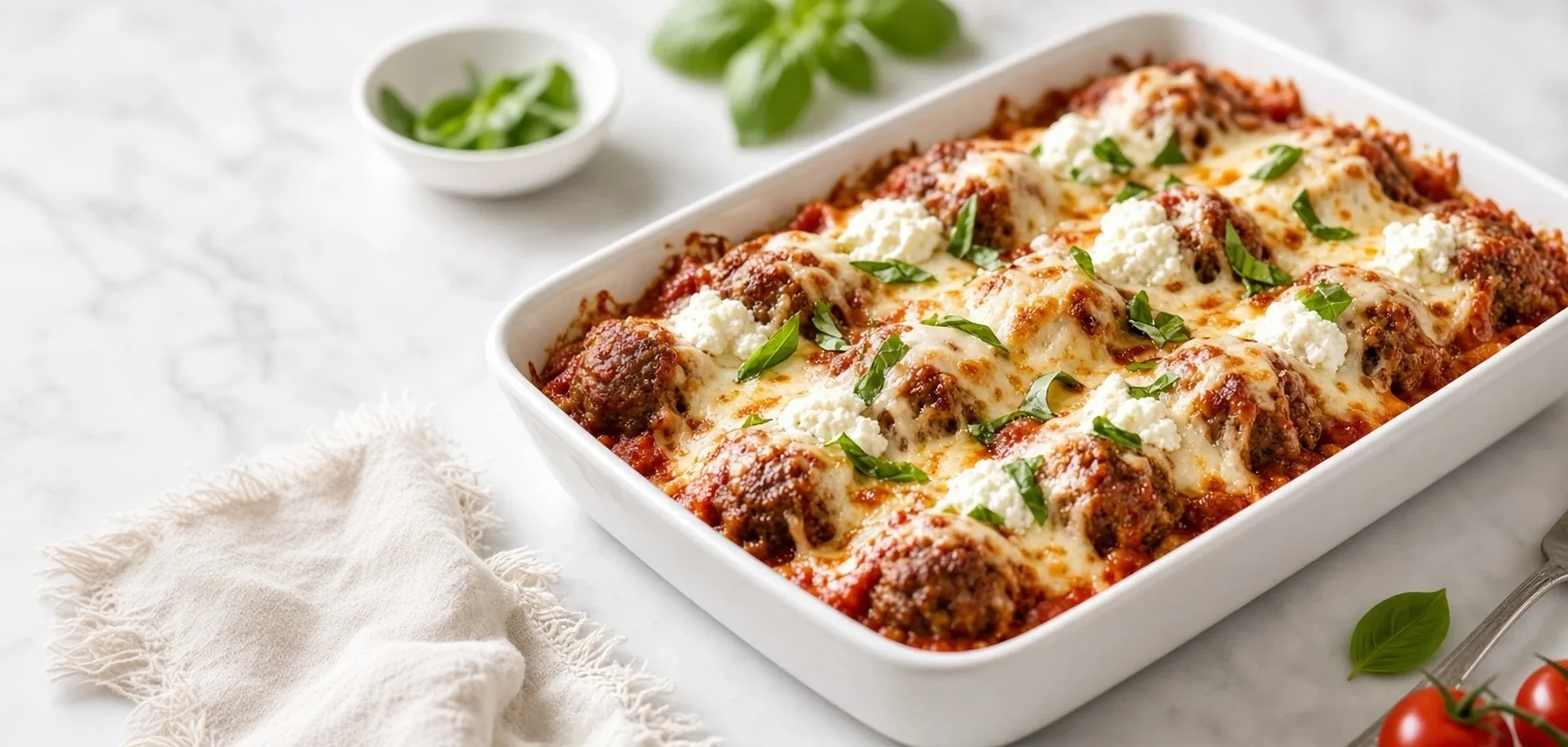
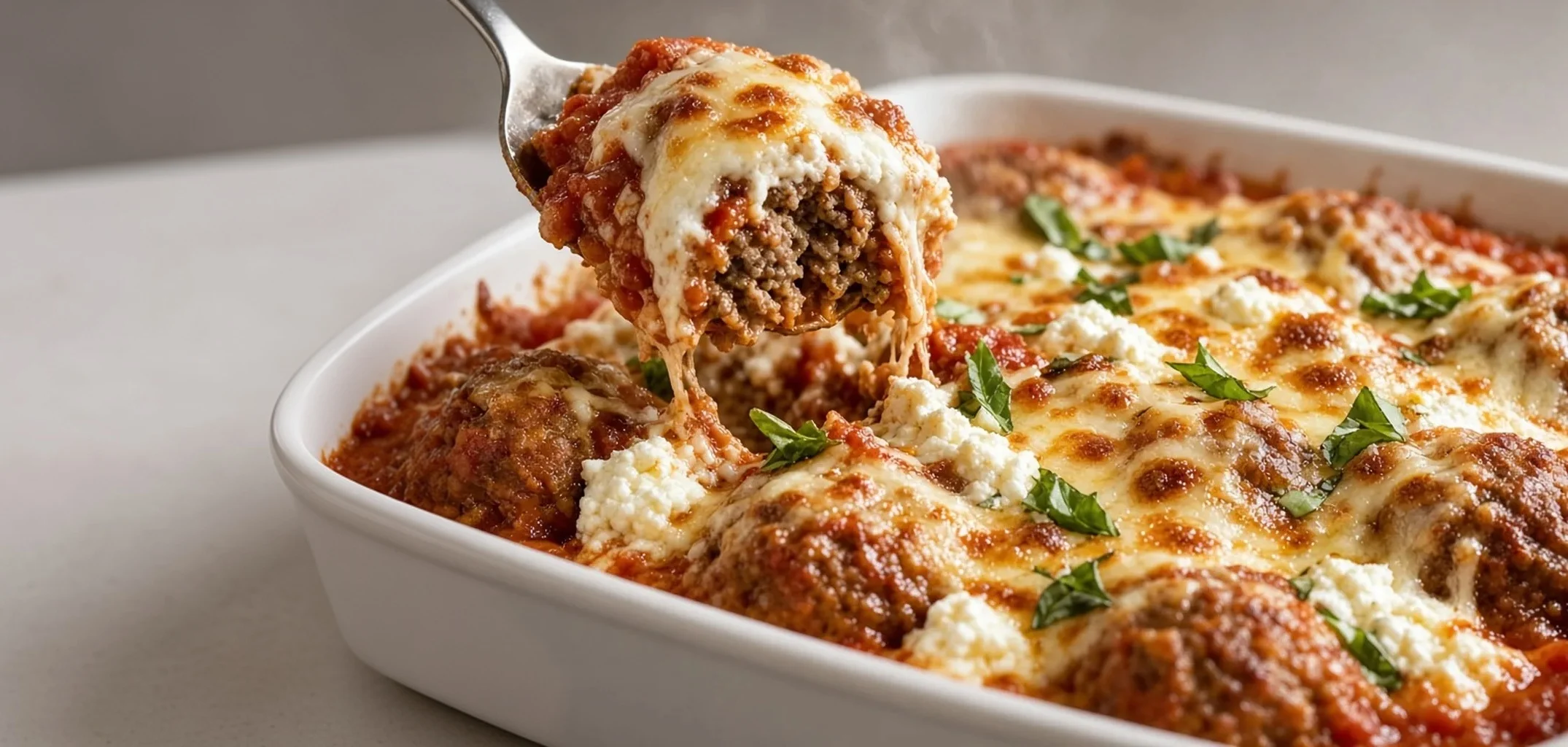
Tender, garlicky parmesan meatballs baked in a simple tomato sauce with spoonfuls of ricotta and a blanket of melted mozzarella. All the flavour of a meatball sub, no bread needed, and it all happens in one dish.
Ingredients
Meatballs
- 1 1/2 lb ground beef (93% lean)
- 1 large egg
- 1/2 cup finely crushed pork rinds
- 1/2 cup grated parmesan, divided
- 3 cloves garlic, minced, divided
- 1 1/2 tsp Italian seasoning, divided
- 3/4 tsp salt, divided
- 1/2 tsp black pepper


Sauce
- 1 1/2 cups canned crushed tomatoes
- 1/4 tsp red pepper flakes


- scant 1/2 cup part-skim ricotta
- 1 cup shredded mozzarella cheese
- a small handful fresh basil, torn (optional)


Steps
- Heat the oven to 400°F. Mix the beef, egg, pork rinds, half the parmesan, two-thirds of the garlic, 1 teaspoon of the Italian seasoning, 1/2 teaspoon of the salt and the pepper with your hands until just combined. Roll into 20 meatballs and set them in a 23 × 33 cm (9 × 13 in) baking dish. Bake 15 minutes, until browned.
- Meanwhile stir the crushed tomatoes with the rest of the garlic, Italian seasoning and salt and the pepper flakes.
- Pour off any fat from the dish and pour the sauce around the meatballs. Drop spoonfuls of ricotta between them, scatter with the mozzarella and the rest of the parmesan, and bake 15–20 minutes, until the sauce bubbles, the cheese has melted and the meatballs reach 160°F in the middle. Broil 2 minutes for a browned top if you like.
- Scatter with basil and serve. Keeps 4 days in the fridge; reheat covered at 350°F or in the microwave.
Good to know
No pork rinds?
Use 1/4 cup of almond flour instead. The meatballs come out a touch softer, at a score of about 57 instead of 60.
Can I use jarred marinara?
Yes, 2 1/2 cups of a no-sugar-added marinara. Many jarred sauces carry added sugar, which nudges the carbs up.
Per
- Calories
- 177
- Protein
- (44%)
- 19 g
- Fat
- (47%)
- 9 g
- Carbohydrates
- (9%)
- 4 g
- of which sugar
- 2 g
- Fiber
- 1 g
- Sodium
- 439 mg
More meals


Computed from the ingredients with our published formula, not yet kitchen-tested. How
As written, 2054 kcal goes into the pot and 1394 g of ingredients comes out as about 1160 g of food: 177 kcal per 100 g. Cooking moves water and energy density is the score's biggest lever, so the dish is scored as cooked, not as an average of its parts. Every ingredient links to its food page, with the same data and score. The label's percentages are each macronutrient's share of the calories. The full formula.