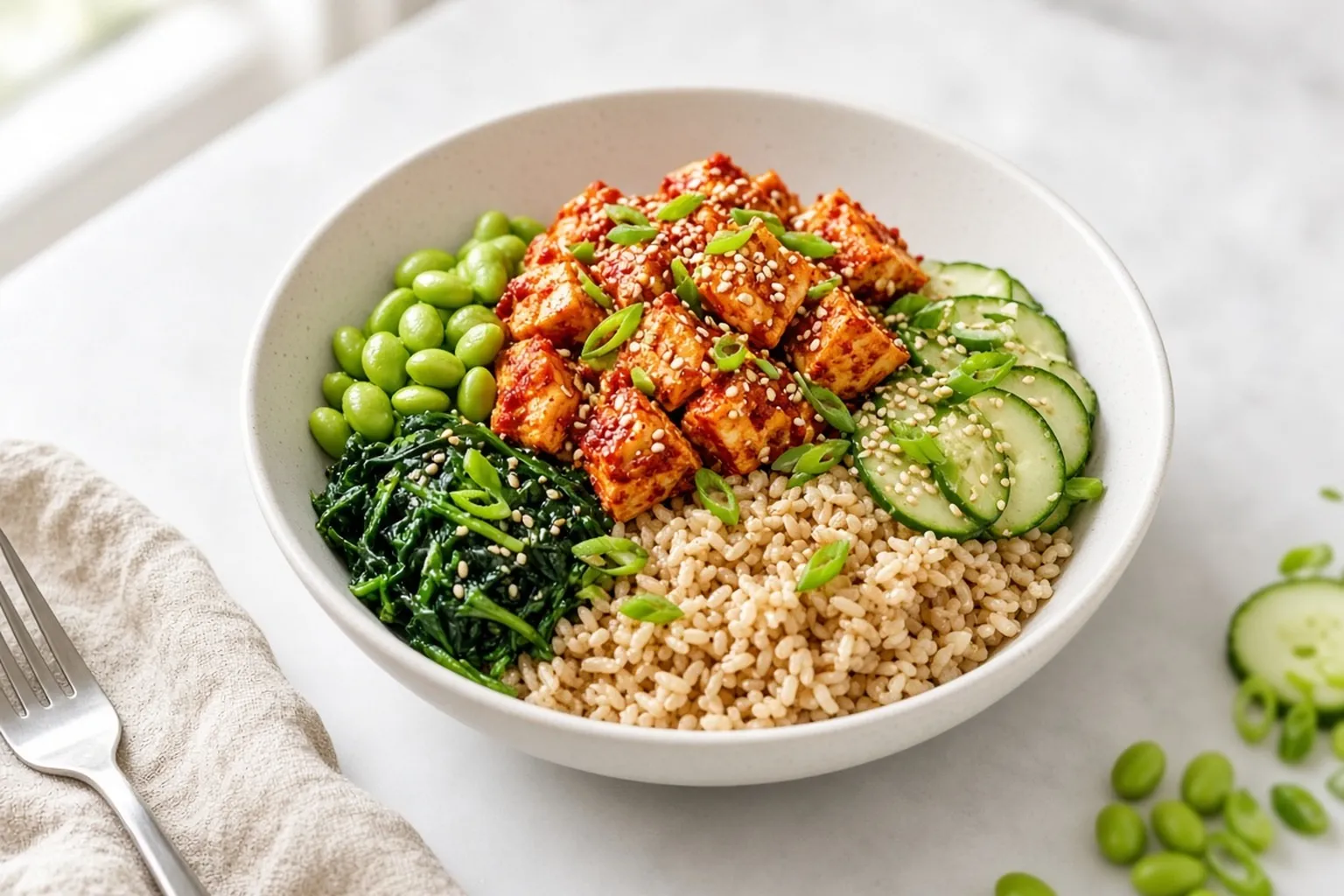
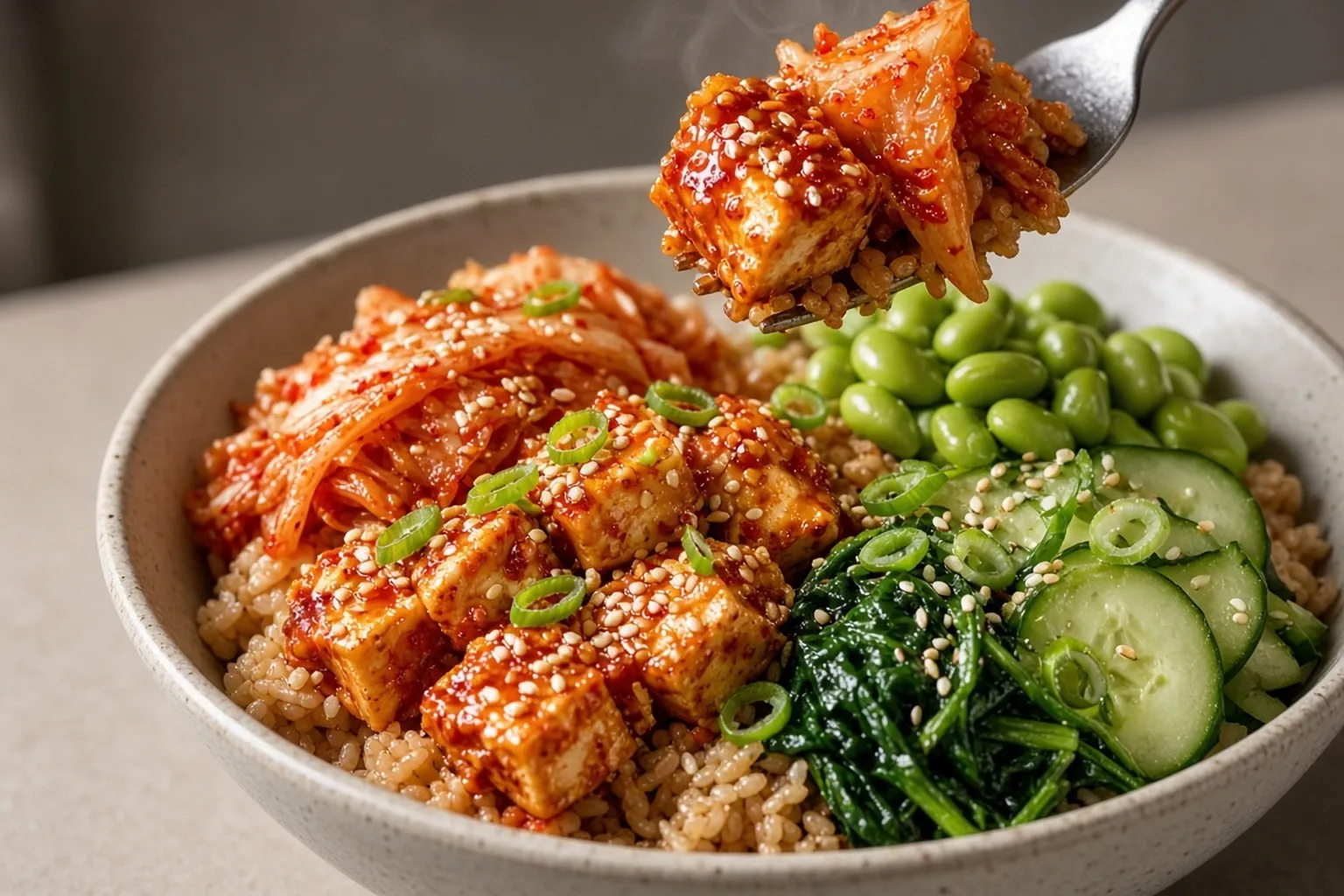
Kimchi tofu rice bowl with edamame
Cubes of tofu tossed in a hot pan with tangy kimchi and a sticky gochujang and soy glaze, spooned over warm brown rice with edamame, wilted spinach and cool cucumber, and scattered with green onion and sesame seeds. Ten minutes with a rice pouch and one pan.
- Time
- 10 min (3 prep + 7 cook)
- Servings
- 2
- Per serving
- 417 kcal
- Protein
- 26 g
Ingredients
- 1 pouch (250 g) brown rice, cooked, microwave brown rice
- 2/3 cup edamame, frozen shelled
- 10 1/2 oz block firm tofu, patted dry, in 2 cm (3/4 inch) cubes
- 1 tsp sesame oil, toasted
- 2/3 cup kimchi, vegan kimchi (check the label for fish sauce), roughly chopped
- 1 tbsp gochujang
- 2 tsp soy sauce
- 2 big handfuls baby spinach
- 1/3 cucumber, thinly sliced
- 1 green onion, thinly sliced
- 1 tsp toasted sesame seeds


Steps
- Put the edamame in a bowl with a splash of water, cover and microwave for 2 minutes; drain. Microwave the rice pouch as the packet says (usually 2 minutes).
- Meanwhile heat the sesame oil in a large frying pan over high heat and fry the tofu for 3 minutes, turning, until warmed through and lightly coloured. Add the kimchi, gochujang and soy sauce and toss for 1 minute until the tofu is coated in a sticky red glaze.
- Push the tofu to one side, drop the spinach into the pan and stir it for 30 seconds until just wilted.
- Divide the rice between two bowls and top with the kimchi tofu, spinach, edamame and cucumber. Scatter with the green onion and sesame seeds.
Good to know
Can I pack it for lunch?
The rice, tofu and edamame keep 2 days in the fridge; reheat them until piping hot and add the cucumber cold.
Can I use white rice?
Yes, a pouch of cooked white rice works the same way, for about the same score.
Per
- Calories
- 83
- Protein
- (25%)
- 5 g
- Fat
- (32%)
- 3 g
- Carbohydrates
- (44%)
- 10 g
- of which sugar
- 1 g
- Fiber
- 2 g
- Sodium
- 227 mg
More meals


Computed from the ingredients with our published formula, not yet kitchen-tested. How
As written, 834 kcal goes into the pot and 1025 g of ingredients comes out as about 1005 g of food: 83 kcal per 100 g. Cooking moves water and energy density is the score's biggest lever, so the dish is scored as cooked, not as an average of its parts. Every ingredient links to its food page, with the same data and score. The label's percentages are each macronutrient's share of the calories. The full formula.