Meals · Skillet & sheet-pan mains
Peppercorn-crusted tuna steaks with Dijon cream sauce
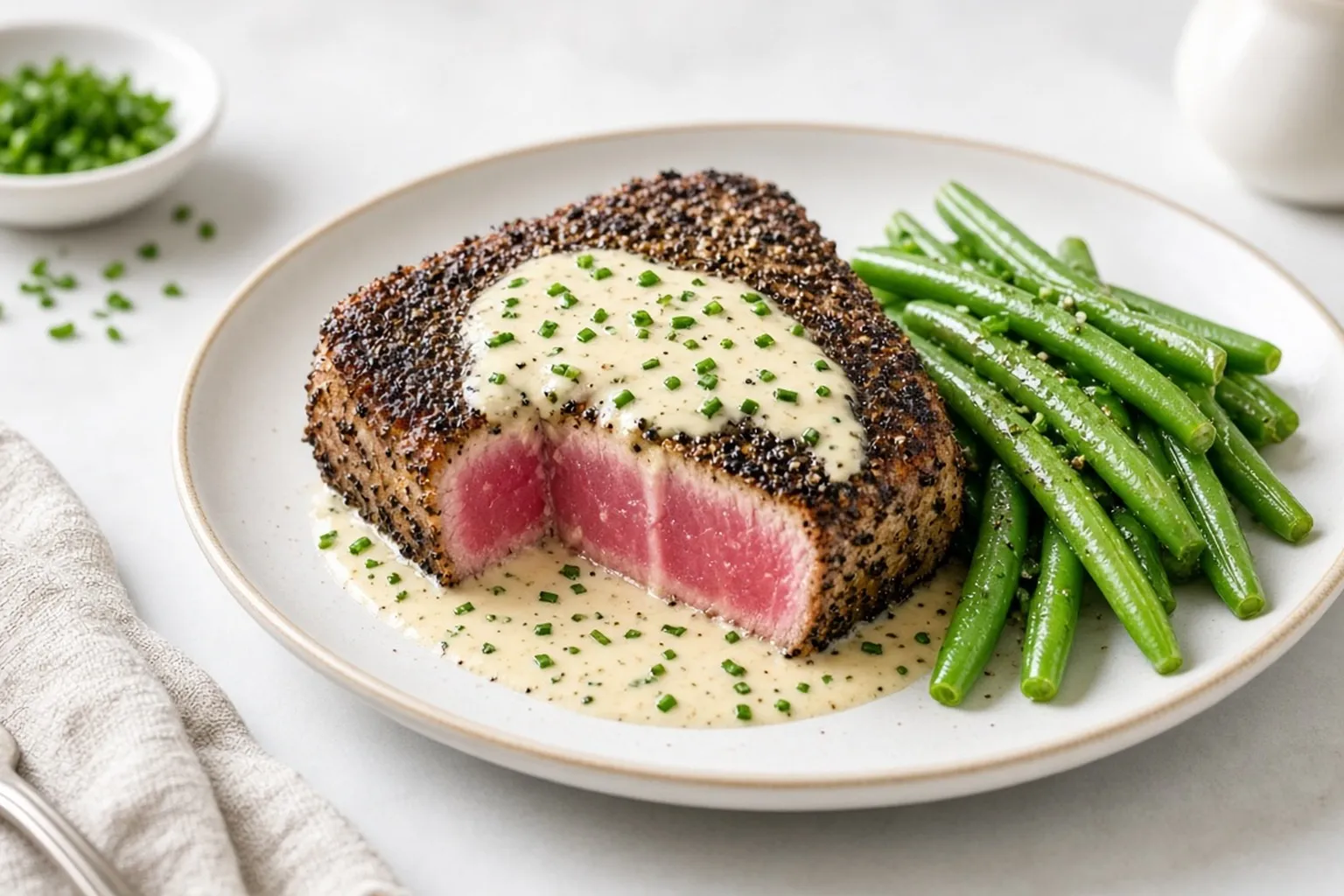
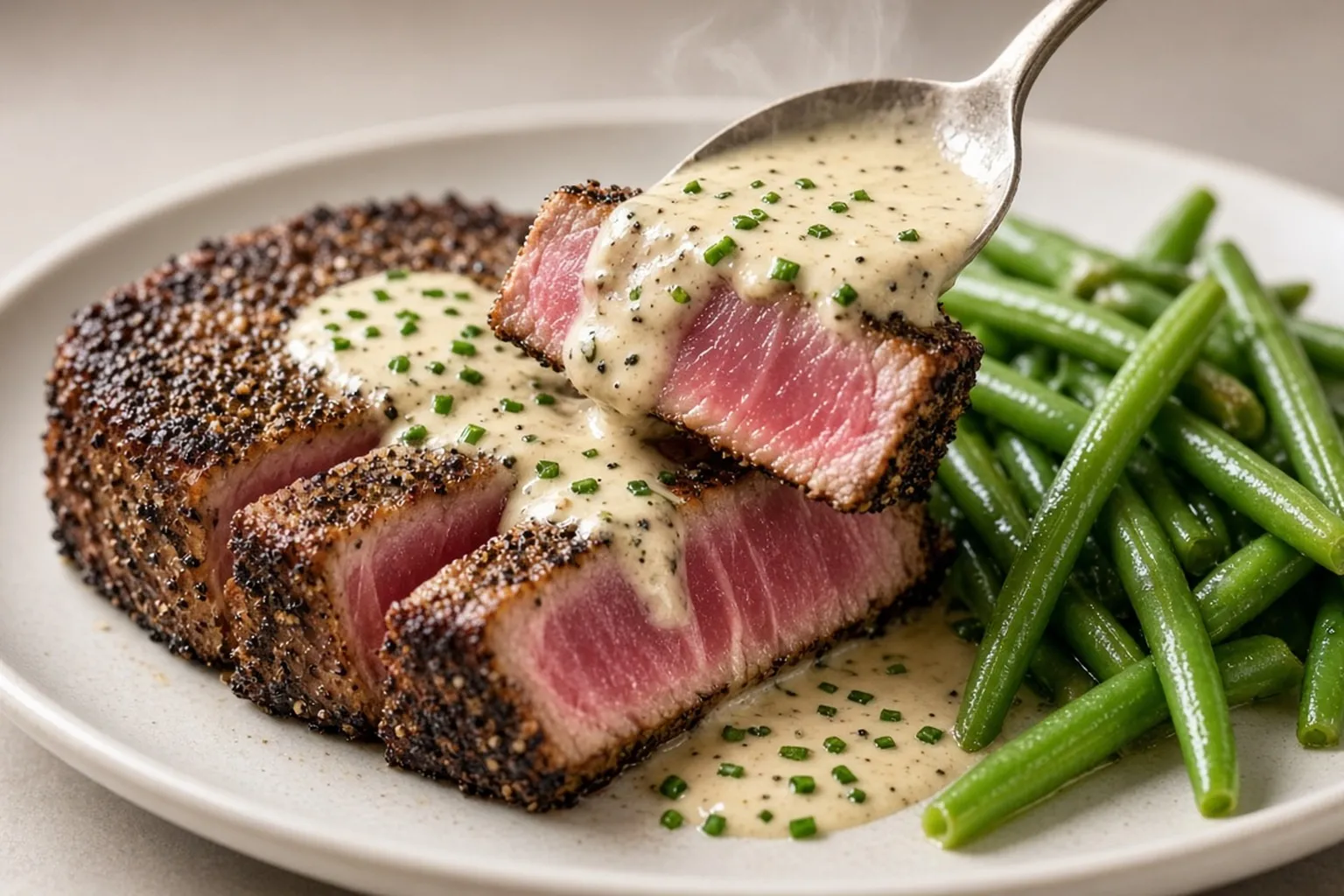
Tuna au poivre: thick tuna steaks pressed into cracked black pepper and coriander, seared hard so the outside is crunchy and the inside stays rosy, then sauced with a quick, peppery Dijon cream made in the same pan. Green beans on the side, 25 minutes.
- Time
- 25 min (10 prep + 15 cook)
- Servings
- 4
- Per serving
- 301 kcal
- Protein
- 43 g
Ingredients
- 14 oz green beans, trimmed
- 2 tsp butter
- 4 tuna steaks, about 1 in thick (5–6 oz each) ahi tuna, thawed if frozen, patted dry
- 1 tbsp, coarsely cracked black pepper
- 1 tsp ground coriander
- 1/4 tsp salt
- 2 tsp avocado oil
- 1 small shallot, finely chopped
- 1/2 cup fish stock
- 2 tsp Dijon mustard
- 1/3 cup light cream
- 1 tbsp fresh chives, snipped


Steps
- Boil the green beans in salted water for 4 minutes until crisp-tender, drain and toss with the butter. Keep warm.
- Mix the cracked pepper, coriander and salt on a plate and press both flat sides of each tuna steak firmly into it. Heat the oil in a heavy frying pan over high heat until it smokes, lay in the tuna and sear 1½–2 minutes a side for rare to medium-rare, or 3 minutes a side if you prefer it cooked through until opaque. Lift onto a board to rest.
- Lower the heat to medium and soften the shallot in the pan for 1 minute. Add the fish stock and Dijon, scrape up the browned bits and boil for 2 minutes until reduced by half, then stir in the cream and simmer 1–2 minutes until it coats a spoon. Stir in the chives. Slice the tuna thickly, spoon the sauce over and serve with the beans.
Good to know
Is it safe to eat tuna rare?
Choose sushi- or sashimi-grade tuna from a fishmonger you trust if you want it rare in the middle. If you are pregnant or prefer it fully cooked, sear it 3 minutes a side until opaque throughout.
Can I make it with steak instead?
Yes: this is the classic steak au poivre crust and sauce. Use the same weight of sirloin and cook it to your liking (80 → 64).
Per
- Calories
- 107
- Protein
- (58%)
- 15 g
- Fat
- (30%)
- 3 g
- Carbohydrates
- (12%)
- 4 g
- of which sugar
- 1 g
- Fiber
- 1 g
- Sodium
- 160 mg
More meals


Computed from the ingredients with our published formula, not yet kitchen-tested. General guidance, not medical advice. Talk to your prescriber. How
As written, 1204 kcal goes into the pot and 1316 g of ingredients comes out as about 1130 g of food: 107 kcal per 100 g. Cooking moves water and energy density is the score's biggest lever, so the dish is scored as cooked, not as an average of its parts. Every ingredient links to its food page, with the same data and score. The label's percentages are each macronutrient's share of the calories. The full formula.