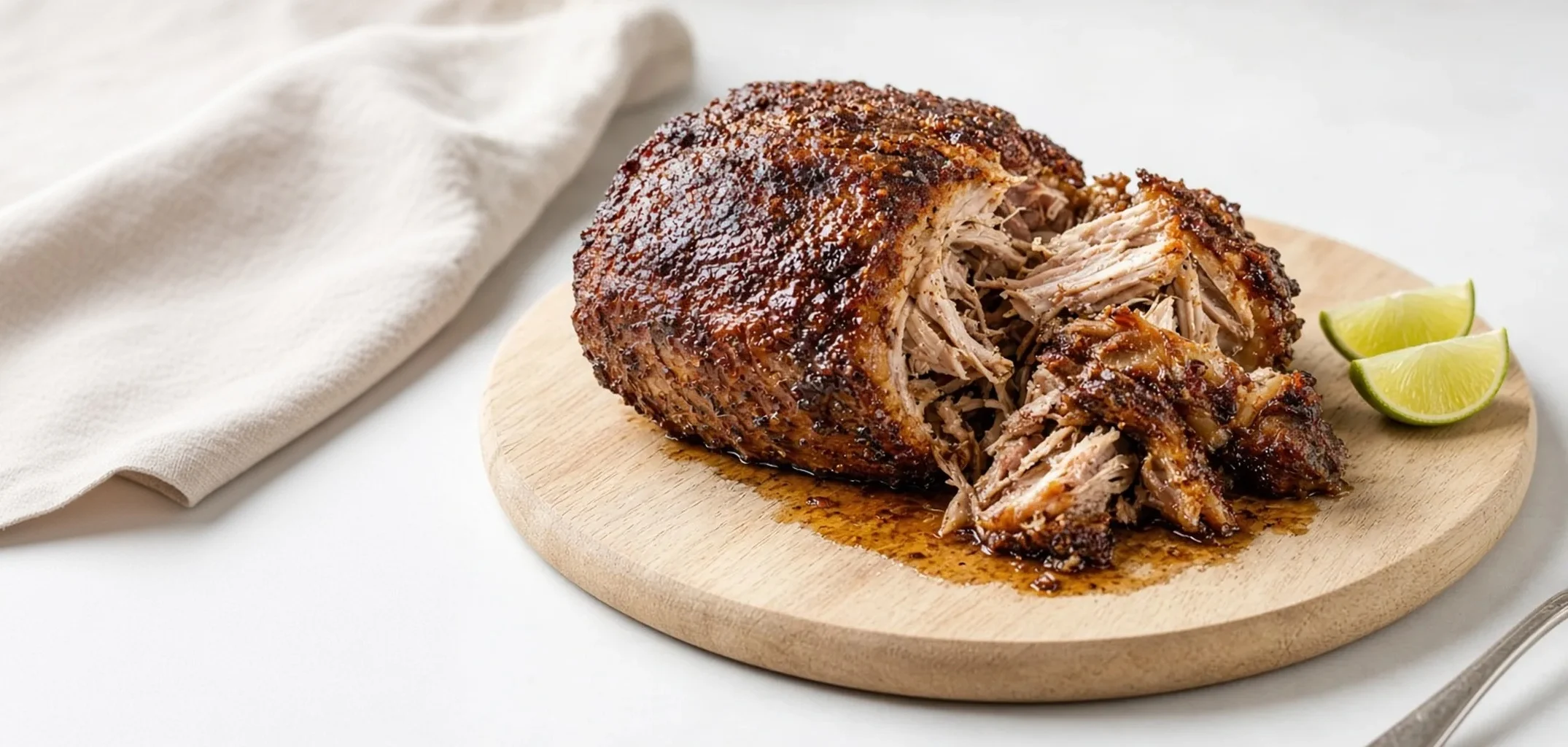
Puerto Rican pernil (garlic and oregano roast pork shoulder)
300 min · 47 g protein · 550 cals / serving
Pork shoulder rubbed all over with a pungent paste of garlic, oregano, vinegar and olive oil, left overnight, then slow-roasted for hours until it pulls apart, with a crusty, garlicky outside. Puerto Rico's holiday roast, and a week of easy dinners.
Ingredients
Adobo paste
- 10 cloves garlic
- 2 tsp dried oregano
- 1 tbsp salt
- 1 1/2 tsp black pepper
- 1 tsp ground cumin
- 2 tbsp olive oil
- 2 tbsp white vinegar
- 1 tsp sazon seasoning, for colour (optional)


- 3 1/2 lb boneless shoulder (butt) pork shoulder, fat cap trimmed to a thin layer

To serve
- 1 lime, in wedges lime juice

Steps
- Pound the garlic, oregano, salt, pepper and cumin to a paste in a mortar (or pulse in a small food processor), then work in the oil, vinegar and sazón if using.
- Cut deep slits 2.5 cm (1 in) apart all over the pork with a small knife and push the paste into them, rubbing the rest over the outside. Cover and refrigerate overnight, or at least 6 hours.
- Take the pork out of the fridge 30 minutes before cooking. Heat the oven to 325°F. Set the pork fat side up in a roasting pan, cover tightly with foil and roast 3 1/2 hours.
- Uncover, turn the oven up to 425°F and roast 30–40 minutes more, until the outside is dark and crusty and the meat pulls apart easily with a fork (it will be well past 145°F, which is what makes it tender). Rest 15 minutes.
- Pour off and discard the clear fat from the pan, keeping the dark juices. Pull the pork into chunks, toss it with the pan juices and serve with lime wedges. Keeps 4 days in the fridge; reheat covered with a splash of water.
Good to know
Can I use a bone-in shoulder with the skin on?
Yes, that is the classic pernil with its crackling (cuerito). Allow about 40 minutes more per kilo at 320°F, and remember the skin and fat cap add a good deal of fat.
What do I serve it with on low carb?
A crunchy cabbage slaw, sliced avocado or a green salad with lime. Rice and beans or tostones are the tradition, and move it out of low carb.
Per
- Calories
- 300
- Protein
- (35%)
- 25 g
- Fat
- (63%)
- 21 g
- Carbohydrates
- (2%)
- 1 g
- of which sugar
- <1 g
- Fiber
- <1 g
- Sodium
- 771 mg
More meals


Computed from the ingredients with our published formula, not yet kitchen-tested. How
As written, 3299 kcal goes into the pot and 1738 g of ingredients comes out as about 1100 g of food: 300 kcal per 100 g. Cooking moves water and energy density is the score's biggest lever, so the dish is scored as cooked, not as an average of its parts. Every ingredient links to its food page, with the same data and score. The label's percentages are each macronutrient's share of the calories. The full formula.