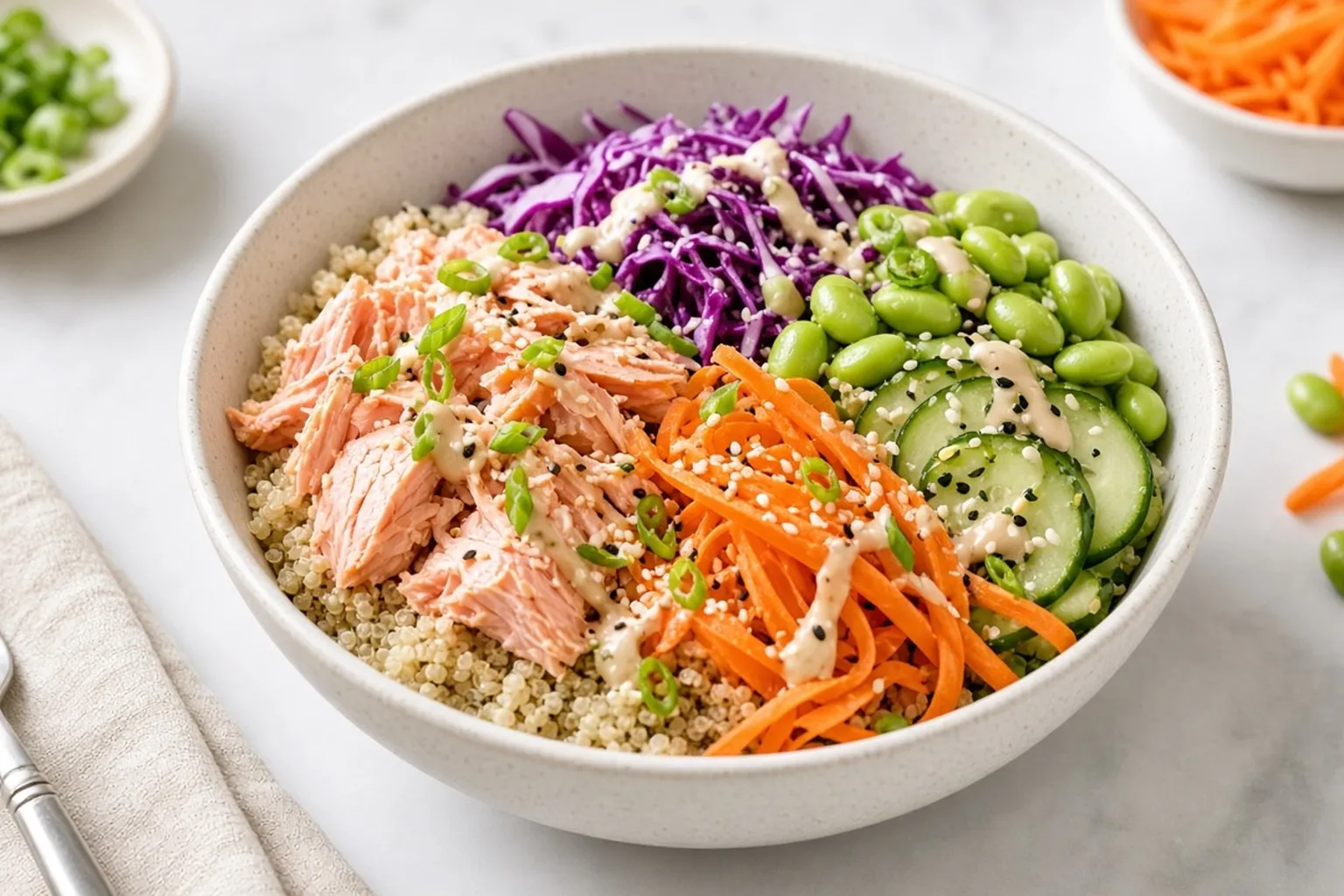
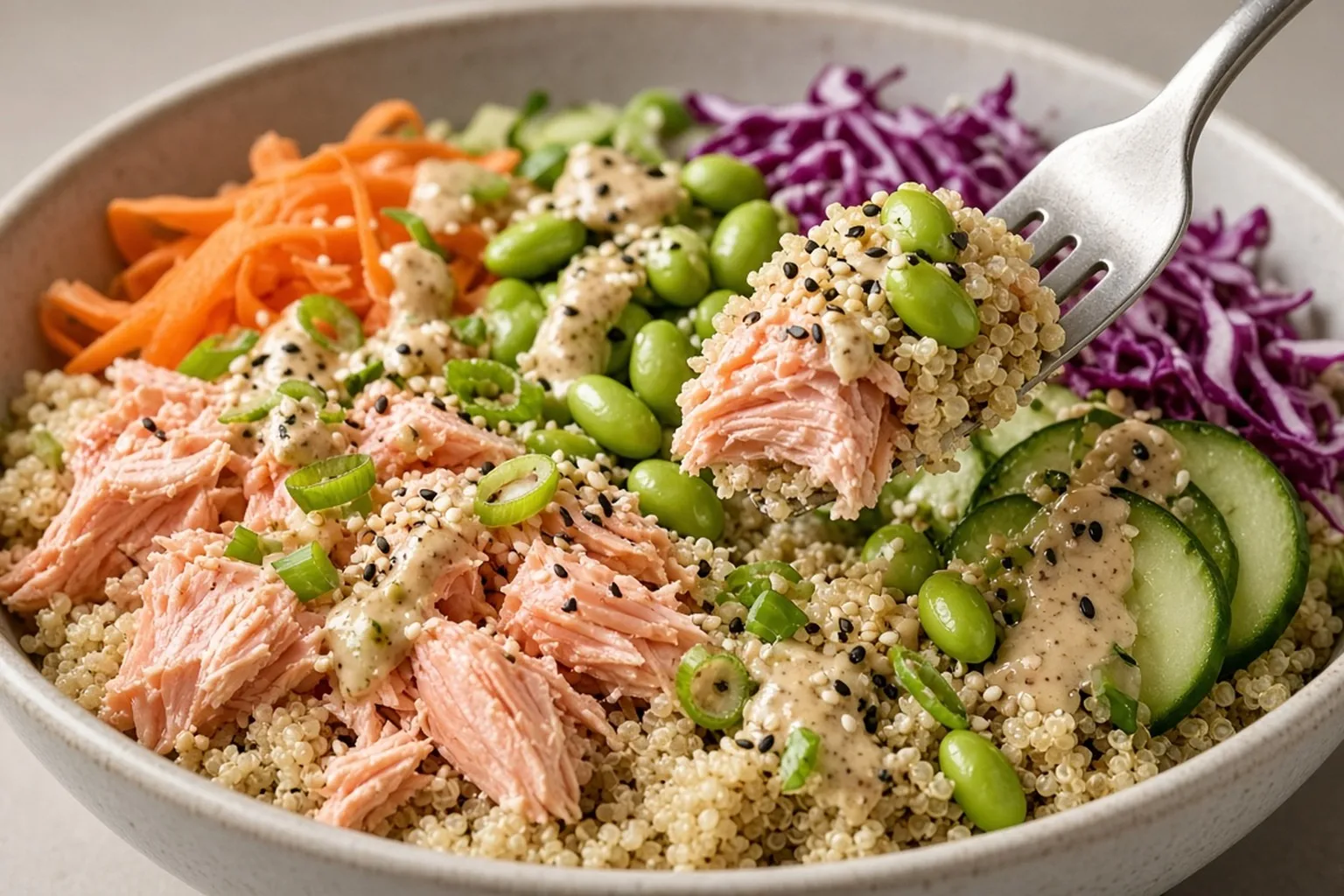
Salmon, quinoa and edamame bowl with miso-ginger dressing
Fluffy quinoa topped with big pink flakes of salmon, bright green edamame, crisp cucumber, purple cabbage and carrot ribbons, drizzled with a salty-sharp miso, ginger and rice vinegar dressing and sprinkled with sesame seeds and green onion. A ten-minute bowl from a can of salmon, with nothing to cook but the beans.
- Time
- 10 min (8 prep + 2 cook)
- Servings
- 2
- Per serving
- 478 kcal
- Protein
- 43 g
Ingredients
- 1 cup edamame, shelled, frozen

Miso-ginger dressing
- 1 tbsp miso, white (shiro) miso; check the label if you need it gluten-free
- 1 tbsp rice vinegar
- 2 tsp tamari
- 1 in (2 cm) piece ginger, finely grated
- 1 tsp sesame oil, toasted
- 1 tbsp water


- 1 1/2 cups quinoa, cooked, a ready-cooked pouch, or leftover
- 7 oz drained canned salmon, pink or red salmon in water (about two small cans), skin and large bones removed, in big flakes
- 1/3 large cucumber, sliced
- 1 cup shredded red cabbage
- 1 small carrot, peeled into ribbons or grated
- 2 green onions, sliced
- 1 1/2 tsp toasted sesame seeds


Steps
- Pour boiling water from the kettle over the edamame in a bowl, leave 3 minutes and drain.
- Whisk the miso, rice vinegar, tamari, ginger, sesame oil and water in a small bowl until smooth.
- Divide the quinoa between two bowls (warm it 1 minute in the microwave if you like). Arrange the salmon, edamame, cucumber, red cabbage and carrot over it, drizzle with the dressing and finish with green onion and sesame seeds.
Good to know
Can I pack it ahead?
Yes, it keeps a day in the fridge with the dressing in a separate jar.
Can I use hot-smoked salmon?
Yes, flaked hot-smoked salmon is smokier and richer, at about 54 instead of 64.
Can I use rice instead of quinoa?
Yes, a pouch of cooked rice works the same way, at about 58 instead of 64.
Per
- Calories
- 101
- Protein
- (37%)
- 9 g
- Fat
- (32%)
- 3 g
- Carbohydrates
- (32%)
- 9 g
- of which sugar
- 2 g
- Fiber
- 2 g
- Sodium
- 219 mg
More meals


Computed from the ingredients with our published formula, not yet kitchen-tested. General guidance, not medical advice. Talk to your prescriber. How
As written, 955 kcal goes into the pot and 949 g of ingredients comes out as about 949 g of food: 101 kcal per 100 g. Cooking moves water and energy density is the score's biggest lever, so the dish is scored as cooked, not as an average of its parts. Every ingredient links to its food page, with the same data and score. The label's percentages are each macronutrient's share of the calories. The full formula.