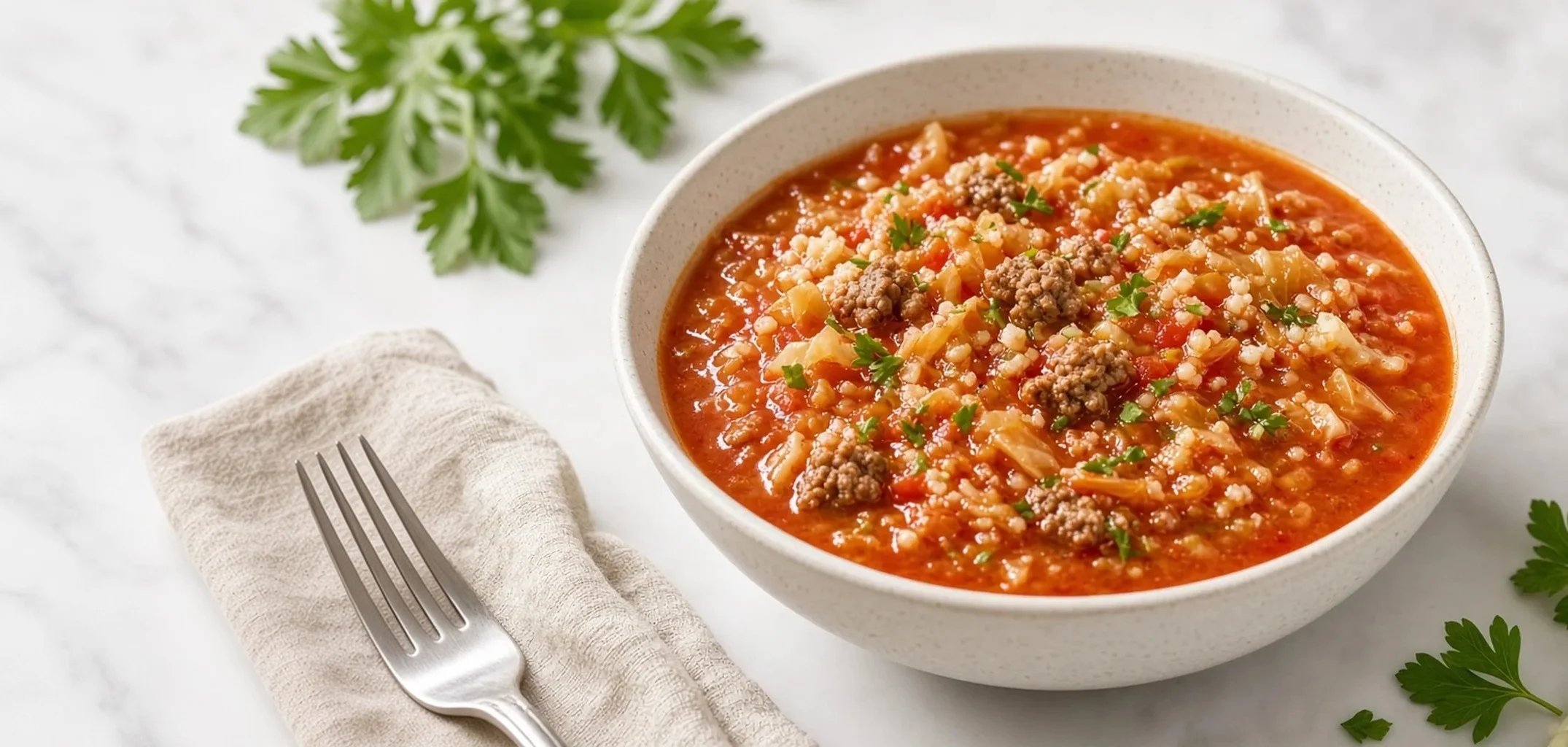
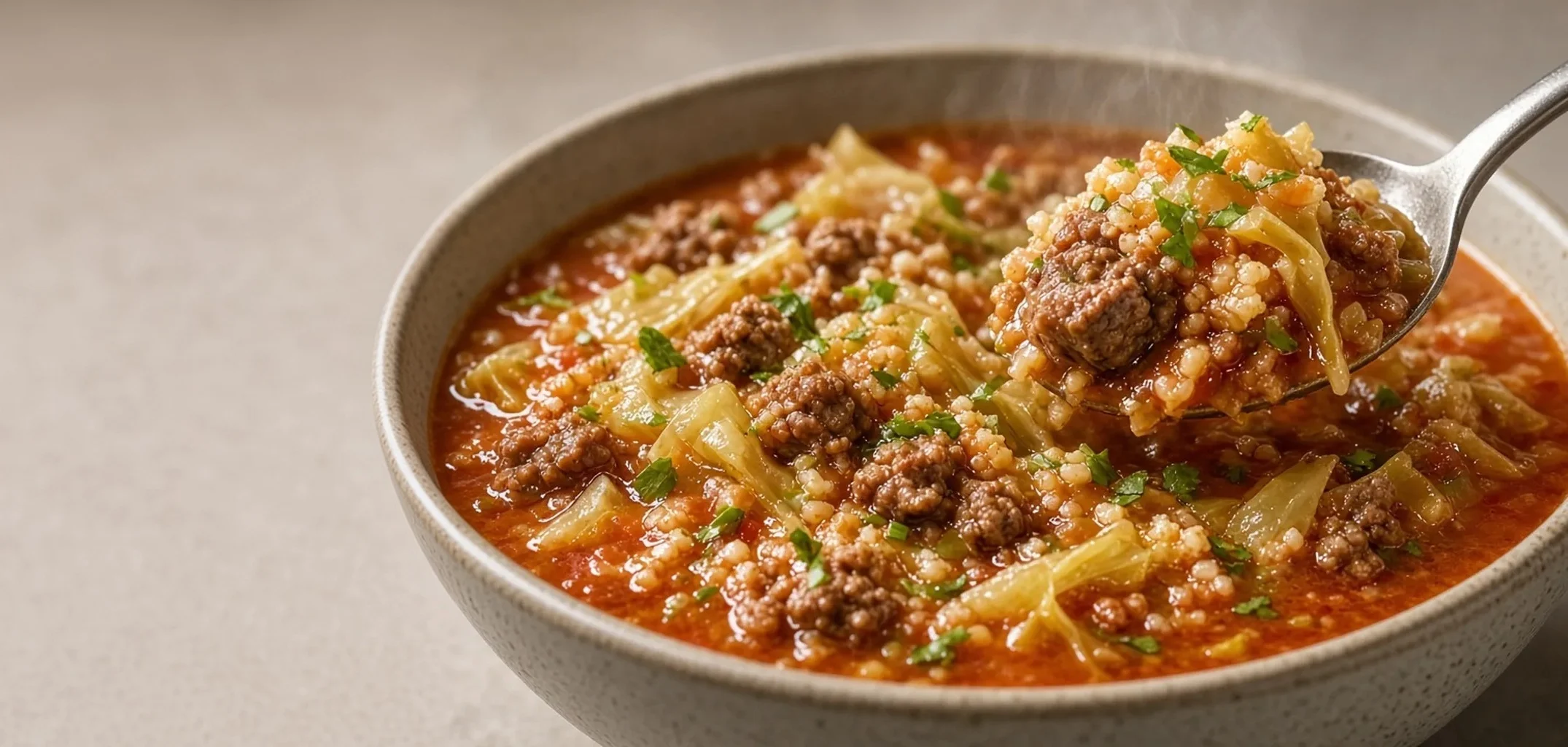
Slow-cooker cabbage roll soup
395 min · 37 g protein · 358 cals / serving
Everything people love about stuffed cabbage rolls, without the rolling: lean ground beef, tender cabbage, onion and garlic simmered slowly in a paprika-scented tomato broth with a sweet-sour edge, with riced cauliflower standing in for the rice. A big pot that freezes and reheats perfectly.
Ingredients
- 2 1/4 lb ground beef (90% lean)
- 1 large onion, diced
- 4 cloves garlic, minced
- 1 small head cabbage, cored and chopped into bite-sized pieces
- 1 large can (28 oz) diced tomatoes
- 2 tbsp tomato paste
- 4 cups beef broth
- 2 tsp paprika
- 1 tsp dried thyme
- 2 tsp Worcestershire sauce
- 2 bay leaf
- 1 tsp salt
- 1/2 tsp black pepper
- 3 cups riced cauliflower, riced, fresh or frozen
- 1 tbsp red wine vinegar


To serve
- 2 tbsp fresh parsley, chopped

Steps
- Brown the beef with the onion in a large frying pan over medium-high heat, breaking it up, for 8–10 minutes until no pink remains (160°F). Add the garlic for 30 seconds, then drain off any fat and tip into the slow cooker.
- Add the cabbage, tomatoes, tomato paste, broth, paprika, thyme, Worcestershire, bay leaves, salt and pepper and stir. Cover and cook on low for 6 hours, or on high for 3 1/2, until the cabbage is soft.
- Stir in the riced cauliflower and vinegar and cook for 20–30 minutes more, until the cauliflower is tender. Take out the bay leaves.
- Taste for salt and a little more vinegar, ladle into bowls and scatter with parsley. Keeps 4 days in the fridge and freezes for 3 months.
Good to know
Can I add real rice?
Yes: stir in 1/2 cup of uncooked long-grain rice with the cabbage, or cooked rice at the end. It is then a family soup rather than a low-carb one.
Can I use ground turkey?
Yes, 93 % lean turkey works well; add an extra teaspoon of paprika. It comes out at about the same score.
Per
- Calories
- 60
- Protein
- (42%)
- 6 g
- Fat
- (39%)
- 3 g
- Carbohydrates
- (18%)
- 3 g
- of which sugar
- 2 g
- Fiber
- 1 g
- Sodium
- 216 mg
More meals


Computed from the ingredients with our published formula, not yet kitchen-tested. General guidance, not medical advice. Talk to your prescriber. How
As written, 2148 kcal goes into the pot and 4085 g of ingredients comes out as about 3570 g of food: 60 kcal per 100 g. Cooking moves water and energy density is the score's biggest lever, so the dish is scored as cooked, not as an average of its parts. Every ingredient links to its food page, with the same data and score. The label's percentages are each macronutrient's share of the calories. The full formula.