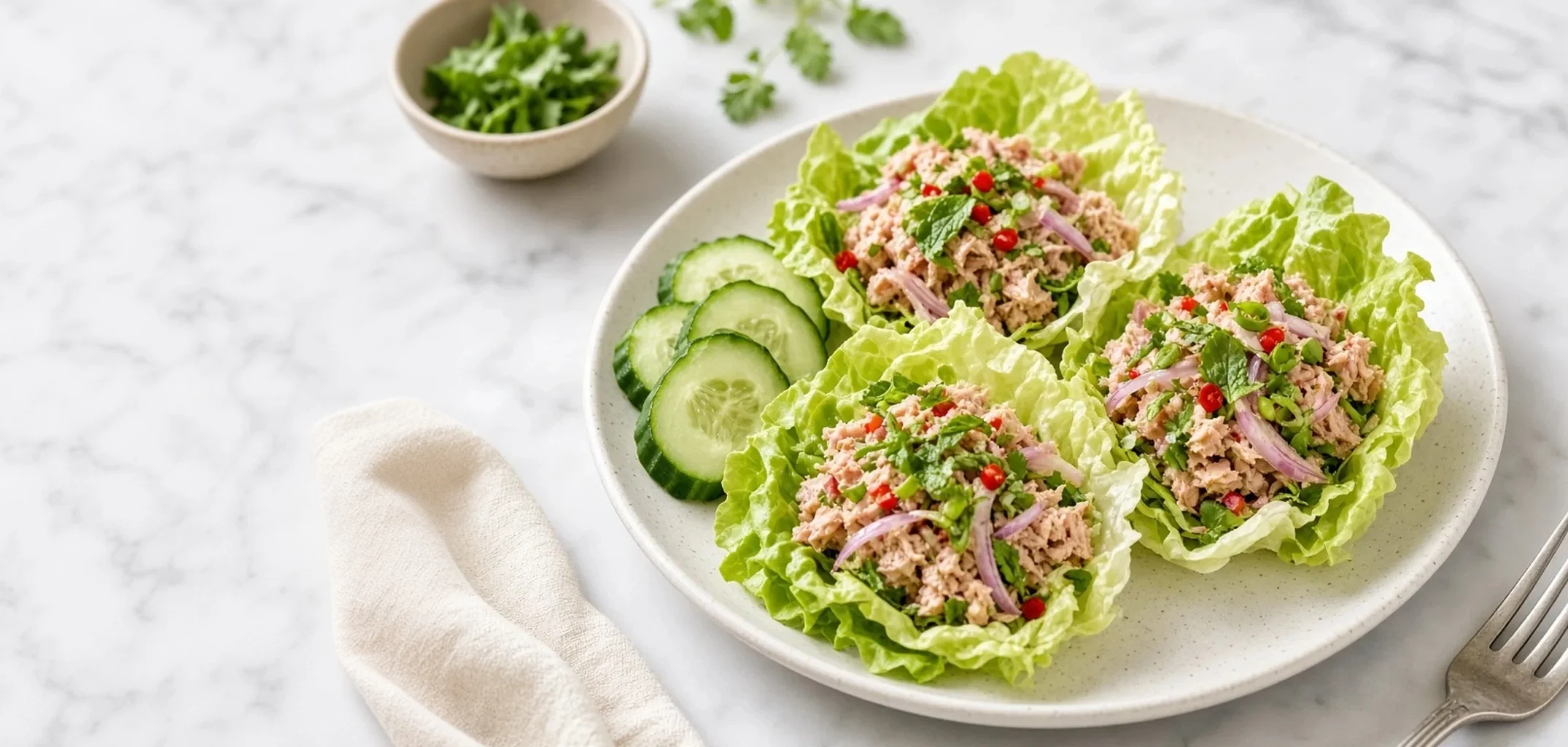
Thai tuna larb lettuce cups
10 min · 44 g protein · 324 cals / serving
Larb made from the cupboard: chunks of canned tuna tossed with lime, fish sauce, chilli and thin slices of shallot, then a fistful of mint, cilantro and green onion. Spooned into soft lettuce cups with cool cucumber beside it, it is sour, salty, hot and fresh, and nothing needs heating.
Ingredients
Dressing
- 2 1/2 tbsp lime juice, from 2 limes
- 1 tbsp fish sauce
- 1/2 tsp erythritol, or a pinch of sugar
- 1/2 tsp red pepper flakes, Thai chilli flakes if you have them
- 1 bird's eye chilli red chili pepper, thinly sliced, or to taste
- 1 clove garlic, grated
- 1 small shallot, halved and very thinly sliced


Larb
- 10 oz drained weight (2–3 cans) tuna in oil, packed in olive oil, drained well
- 2 green onions, thinly sliced
- a handful of leaves fresh mint, torn
- 3 tbsp fresh cilantro, chopped, stems and all


To serve
- 1 small head (about 12 leaves) butterhead lettuce, butter or Little Gem lettuce, leaves separated
- 1/3 cucumber, cut in thick slices or sticks


Steps
- In a mixing bowl, stir the lime juice, fish sauce, erythritol, chilli flakes, fresh chilli and garlic until the erythritol dissolves. Add the shallot and leave it to soften in the dressing while you open and drain the tuna.
- Break the tuna into the bowl in large flakes, then add the green onion, mint and cilantro and fold everything together gently so the tuna stays in chunks. Taste: it should be sour first, then salty, then hot. Add a squeeze more lime or a few drops of fish sauce if it needs it.
- Spoon the larb into the lettuce leaves and eat with the cucumber alongside, which cools the chilli between bites.
Good to know
What about the toasted rice powder?
It gives restaurant larb its nutty crunch. Toast a tablespoon of raw jasmine rice in a dry pan for 3–4 minutes until golden, grind it and scatter it over the top. It adds a few minutes and about 4 g of carbohydrate a serving, which takes the larb past keto by our count; the dish stays very good without it.
Can I use tuna packed in water?
Yes, and the larb gets leaner, at about 92 instead of 77. It is then no longer keto by our count, because the oil in the tuna is what balances the lime and shallot, but it is still a fine low-carb lunch.
Alternative

Per
- Calories
- 104
- Protein
- (55%)
- 14 g
- Fat
- (34%)
- 4 g
- Carbohydrates
- (11%)
- 3 g
- of which sugar
- 1 g
- Fiber
- 1 g
- Sodium
- 419 mg
More meals


Computed from the ingredients with our published formula, not yet kitchen-tested. General guidance, not medical advice. Talk to your prescriber. How
As written, 649 kcal goes into the pot and 625 g of ingredients comes out as about 625 g of food: 104 kcal per 100 g. Cooking moves water and energy density is the score's biggest lever, so the dish is scored as cooked, not as an average of its parts. Every ingredient links to its food page, with the same data and score. The label's percentages are each macronutrient's share of the calories. The full formula.