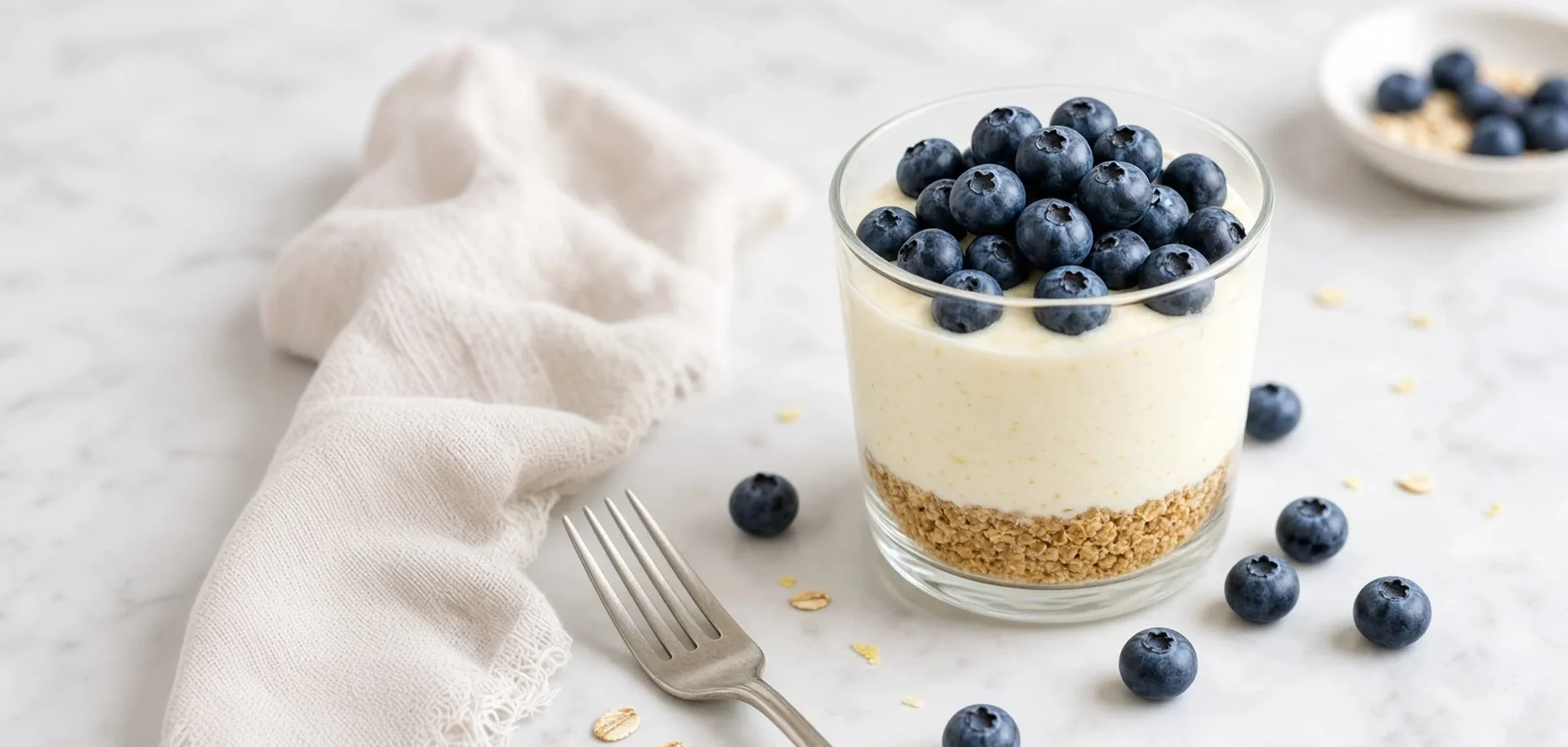
Vegan lemon-blueberry cheesecake cups
14 min · 17 g protein · 242 cals / serving
Little glasses of tangy lemon cheesecake cream over a toasted oat crumb, piled with blueberries. The cream is silken tofu and soy yogurt blended with a few cashews, lemon zest and vanilla until thick and smooth, so it tastes of cheesecake rather than of tofu.
Ingredients
Crumb
- 1/3 cup oats, rolled, uncooked
- 1 1/2 tsp maple syrup
- 1/2 tsp ground cinnamon


Cheesecake cream
- 14 oz silken tofu, drained
- 3/4 cup unsweetened soy yogurt
- 2 tbsp cashews, raw; soaked 15 minutes in boiling water if your blender is not a high-speed one
- 1 1/3 scoops plant protein powder, vanilla
- 4 packets (4 g) stevia, or to taste
- 2 tbsp lemon juice
- zest of 1 lemon lemon zest
- 1 tsp vanilla extract
- a pinch salt


To finish
- 2 cups blueberries, fresh, or frozen and thawed

Steps
- Toast the oats, maple syrup and cinnamon in a dry nonstick skillet over medium heat for 3–4 minutes, stirring, until golden and smelling of biscuits. Tip onto a plate to cool and crisp.
- Blend the tofu, soy yogurt, cashews, protein powder, stevia, lemon juice, zest, vanilla and salt for 1–2 minutes, scraping down once, until completely smooth and thick. Taste and add a little more lemon or sweetener if you like.
- Divide the crumb between 4 glasses or jars, spoon the cream over and top with the blueberries. Eat straight away, or chill for an hour so the cream firms up; if you make them a day ahead, keep the crumb apart and add it just before eating.
Good to know
Can I use raspberries instead?
Yes, any berry works. Raspberries are the tartest and carry the most fibre, at about 65 instead of 59.
Will it set like a baked cheesecake?
No, it is a spoonable cream, like the inside of a no-bake cheesecake. For a firmer set, chill it overnight; the cashews and protein powder thicken it as it stands.
Alternative

Per
- Calories
- 93
- Protein
- (28%)
- 6 g
- Fat
- (31%)
- 3 g
- Carbohydrates
- (42%)
- 10 g
- of which sugar
- 5 g
- Fiber
- 2 g
- Sodium
- 58 mg
More desserts


Computed from the ingredients with our published formula, not yet kitchen-tested. General guidance, not medical advice. Talk to your prescriber. How
As written, 967 kcal goes into the pot and 1042 g of ingredients comes out as about 1038 g of food: 93 kcal per 100 g. Cooking moves water and energy density is the score's biggest lever, so the dish is scored as cooked, not as an average of its parts. Every ingredient links to its food page, with the same data and score. The label's percentages are each macronutrient's share of the calories. The full formula.