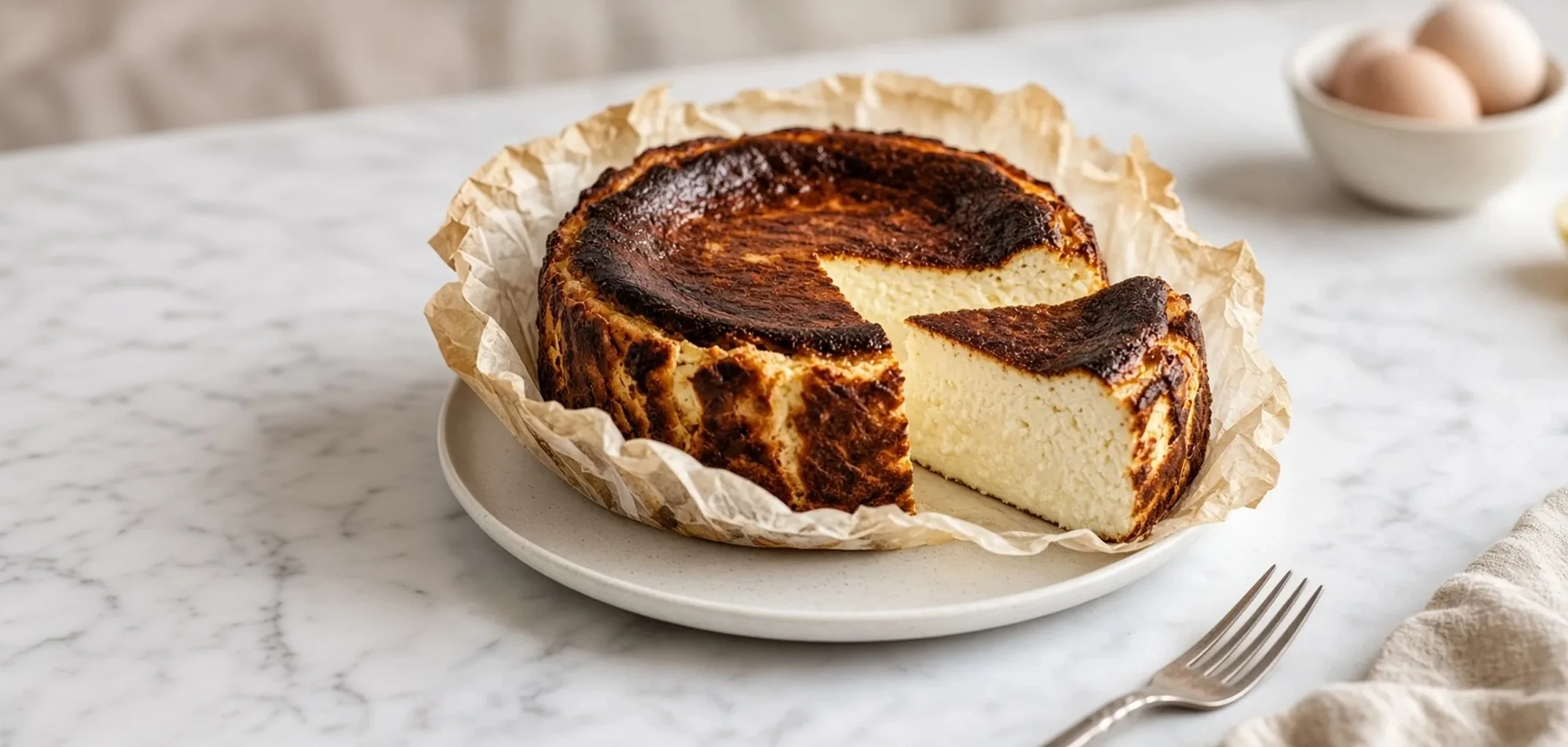
Basque burnt cheesecake with cottage cheese
50 min · 14 g protein · 278 cals / serving
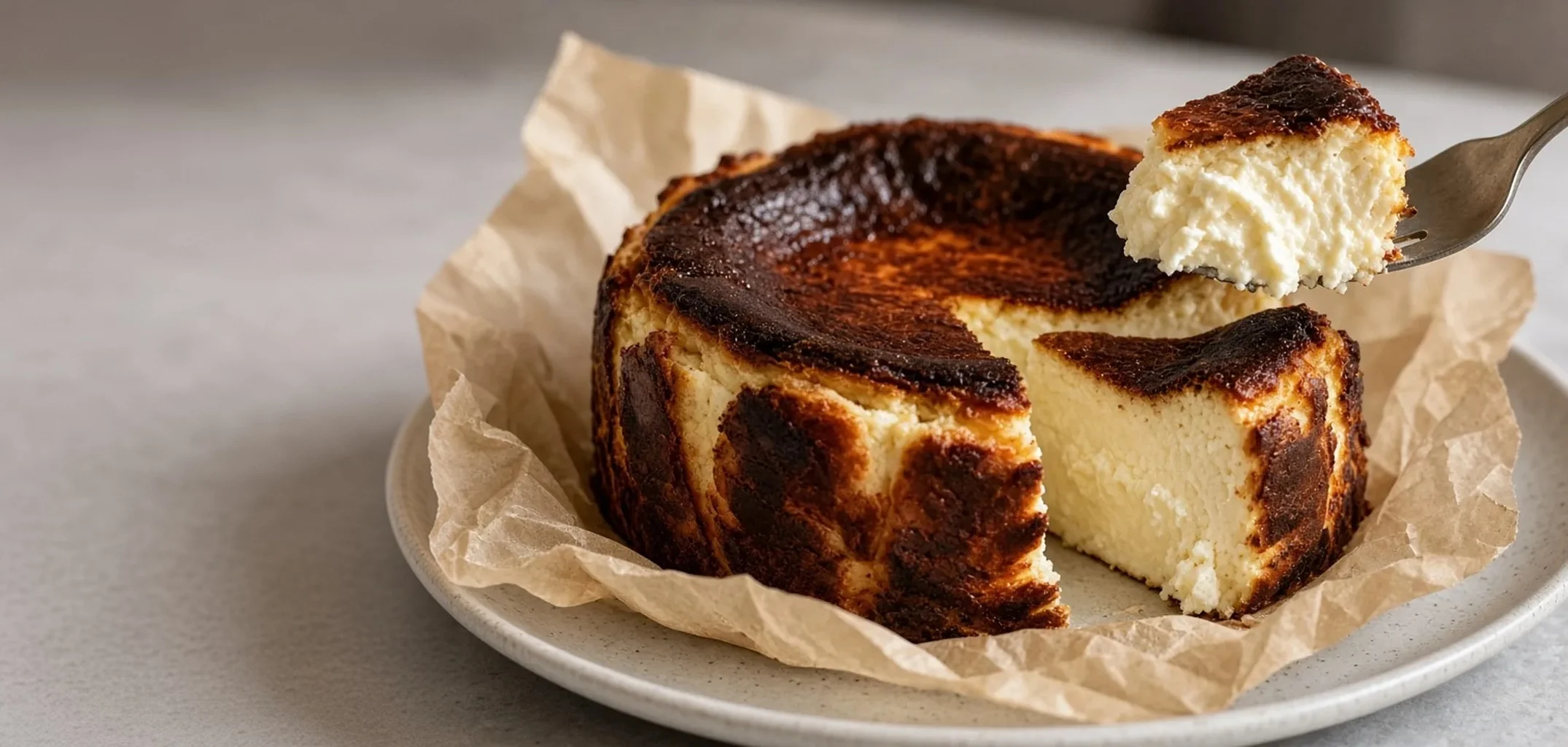
The cheesecake from San Sebastián: a deeply caramelised, almost black top, rustic crinkled edges from the parchment, and a soft, creamy, barely set middle. Half the cream cheese is blended cottage cheese, so it is lighter and higher in protein, and nobody can tell. One bowl, no crust, no water bath.
Ingredients
- 2 cups cottage cheese (1%)
- 16 oz cream cheese, room temperature
- 1/4 cup erythritol, powdered
- 10 packets (10 g) stevia, powdered stevia, or to taste
- 1 scoop whey protein, unflavoured or vanilla
- 1 tsp vanilla extract
- a pinch salt
- 5 large eggs, room temperature
- 1/2 cup heavy cream


Steps
- Heat the oven to 450°F with a rack in the middle. Scrunch two large sheets of parchment into a ball, open them out and press them into a 8 inch springform pan, one on top of the other, so the paper stands 2 inch above the rim in loose folds.
- Blend the cottage cheese in a blender or food processor for 1–2 minutes, until completely smooth with no curds left. Add the cream cheese, powdered erythritol, stevia, whey, vanilla and salt and blend until silky.
- Add the eggs one at a time, blending briefly after each, then pour in the cream and blend just until combined. Pour into the lined pan.
- Bake 30–35 minutes, until the top is a deep mahogany brown, nearly black in places, the cake has puffed high and the middle still wobbles like a jelly when you nudge the pan; a thermometer 1 inch from the centre reads 160°F.
- Cool on a rack for 1 hour (it sinks and that is right), then chill at least 4 hours, or overnight. Lift it out by the paper and slice with a hot knife. Keeps 4 days in the fridge.
Good to know
Will it taste of cottage cheese?
No. Blended until there are no curds, it disappears into the cream cheese and only makes the cake a little tangier. A blender does it better than a stick blender.
Can I make it all cream cheese?
Yes, the classic is all cream cheese and richer, at about 21 instead of 29.
Per
- Calories
- 221
- Protein
- (19%)
- 11 g
- Fat
- (68%)
- 18 g
- Carbohydrates
- (14%)
- 8 g
- of which sugar
- 3 g
- Fiber
- <1 g
- Sodium
- 340 mg
More desserts


Computed from the ingredients with our published formula, not yet kitchen-tested. How
As written, 2776 kcal goes into the pot and 1366 g of ingredients comes out as about 1257 g of food: 221 kcal per 100 g. Cooking moves water and energy density is the score's biggest lever, so the dish is scored as cooked, not as an average of its parts. Every ingredient links to its food page, with the same data and score. The label's percentages are each macronutrient's share of the calories. The full formula.