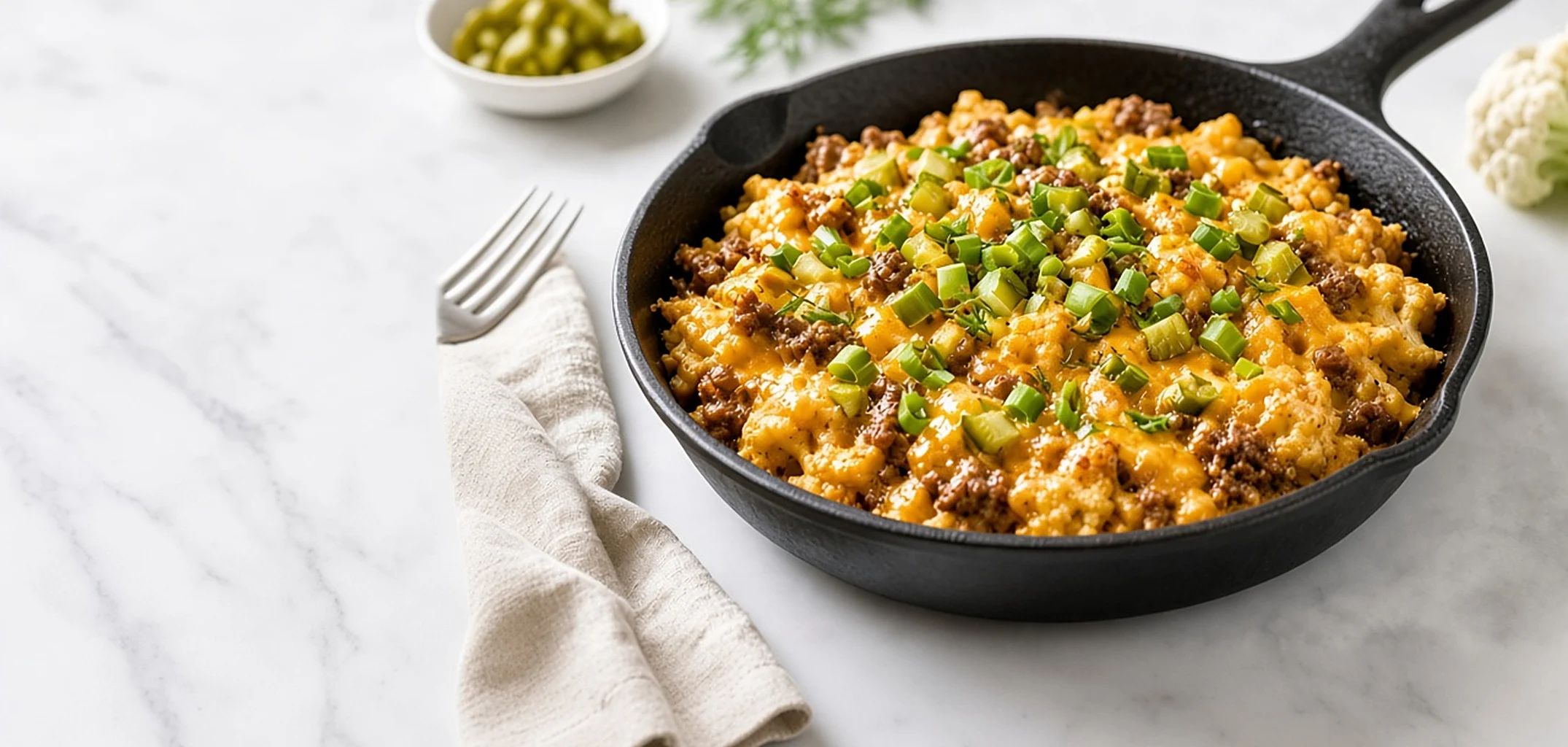
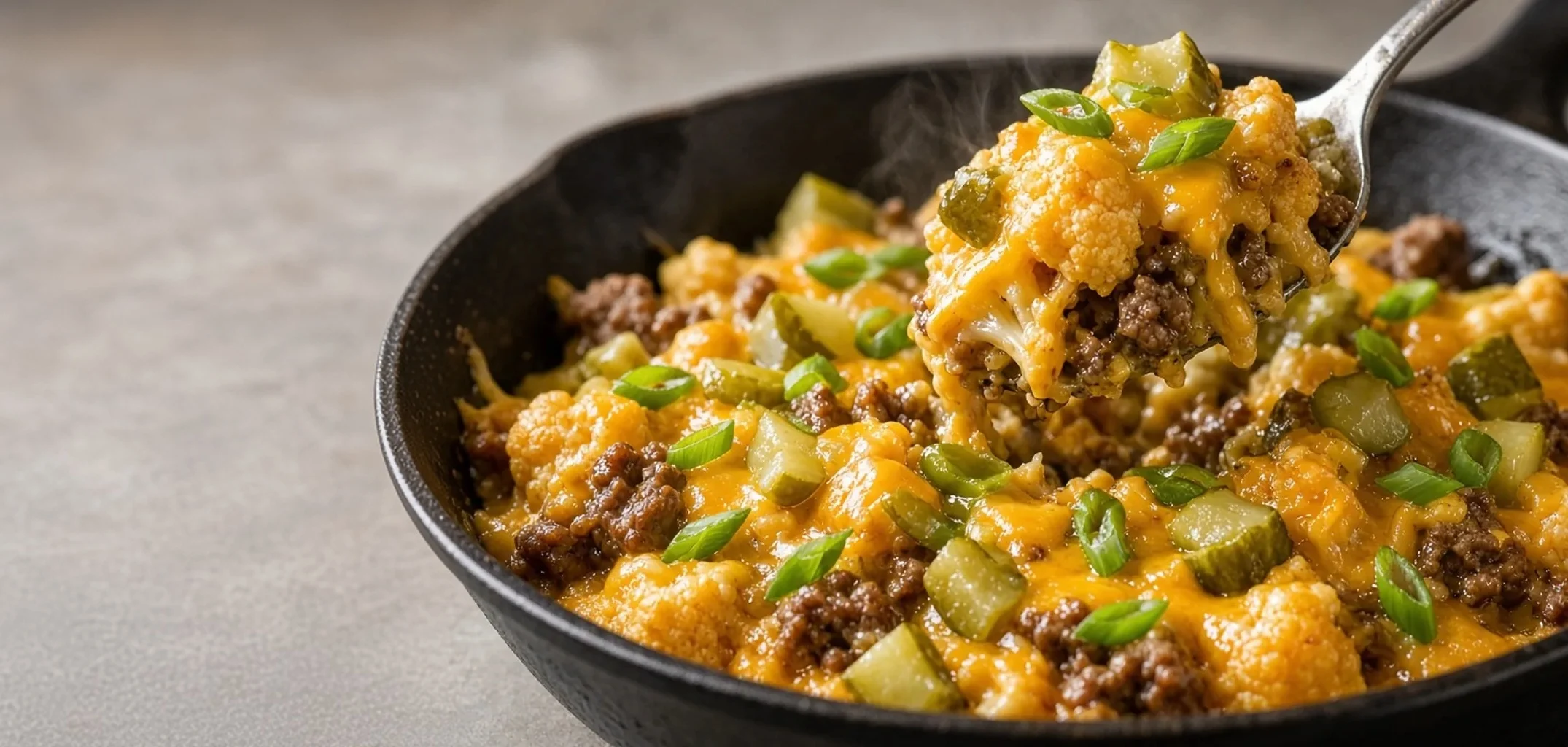
Cheeseburger cauliflower mac skillet
40 min · 47 g protein · 487 cals / serving
The boxed cheeseburger macaroni of childhood, rebuilt in one skillet: seasoned beef and tender little cauliflower florets in a creamy, tangy cheddar sauce with a hint of mustard and tomato, finished with chopped pickles. Dinner in about 35 minutes.
Ingredients
- 1 1/2 lb ground beef (93% lean)
- 1 small onion, finely chopped
- 2 cloves garlic, minced
- 2/3 tsp salt
- 1 tsp paprika
- 2 tbsp tomato paste
- 2 tsp yellow mustard
- 1 tsp Worcestershire sauce
- 1 medium head cauliflower, cut into macaroni-size pieces
- 1 cup beef broth
- 3 oz light cream cheese
- 1 cup shredded sharp cheddar cheese
- 1/3 cup chopped reduced sodium dill pickles
- 1 green onion, sliced (optional)


Steps
- Brown the beef and onion in a large, deep skillet over medium-high heat, breaking up the meat, 7–8 minutes until no pink remains and it reaches 160°F. Pour off any fat, then stir in the garlic, salt and paprika for 30 seconds.
- Stir in the tomato paste, mustard and Worcestershire, then the cauliflower and broth. Cover and simmer 8–10 minutes, stirring once, until the cauliflower is just tender. Uncover and simmer 2–3 minutes more until most of the broth has cooked away.
- Turn the heat to low, stir in the cream cheese until melted, then the cheddar a handful at a time until the sauce is smooth and coats everything.
- Scatter with the chopped pickles and green onion and serve. Keeps 4 days in the fridge; reheat with a splash of water in the microwave or a pan.
Good to know
Can I use frozen cauliflower?
Yes. Add it straight from frozen and simmer uncovered a few minutes longer so its extra water cooks away before the cheese goes in. It comes out at about the same score.
Can I make it bacon cheeseburger style?
Yes. Crumble 4 rashers of crisp bacon over the top; it adds flavour and a little fat, and lowers the score a few points.
Per
- Calories
- 130
- Protein
- (40%)
- 13 g
- Fat
- (50%)
- 7 g
- Carbohydrates
- (9%)
- 3 g
- of which sugar
- 2 g
- Fiber
- 1 g
- Sodium
- 278 mg
More meals


Computed from the ingredients with our published formula, not yet kitchen-tested. How
As written, 1949 kcal goes into the pot and 1862 g of ingredients comes out as about 1500 g of food: 130 kcal per 100 g. Cooking moves water and energy density is the score's biggest lever, so the dish is scored as cooked, not as an average of its parts. Every ingredient links to its food page, with the same data and score. The label's percentages are each macronutrient's share of the calories. The full formula.