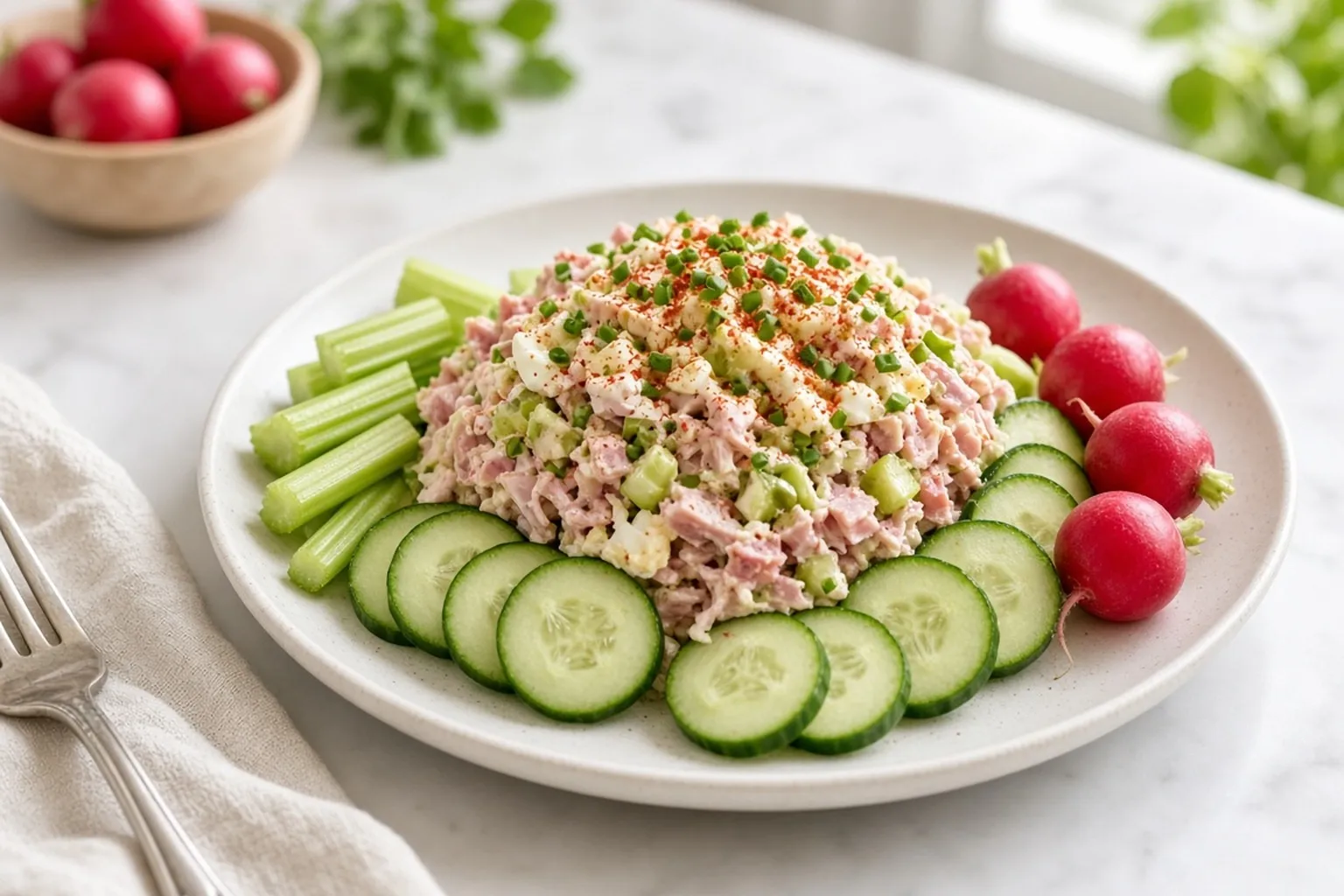
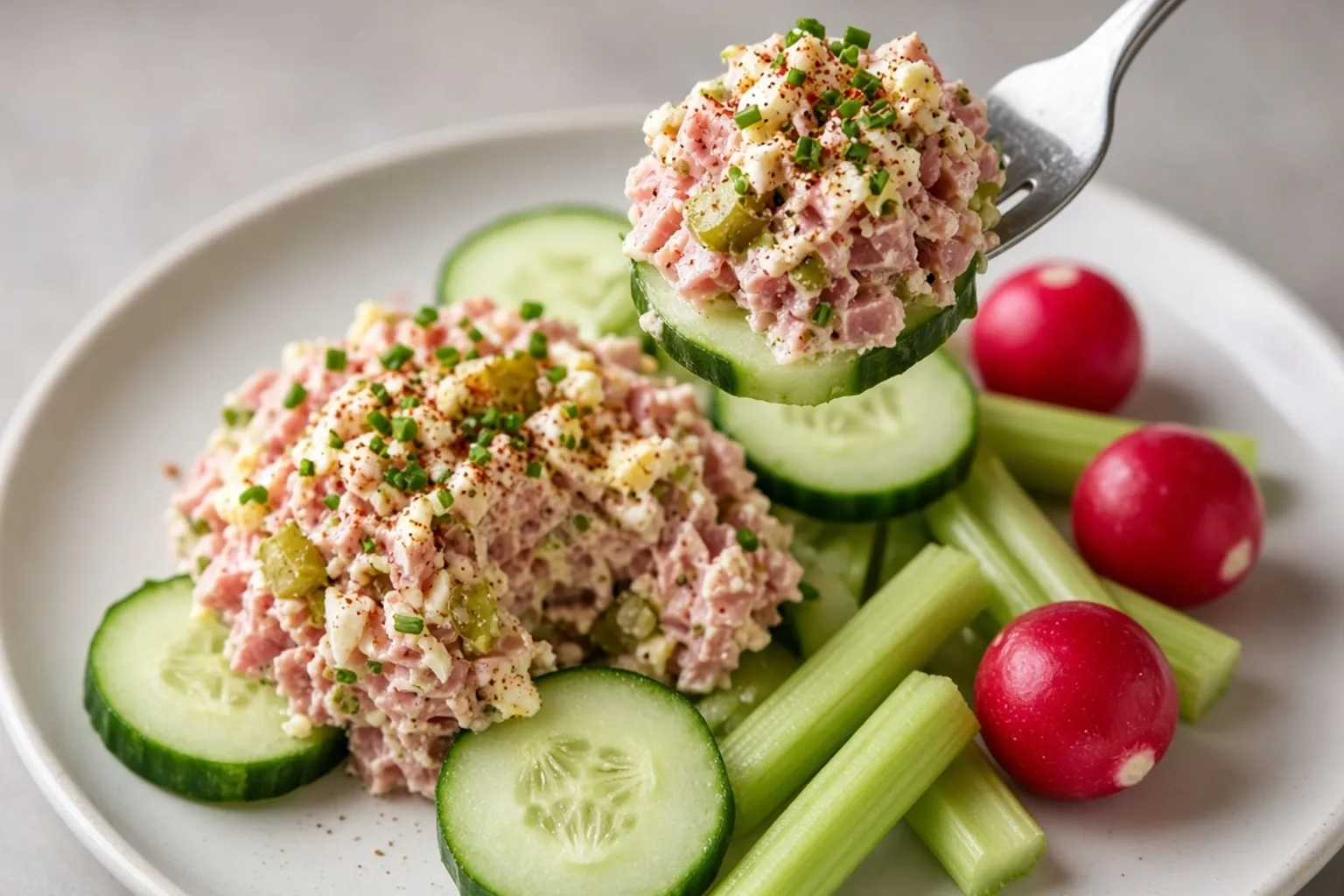
Deviled ham salad with celery, pickles and crudités
The Southern lunch-counter spread: chopped ham, egg, crunchy celery and dill pickle bound in a tangy, mustardy, peppery mayonnaise with a kick of hot sauce. Scooped onto cool cucumber rounds, celery sticks and radishes instead of crackers, in ten minutes.
- Time
- 10 min (10 prep + 0 cook)
- Servings
- 2
- Per serving
- 303 kcal
- Protein
- 31 g
Ingredients
- 10 oz deli ham, lean sliced or a piece, roughly torn; check the label for milk or lactose, which a few hams contain
- 2 hard-boiled eggs, ready-boiled, roughly chopped
- 1 large dill pickle pickles, finely chopped
- 2 tsp red onions, minced


Dressing
- 2 tbsp light mayonnaise
- 2 tsp Dijon mustard
- a few dashes hot sauce
- 1/2 tsp paprika, plus a pinch to finish
- 1/4 tsp black pepper


To serve
- 1 medium cucumber, cut in thick rounds

- 3 stalks celery, cut in sticks; one stalk's worth finely diced for the salad

To serve
- 6 radishes, whole, trimmed

- 1 tbsp fresh chives, snipped (optional)

Steps
- Pulse the ham in a food processor in short bursts until finely chopped but not a paste, about 8 pulses (or chop it finely with a knife).
- Cut the celery into sticks and finely dice one stalk's worth of them. Tip the ham into a bowl with the egg, diced celery, pickle and red onion. Add the mayonnaise, mustard, hot sauce, paprika and pepper and fold together until evenly bound. Taste for heat and add more hot sauce if you like.
- Spoon the ham salad into the middle of two plates, dust with a pinch of paprika and the chives, and arrange the cucumber rounds, celery sticks and radishes around it for scooping.
Good to know
How long does it keep?
The ham salad keeps 3 days in a covered box in the fridge, so it makes a good packed lunch; cut the vegetables on the day.
Can I leave out the egg?
Yes, it is just as good as a plain ham salad, at about 82 instead of 76.
Per
- Calories
- 69
- Protein
- (42%)
- 7 g
- Fat
- (46%)
- 3 g
- Carbohydrates
- (12%)
- 2 g
- of which sugar
- 1 g
- Fiber
- 1 g
- Sodium
- 415 mg
More meals


Computed from the ingredients with our published formula, not yet kitchen-tested. How
As written, 605 kcal goes into the pot and 873 g of ingredients comes out as about 873 g of food: 69 kcal per 100 g. Cooking moves water and energy density is the score's biggest lever, so the dish is scored as cooked, not as an average of its parts. Every ingredient links to its food page, with the same data and score. The label's percentages are each macronutrient's share of the calories. The full formula.