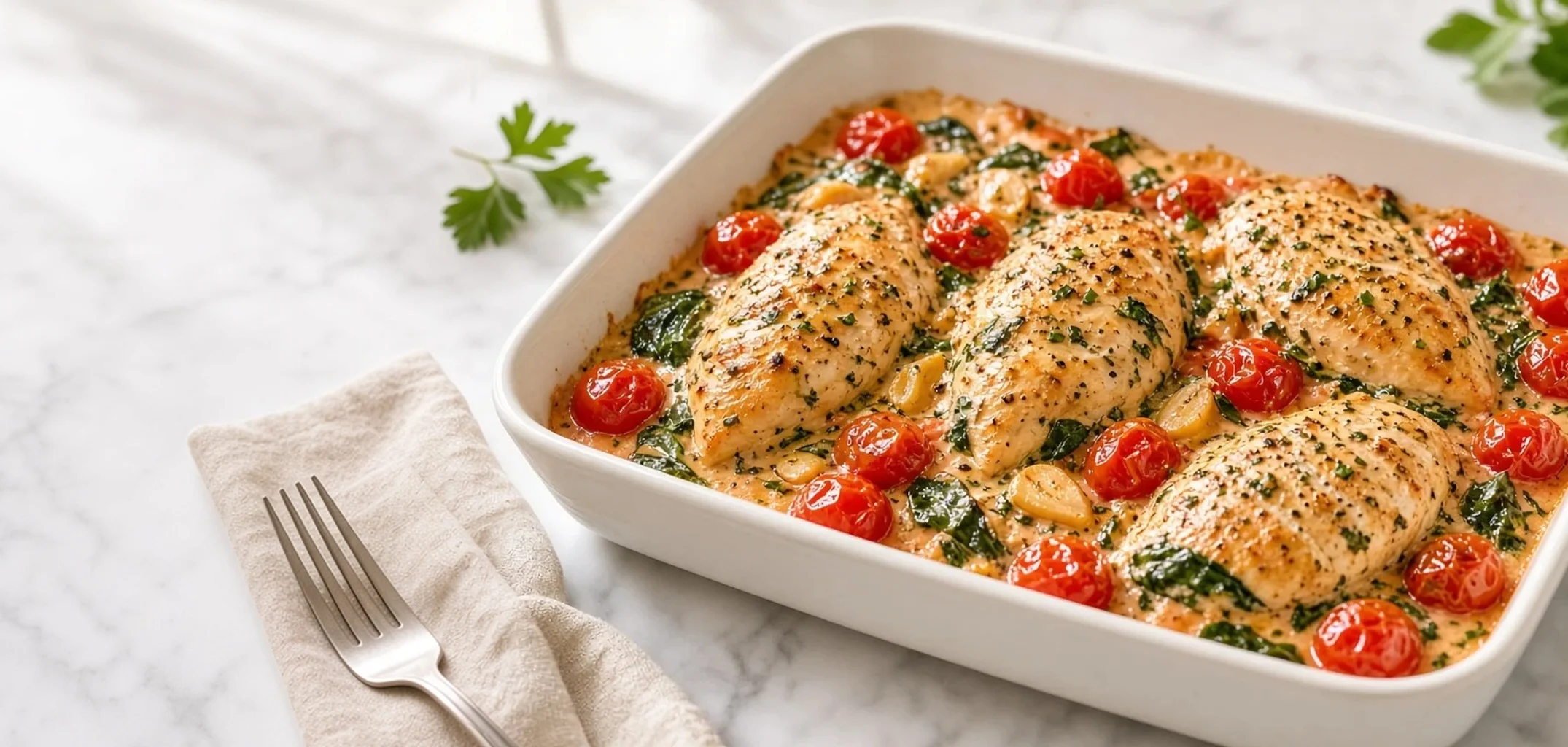
Baked garlic and herb cheese chicken with burst tomatoes
50 min · 52 g protein · 422 cals / serving
The viral baked cheese-and-tomato dish, turned into dinner: chicken breasts roasted among cherry tomatoes until they burst, with a round of garlicky herb cream cheese melting in the middle. Stir it all together with fresh spinach for a pink, creamy sauce to spoon over the sliced chicken.
Ingredients
Garlic herb cheese
- 2/3 cup light cream cheese, softened
- 1 clove garlic, finely grated
- 1 tbsp fresh chives, finely chopped
- 1 tbsp fresh parsley, finely chopped
- 1/4 tsp dried thyme
- 1/2 tsp black pepper


- 2 pints cherry tomatoes
- 2 cloves garlic, sliced
- 1 tbsp olive oil
- 1/2 tsp salt
- 1 3/4 lb (4 medium breasts) chicken breast, roasted
- 1 tsp Italian seasoning
- 4 large handfuls baby spinach
- 2 tsp lemon juice


Steps
- Heat the oven to 425°F. Mash the cream cheese with the grated garlic, chives, parsley, thyme and pepper, then shape it into a thick round on a piece of baking paper and chill it while you prepare the rest.
- Tip the tomatoes and sliced garlic into a 23 × 33 cm (9 × 13 in) baking dish, toss with the oil and half the salt, and push them to the sides. Season the chicken with the rest of the salt and the Italian seasoning and lay it around the edges, leaving a gap in the middle. Set the cheese round in the gap.
- Bake for 25 to 30 minutes, until the tomatoes have burst, the cheese is soft and golden at the edges and the chicken reaches 165°F in the thickest part.
- Move the chicken to a board. Stir the cheese and tomatoes together in the hot dish, pressing the tomatoes so they release their juice, then stir in the spinach and lemon juice until wilted. Slice the chicken, return it to the dish and spoon the sauce over.
Good to know
Can I use a store-bought garlic and herb cheese round?
Yes. One 5.2 oz round replaces the mashed cream cheese and herbs; it melts smoother (light cream cheese can turn a little grainy in a hot oven) and is richer, at about 64 instead of 70.
Can I use chicken thighs?
Boneless thighs stay juicier if you reheat leftovers; bake them the same time to 165°F. The score is about 58 instead of 70.
Per
- Calories
- 127
- Protein
- (50%)
- 15 g
- Fat
- (40%)
- 6 g
- Carbohydrates
- (10%)
- 4 g
- of which sugar
- 2 g
- Fiber
- 1 g
- Sodium
- 186 mg
More meals


Computed from the ingredients with our published formula, not yet kitchen-tested. General guidance, not medical advice. Talk to your prescriber. How
As written, 1690 kcal goes into the pot and 1722 g of ingredients comes out as about 1335 g of food: 127 kcal per 100 g. Cooking moves water and energy density is the score's biggest lever, so the dish is scored as cooked, not as an average of its parts. Every ingredient links to its food page, with the same data and score. The label's percentages are each macronutrient's share of the calories. The full formula.