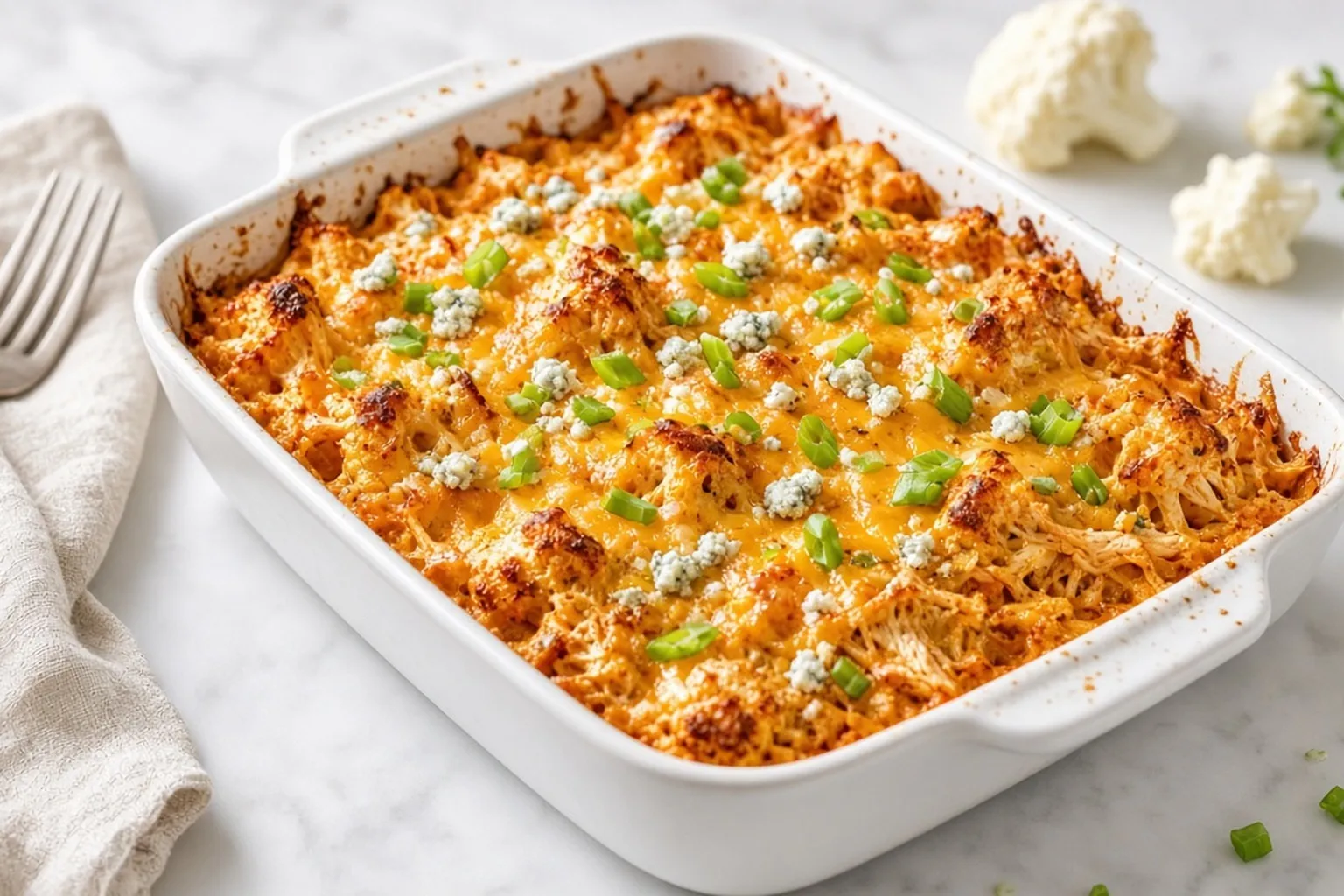
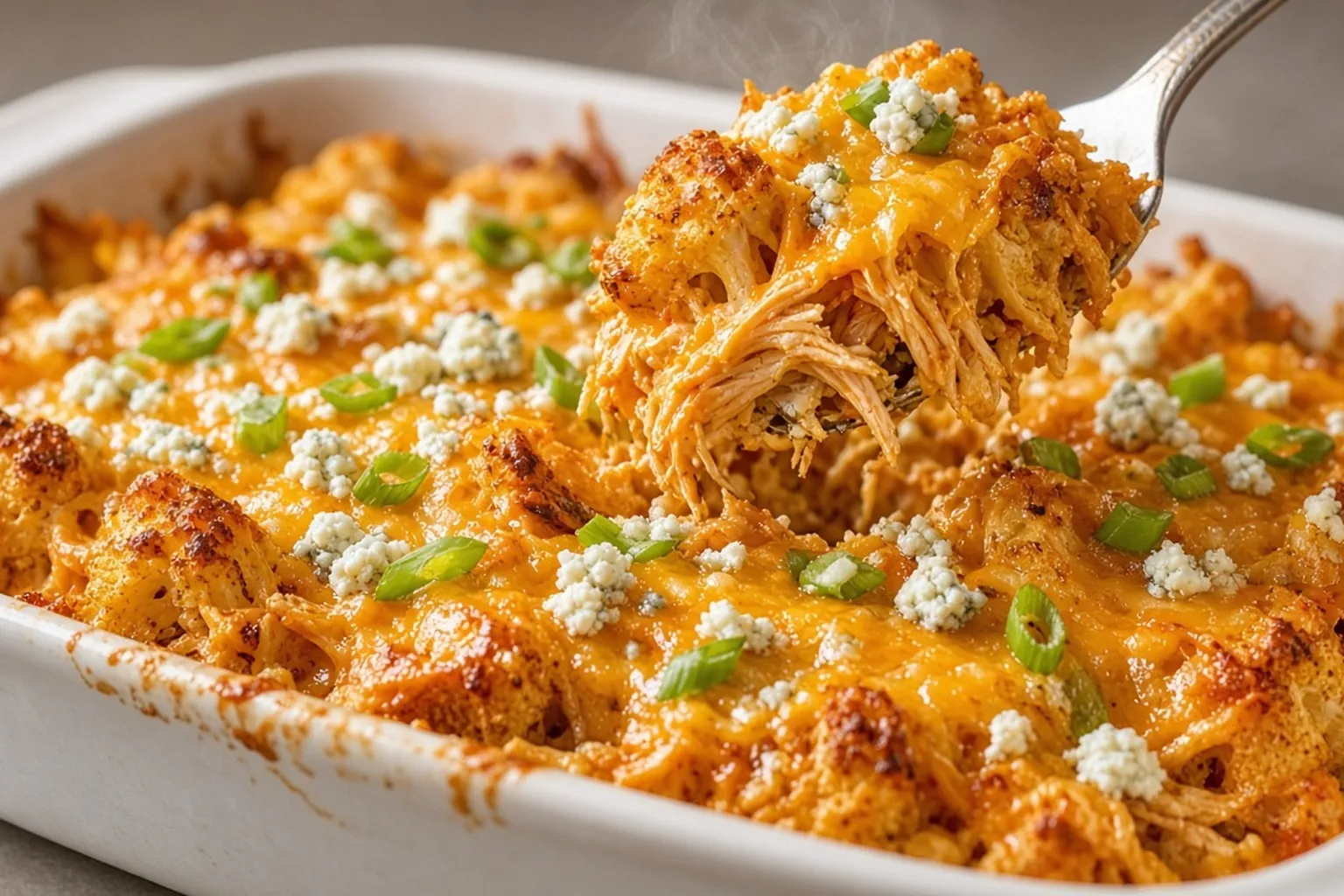
Keto buffalo chicken cauliflower casserole
Roasted cauliflower and shredded chicken in a tangy, creamy buffalo sauce, baked under cheddar until bubbling, with green onion on top. It tastes like buffalo chicken dip turned into dinner, and it reheats well for lunches.
- Time
- 65 min (15 prep + 50 cook)
- Servings
- 4
- Per serving
- 493 kcal
- Protein
- 55 g
Ingredients
- 1 large head cauliflower, cut into small florets
- 2 tsp olive oil
- 1/2 tsp salt
- 4 cups shredded roasted chicken breast, shredded (rotisserie or leftover)


Sauce
- 4 oz light cream cheese, softened
- 1/2 cup nonfat Greek yogurt
- 1/2 cup buffalo sauce
- 1 tsp garlic powder
- 1 tsp dried dill


- 3/4 cup shredded sharp cheddar cheese
- 2 green onions, sliced
- 1/4 cup crumbled blue cheese (optional)


Steps
- Heat the oven to 425°F. Toss the cauliflower with the oil and salt on a large lined tray and roast 20 minutes, until tender and browned at the edges. Lower the oven to 375°F.
- Stir the cream cheese, yogurt, buffalo sauce, garlic powder and dill together in a large bowl until smooth, then fold in the chicken and the roasted cauliflower. Spread in a 23 × 33 cm (9 × 13 in) baking dish.
- Scatter with the cheddar and bake 20–25 minutes, until bubbling at the edges and the cheese has melted.
- Rest 5 minutes, then top with the green onion and the blue cheese if you like it. Keeps 4 days in the fridge; reheat covered at 350°F or in the microwave.
Good to know
Can I use frozen cauliflower?
Yes. Roast it straight from frozen for 25–30 minutes, until the water has cooked off and the edges brown, then carry on. Skipping the roast is what makes these casseroles watery. It comes out at about the same score.
Can I use raw chicken breasts?
Yes. Poach 650 g of breasts in simmering salted water for 15–18 minutes, until they reach 165°F in the thickest part, then shred with two forks.
Per
- Calories
- 137
- Protein
- (46%)
- 15 g
- Fat
- (45%)
- 7 g
- Carbohydrates
- (9%)
- 4 g
- of which sugar
- 2 g
- Fiber
- 1 g
- Sodium
- 463 mg
More meals


Computed from the ingredients with our published formula, not yet kitchen-tested. How
As written, 1971 kcal goes into the pot and 1707 g of ingredients comes out as about 1440 g of food: 137 kcal per 100 g. Cooking moves water and energy density is the score's biggest lever, so the dish is scored as cooked, not as an average of its parts. Every ingredient links to its food page, with the same data and score. The label's percentages are each macronutrient's share of the calories. The full formula.