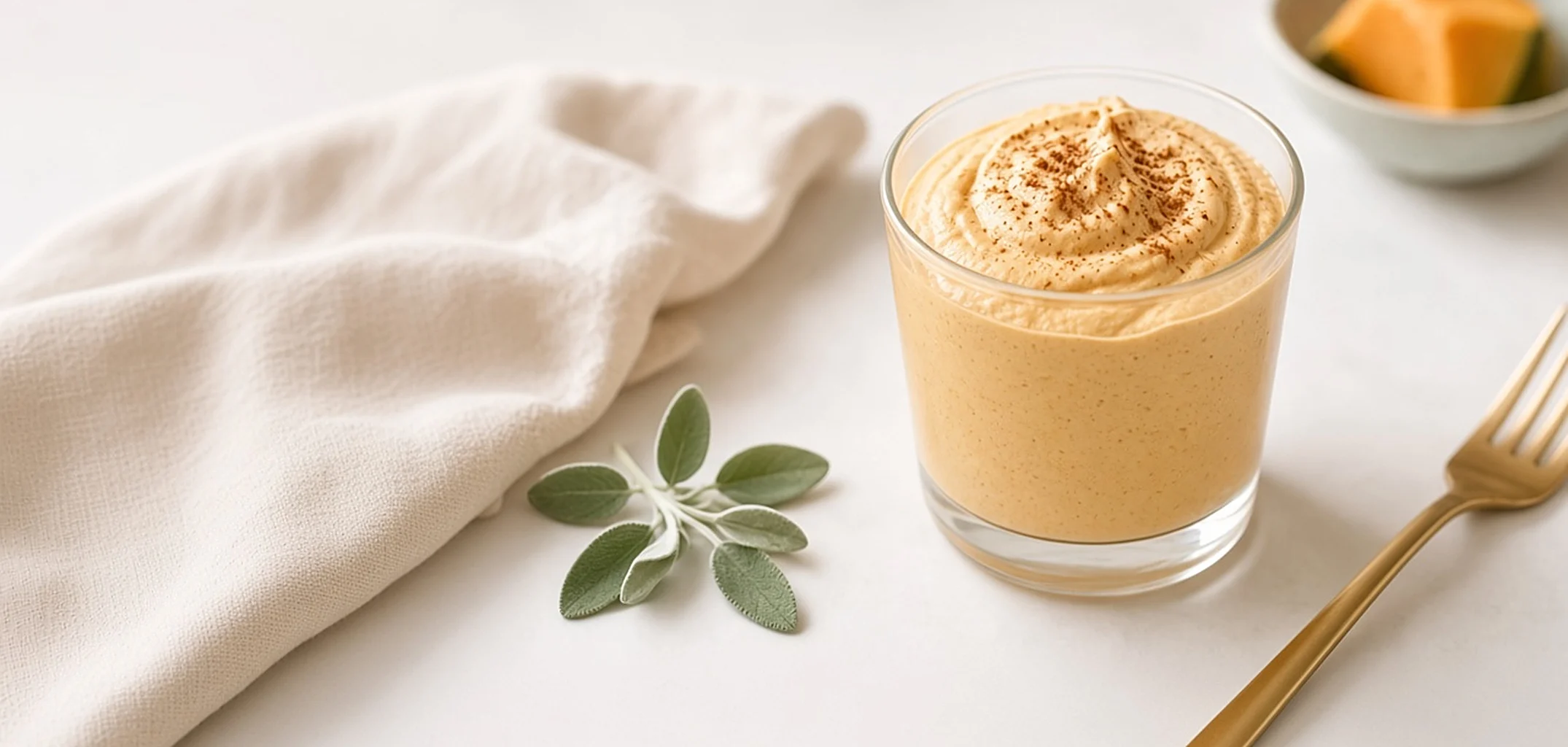
Pumpkin cheesecake mousse
10 min · 14 g protein · 193 cals / serving
Pumpkin pie in a glass without the oven: a thick, airy, spiced pumpkin cheesecake cream with cinnamon, ginger and nutmeg, folded light with whipped cream and topped with a dusting of spice. Ten minutes with a mixer and an hour in the fridge.
Ingredients
- 1/2 cup heavy cream, cold
- 4 oz light cream cheese, softened
- 1 cup canned pumpkin, plain purée, not pie filling
- 1 cup nonfat Greek yogurt, plain, 0 %
- 1 1/2 scoops casein protein powder, vanilla
- 2 tbsp erythritol, powdered
- 6 packets (6 g) stevia, powdered stevia, or to taste
- 2 tsp pumpkin pie spice, plus a pinch to dust
- 1 tsp vanilla extract
- a pinch salt


Steps
- Whip the cold cream to soft peaks that just hold their shape and set it aside.
- In a second bowl, beat the cream cheese until smooth, then beat in the pumpkin, yogurt, casein, powdered erythritol, stevia, pumpkin pie spice, vanilla and salt until thick and even, scraping the bowl.
- Fold the whipped cream through the pumpkin in two additions, gently, until no white streaks remain. Spoon into six small glasses, dust with a pinch of pumpkin pie spice and chill at least 1 hour, until it holds its shape. Keeps 3 days in the fridge, covered.
Good to know
Can I make it without the protein powder?
Casein is what makes it set thick. Without it, use 4 oz more cream cheese and it will be softer and richer.
Can I use all cream cheese instead of yogurt?
Yes, a full 8 oz of cream cheese is the classic mousse and tastes more like cheesecake, at about 28 instead of 41.
Per
- Calories
- 144
- Protein
- (26%)
- 10 g
- Fat
- (52%)
- 9 g
- Carbohydrates
- (23%)
- 9 g
- of which sugar
- 3 g
- Fiber
- 1 g
- Sodium
- 157 mg
More desserts


Computed from the ingredients with our published formula, not yet kitchen-tested. How
As written, 1157 kcal goes into the pot and 802 g of ingredients comes out as about 802 g of food: 144 kcal per 100 g. Cooking moves water and energy density is the score's biggest lever, so the dish is scored as cooked, not as an average of its parts. Every ingredient links to its food page, with the same data and score. The label's percentages are each macronutrient's share of the calories. The full formula.