Meals · Skillet & sheet-pan mains
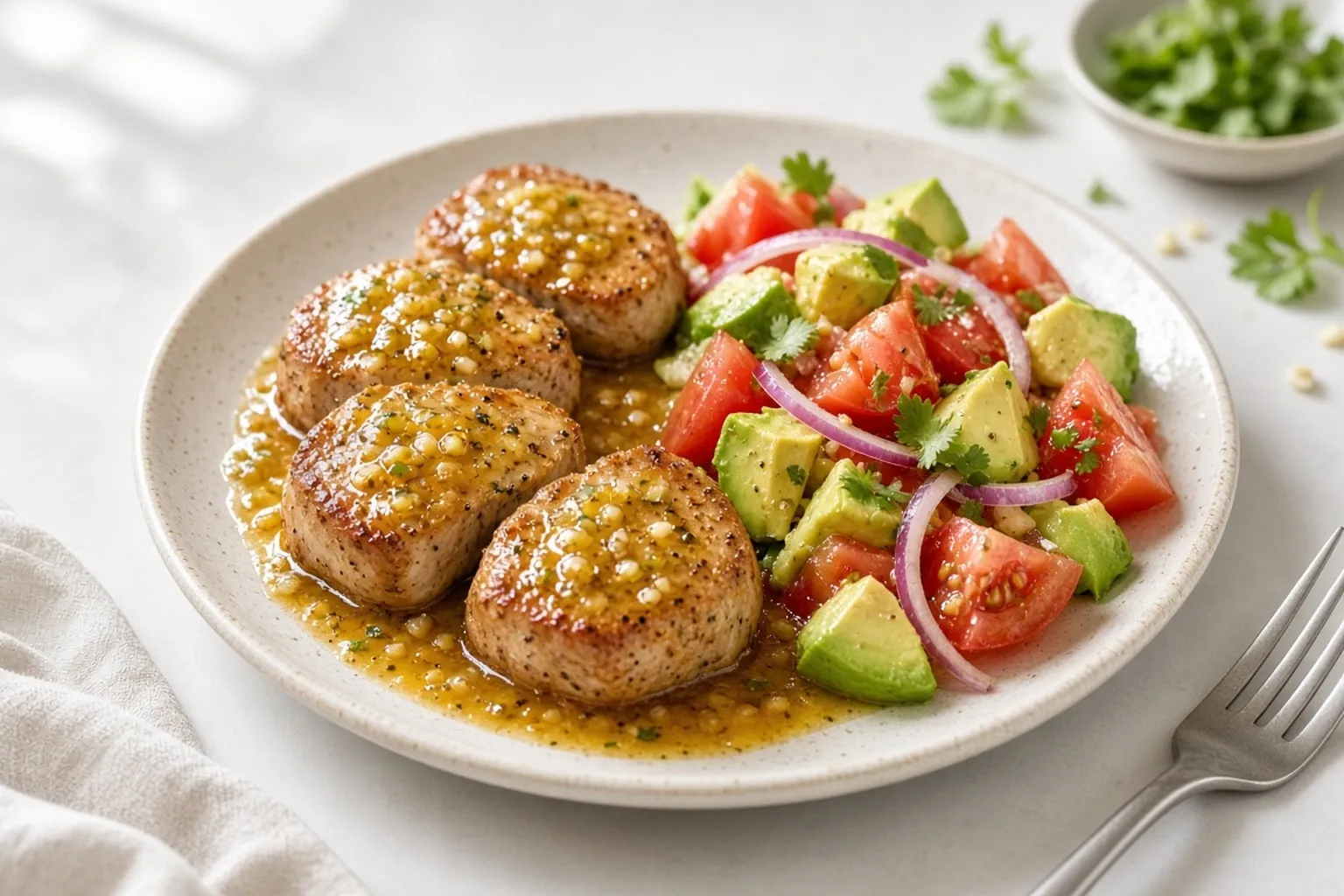
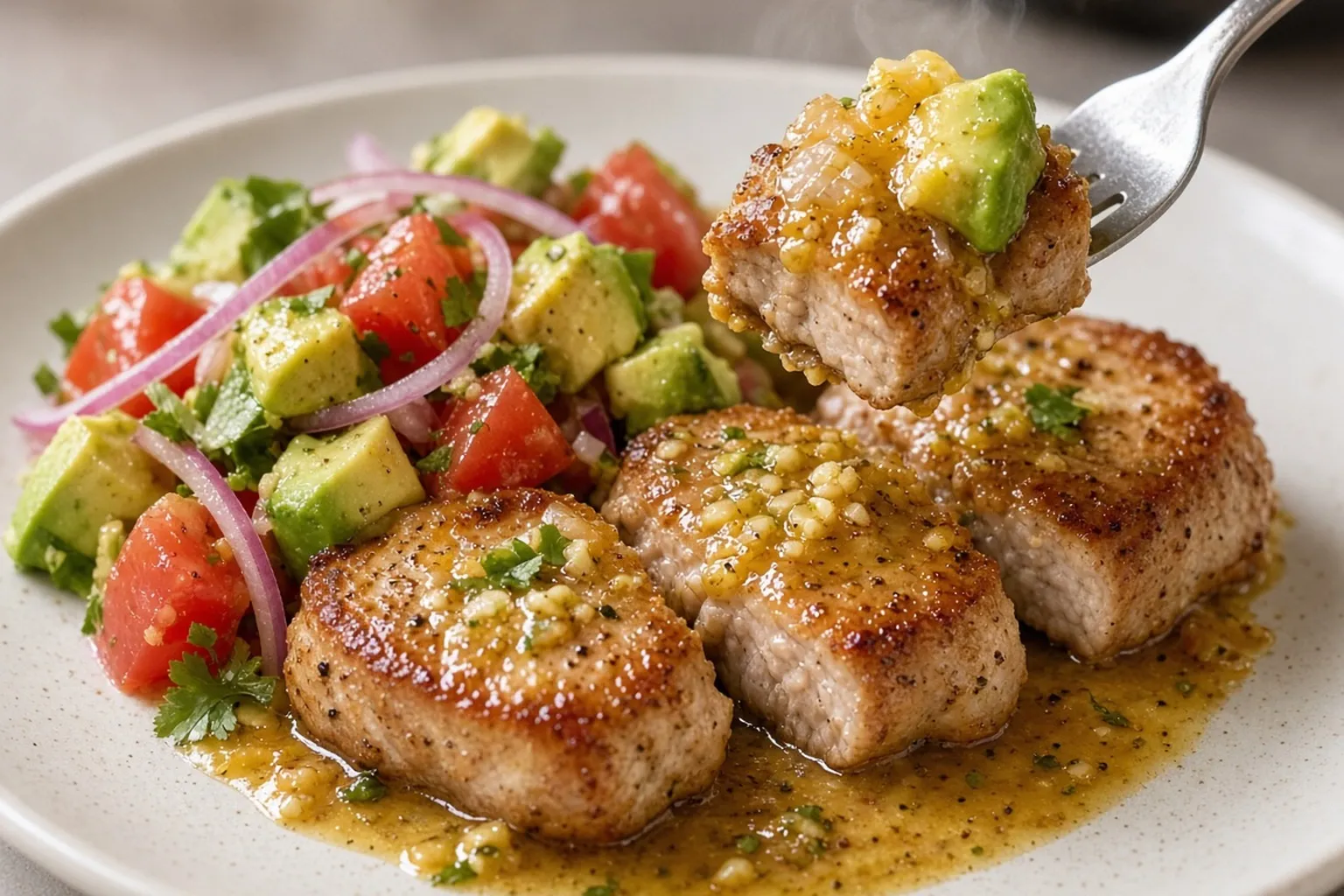
Cuban mojo pork medallions with avocado and onion salad
Thick medallions of pork tenderloin tossed in a garlicky citrus mojo of orange, lime, cumin and oregano, seared golden and juicy, with the rest of the mojo sizzled in the pan as a sauce. Served with a cool Cuban salad of avocado, tomato and paper-thin onion, in under twenty minutes.
- Time
- 18 min (8 prep + 10 cook)
- Servings
- 2
- Per serving
- 428 kcal
- Protein
- 52 g
Ingredients
Mojo
- 4 cloves garlic, minced
- 2 tbsp orange juice, freshly squeezed, from 1/2 orange
- 4 tsp lime juice, from 1 lime
- 1 tsp ground cumin
- 1 tsp dried oregano
- 1/2 tsp salt
- 1 tsp olive oil


- 1 tenderloin (1 lb) pork tenderloin, raw, trimmed and cut in 2.5 cm (1 inch) medallions, pressed a little flat
- 1 tsp olive oil

Avocado salad
- 1/2 avocado, in chunks
- 1 large tomato, in wedges
- 1/4 small red onion, sliced paper-thin
- 2 tsp lime juice
- a pinch salt
- a small handful fresh cilantro, or parsley (optional)


Steps
- Stir the garlic, orange juice, lime juice, cumin, oregano, salt and oil together in a bowl, add the pork medallions and turn them to coat while the pan heats.
- Heat the oil in a large skillet over medium-high heat. Lift the medallions out of the mojo (keep it), and sear them 3 minutes a side until golden and 145°F in the middle. Move them to a plate to rest for 3 minutes, pour the leftover mojo into the hot pan and let it bubble for 1 minute, scraping up the brown bits, then pour it over the pork.
- While the pork rests, toss the avocado, tomato and onion with the lime juice, salt and cilantro, and serve it beside the medallions.
Good to know
Can I make it with chicken?
Yes, thin chicken breast cutlets take the same mojo and cook in the same time; cook them to 165°F. It comes out at about the same score.
Can I marinate it longer?
Up to a few hours in the fridge, no longer: the citrus starts to make the surface mealy. A few minutes is enough for this cut.
Per
- Calories
- 129
- Protein
- (50%)
- 16 g
- Fat
- (40%)
- 6 g
- Carbohydrates
- (10%)
- 4 g
- of which sugar
- 1 g
- Fiber
- 1 g
- Sodium
- 274 mg
More meals


Computed from the ingredients with our published formula, not yet kitchen-tested. General guidance, not medical advice. Talk to your prescriber. How
As written, 855 kcal goes into the pot and 794 g of ingredients comes out as about 662 g of food: 129 kcal per 100 g. Cooking moves water and energy density is the score's biggest lever, so the dish is scored as cooked, not as an average of its parts. Every ingredient links to its food page, with the same data and score. The label's percentages are each macronutrient's share of the calories. The full formula.