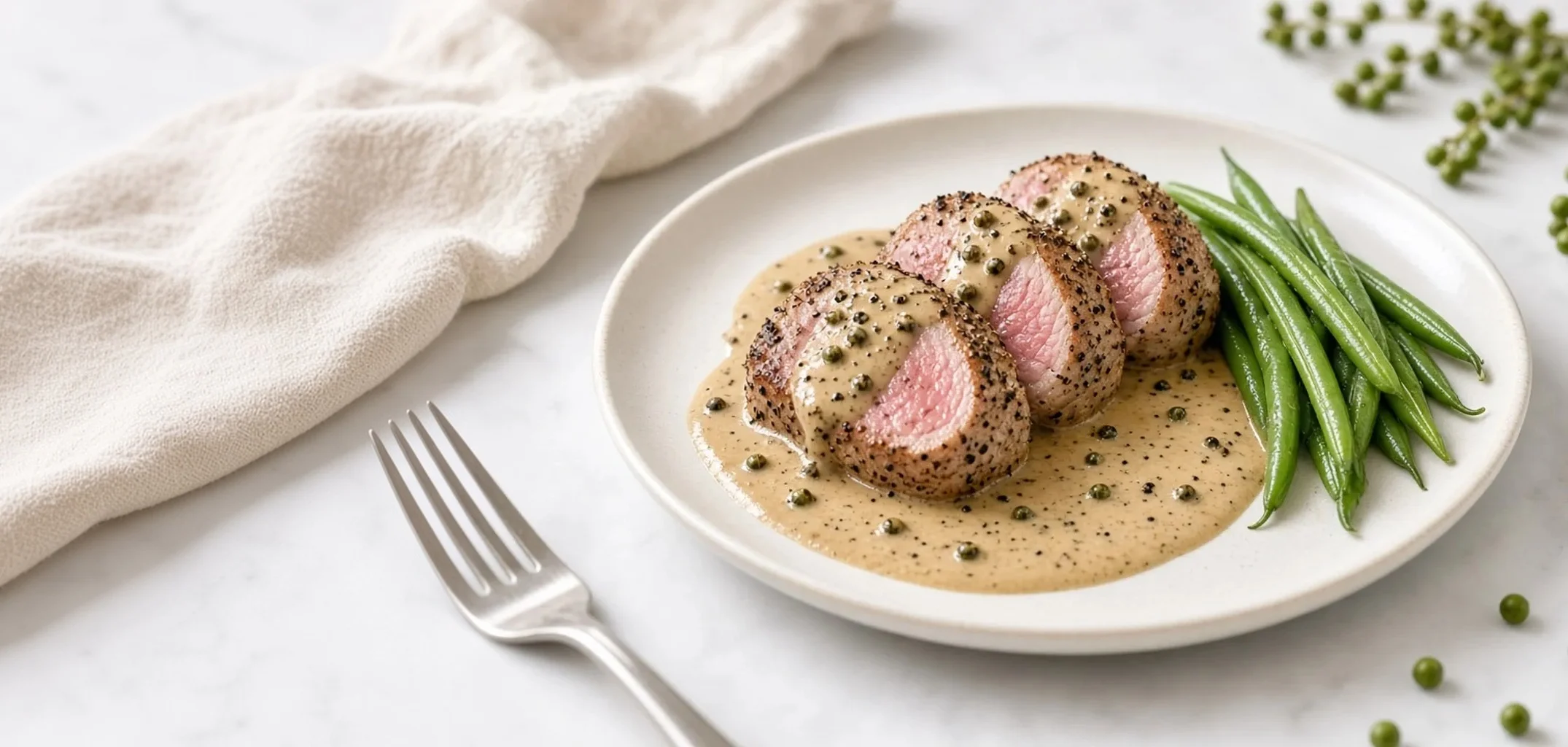
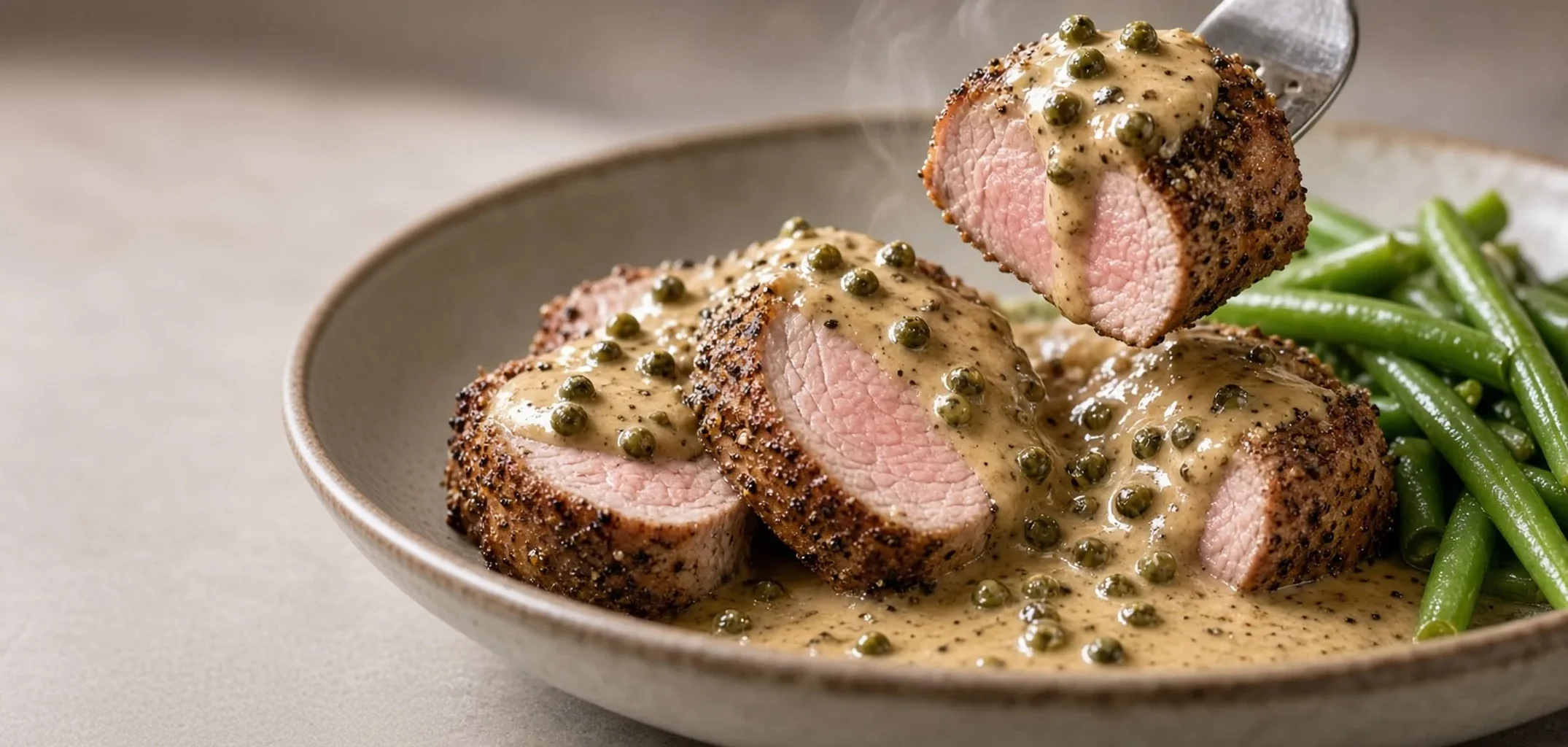
Pork tenderloin with peppercorn cream sauce
40 min · 49 g protein · 450 cals / serving
Whole pork tenderloins crusted in cracked black pepper, seared and roasted until just blush pink, then sliced into medallions under a glossy brandy and green peppercorn cream sauce. With tender green beans, it is a steakhouse dinner for a weeknight.
Ingredients
- 2 tenderloins (about 1 3/4 lb) pork tenderloin, raw, silver skin trimmed
- 3/4 tsp salt
- 2 tsp black pepper, coarsely cracked
- 2 tsp olive oil


Green beans
- 1 lb 2 oz green beans, trimmed

Peppercorn sauce
- 1 tbsp butter
- 1 large shallot, finely chopped
- 1 clove garlic, minced
- 2 tbsp brandy, or more broth
- 1 cup beef broth
- 1/3 cup heavy cream
- 2 tsp Dijon mustard
- 1 tbsp green peppercorns in brine, drained, lightly crushed


- a few leaves fresh thyme

Steps
- Heat the oven to 425°F.
- Pat the tenderloins dry, season with the salt and press the cracked pepper all over them. Heat the oil in a large ovenproof frying pan over medium-high heat and brown the pork on all sides, about 6 minutes, then move the pan to the oven for 12–15 minutes, until 145°F in the thickest part. Rest the pork on a board, loosely covered, for 5–10 minutes.
- Meanwhile, boil or steam the green beans 5–6 minutes until tender-crisp, and drain.
- Set the pork pan (careful, the handle is hot) over medium heat, melt the butter and cook the shallot and garlic 2 minutes until soft. Add the brandy and let it bubble away for 30 seconds, then pour in the broth and boil 5–6 minutes, scraping the pan, until reduced by half.
- Stir in the cream, mustard, green peppercorns and thyme and simmer 2–3 minutes until the sauce coats a spoon. Add any juices from the resting pork. Slice the pork into thick medallions and serve with the green beans and the sauce spooned over.
Good to know
Is pink pork safe?
Yes. Whole cuts of pork are safe at 145°F followed by a short rest, and they stay juicy with a blush of pink in the middle.
Can I leave out the brandy?
Yes, use an extra 2 tablespoons of broth and a few drops of Worcestershire for depth.
Per
- Calories
- 131
- Protein
- (46%)
- 14 g
- Fat
- (44%)
- 6 g
- Carbohydrates
- (10%)
- 4 g
- of which sugar
- 1 g
- Fiber
- 1 g
- Sodium
- 252 mg
About 75% of the alcohol remains after cooking; the label counts only that.
More meals


Computed from the ingredients with our published formula, not yet kitchen-tested. How
As written, 1801 kcal goes into the pot and 1753 g of ingredients comes out as about 1375 g of food: 131 kcal per 100 g. Cooking moves water and energy density is the score's biggest lever, so the dish is scored as cooked, not as an average of its parts. Every ingredient links to its food page, with the same data and score. The label's percentages are each macronutrient's share of the calories. The full formula.