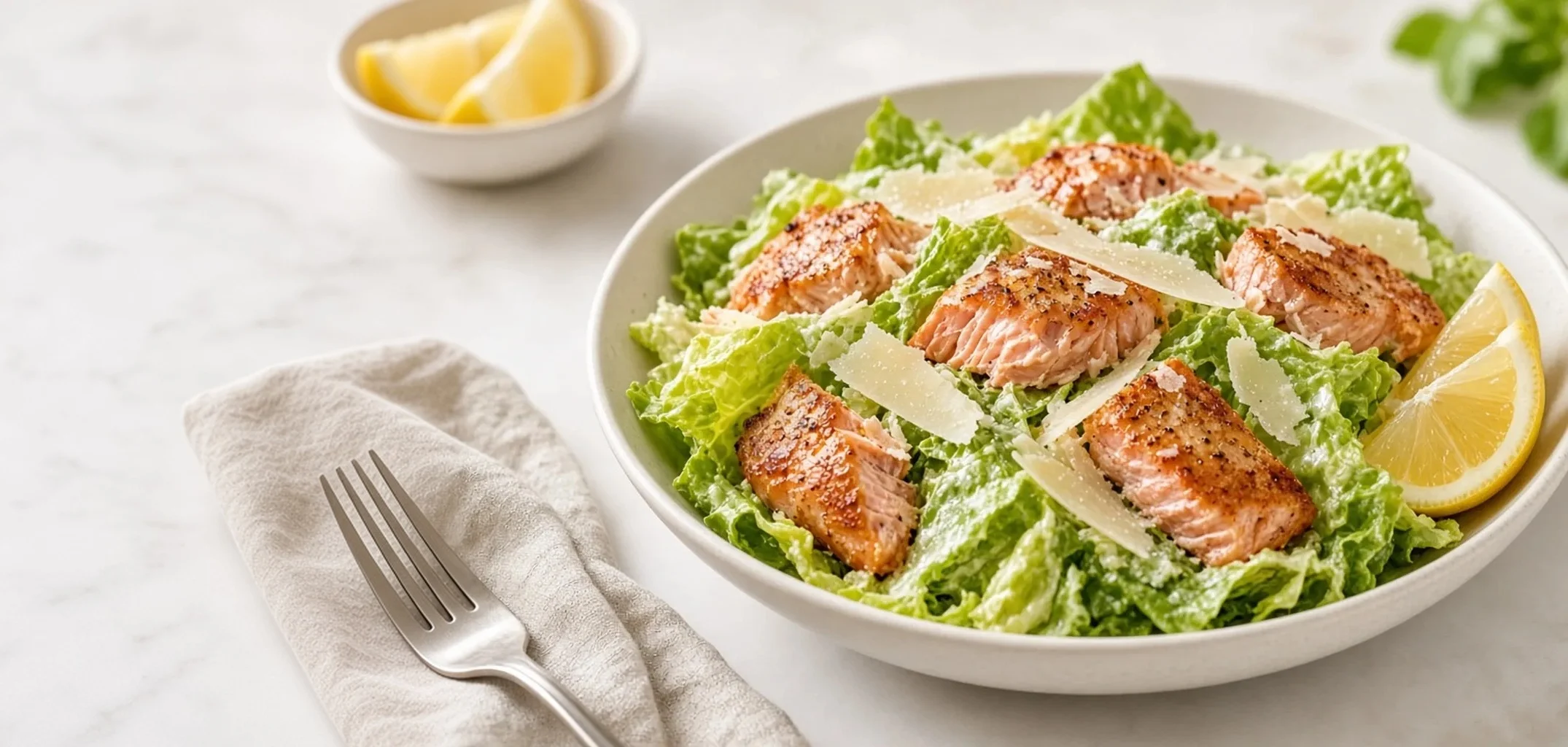
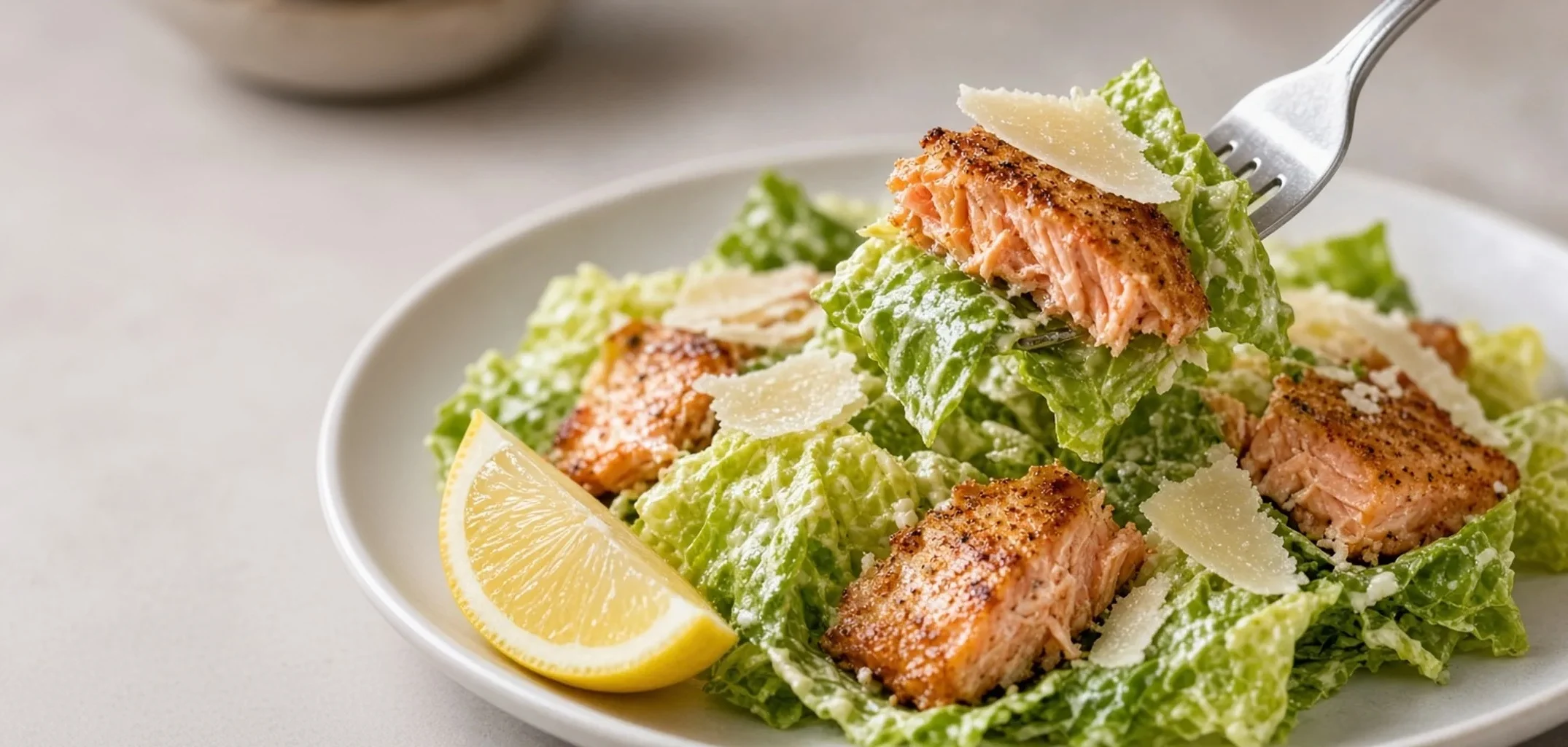
Salmon Caesar salad with anchovy-lemon dressing
25 min · 44 g protein · 496 cals / serving
Crisp romaine in a punchy Caesar dressing of anchovy, garlic, lemon and parmesan, made thick with Greek yogurt, under flakes of pan-seared salmon with a golden crust. Shaved parmesan brings the crunch and the salt that croutons would.
Ingredients
Salmon
- 1 1/2 lb salmon, 4 skin-on or skinless fillets
- 1/2 tsp salt
- 1 tsp black pepper, divided
- 2 tsp olive oil


Dressing
- 1/2 cup nonfat Greek yogurt
- 2 tbsp mayonnaise
- 1/3 cup grated parmesan, finely grated
- 2 tsp anchovy paste, or 3 anchovy fillets, mashed
- 2 tbsp lemon juice
- 1 tsp Dijon mustard
- 1 tsp Worcestershire sauce
- 2 cloves garlic, grated


Salad
- 3 hearts romaine lettuce, torn or chopped
- 1/4 cup grated parmesan (refrigerated), shaved with a peeler
- 1/2 lemon, cut in wedges (optional)


Steps
- Whisk the yogurt, mayonnaise, grated parmesan, anchovy paste, lemon juice, Dijon, Worcestershire, garlic and half the pepper until smooth. Taste: it should be sharp and salty. Thin with a teaspoon of water if it is too thick to toss.
- Pat the salmon dry and season with the salt and the rest of the pepper. Heat the oil in a large non-stick or cast-iron skillet over medium-high heat. Lay the fillets in presentation side down and cook 4 minutes without moving, until a golden crust forms, then turn and cook 2–4 minutes more, until the salmon flakes and is opaque in the centre (145°F). Rest 2 minutes, then break into large flakes, leaving any skin behind.
- Toss the romaine with three-quarters of the dressing until every leaf is coated. Divide among four plates, top with the salmon, spoon the last of the dressing over the fish and finish with the shaved parmesan and lemon wedges.
Good to know
Can I keep the croutons?
Yes, a small handful each is fine. Two cups of croutons for four takes the score to about 47 from 52 and the salad past keto by our count.
Can I use canned or leftover salmon?
Yes. Flake 2 large cans of salmon (drained) or leftover baked salmon straight onto the dressed leaves; it becomes a 10-minute lunch.
Per
- Calories
- 157
- Protein
- (36%)
- 14 g
- Fat
- (58%)
- 10 g
- Carbohydrates
- (6%)
- 3 g
- of which sugar
- 1 g
- Fiber
- 1 g
- Sodium
- 267 mg
More meals


Computed from the ingredients with our published formula, not yet kitchen-tested. How
As written, 1983 kcal goes into the pot and 1439 g of ingredients comes out as about 1261 g of food: 157 kcal per 100 g. Cooking moves water and energy density is the score's biggest lever, so the dish is scored as cooked, not as an average of its parts. Every ingredient links to its food page, with the same data and score. The label's percentages are each macronutrient's share of the calories. The full formula.